CAGAYAN DE ORO CITY— For rural farmers living in areas with weak or nonexistent internet service, smartphone weather apps and online river advisories offer little warning when heavy rain threatens low-lying fields at night.
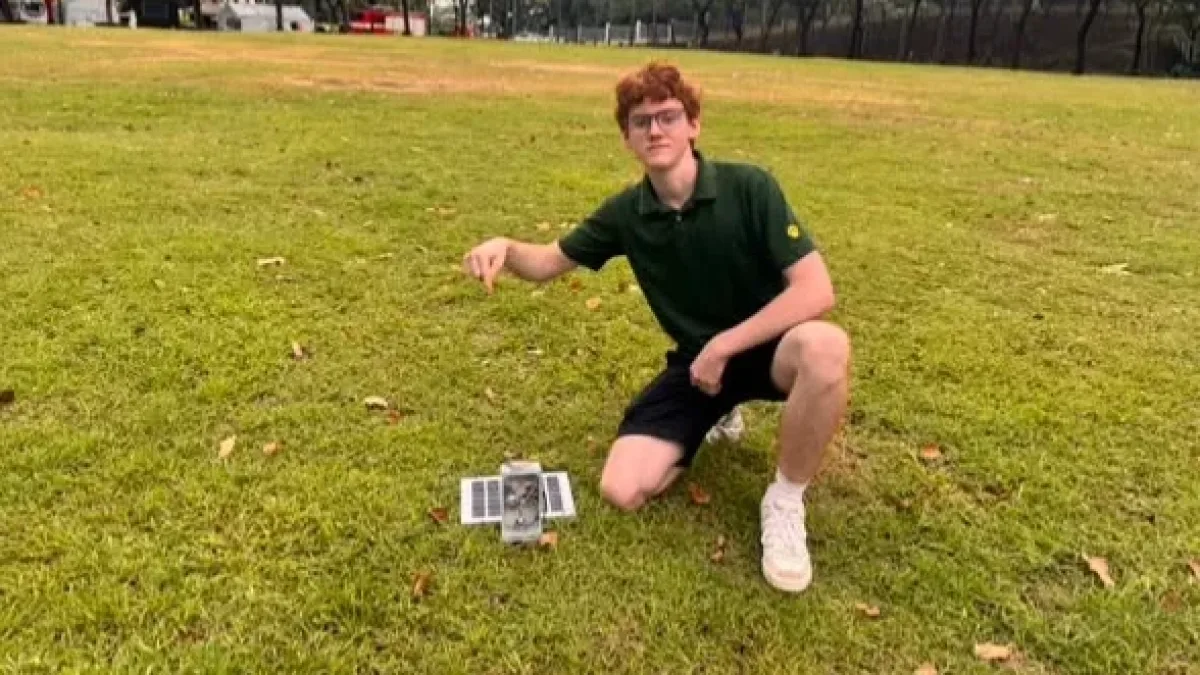
To bridge that gap, a 16-year-old American student in Metro Manila has built a ₱4,500 solar-powered flood warning kit that delivers plain-text alerts to basic keypad phones without requiring mobile data or Wi-Fi, with a farmers' cooperative in Bukidnon among the first set to host the units.
Developed by Rhys Luffman of International School Manila, the Flood Monitoring System (FMS) pairs a ground-level sensor—which tracks rainfall, standing water, and soil moisture—with a radio-linked base station that sends automated short message service (SMS) warnings directly to registered community phones.
Offline Lifeline
In Luffman's survey of Philippine growers, 10 of 23 respondents said their cellular signal is weak or missing, while members of a Bukidnon cooperative told him most of their farmers have no internet connection at all.
Because the field sensor operates without a SIM card or Wi-Fi and transmits readings across a 1-kilometer radio link to its base station, remote farms can receive warnings even in dead data zones where internet-based apps fail to load.
Survey respondents noted that getting an SMS alert at 2 a.m. with at least three hours of lead time lets rural families harvest early, move livestock, and haul seeds and farm tools to higher ground before floodwaters peak.
Bukidnon Rollout
Luffman began designing the kit after seeing street flooding while living in Thailand and later surveying 38 Philippine farmers, 31 of whom had been flooded in the past year while 16 of 36 respondents received no advance warning.
Among them was a farmer in Candaba, Pampanga, who lost an entire crop two weeks before harvest because no warning reached the farm in time.
"Before that, FMS was a build I was proud of," Luffman said. "Now, it feels like something I owe to people."
Field Trials
Commercial river monitoring stations can cost nearly ₱1 million, so Luffman kept the unit affordable for rural barangays by leaving cellular hardware out of the field sensor and housing the SMS transmitter solely inside the base station.
Writing the firmware in C++ on an Arduino microcontroller, he rebuilt the hardware three times after an early prototype kept resetting and a second version burned out its power wiring during wet-season field testing in a rice paddy at Maejo University in Thailand.
"At the time, it was quite devastating to witness the sensor I had spent hundreds of hours on fail in such a short duration, but I could have bench tested for months and never found it," Luffman said.
With guidance from a fabrication laboratory engineer, his third version adds a solar charging regulator and filters out water splashes by requiring consecutive readings and powering the probe for only 10 milliseconds per check to prevent corrosion.
Plain Alerts
Rather than technical charts, the base station sends actionable instructions—such as warning that soil is saturated after three hours of rain and advising residents to move seed, tools, and livestock to higher ground—while an optional web dashboard for connected offices remains in development at bench-dashboard.floodmonitors.com.
Luffman, who currently assembles and arranges field tests through fms.floodmonitors.com with local Disaster Risk Reduction and Management Offices and cooperatives, said preventing false alarms is vital so rural communities trust every text they receive.
"What scares me is the quiet failures, like a missed event or a false alarm that teaches people to ignore the next one and not receive flood relief," Luffman said. "If it works, ₱4,500 means a barangay doesn’t have to wait for someone to fund a million-peso station."