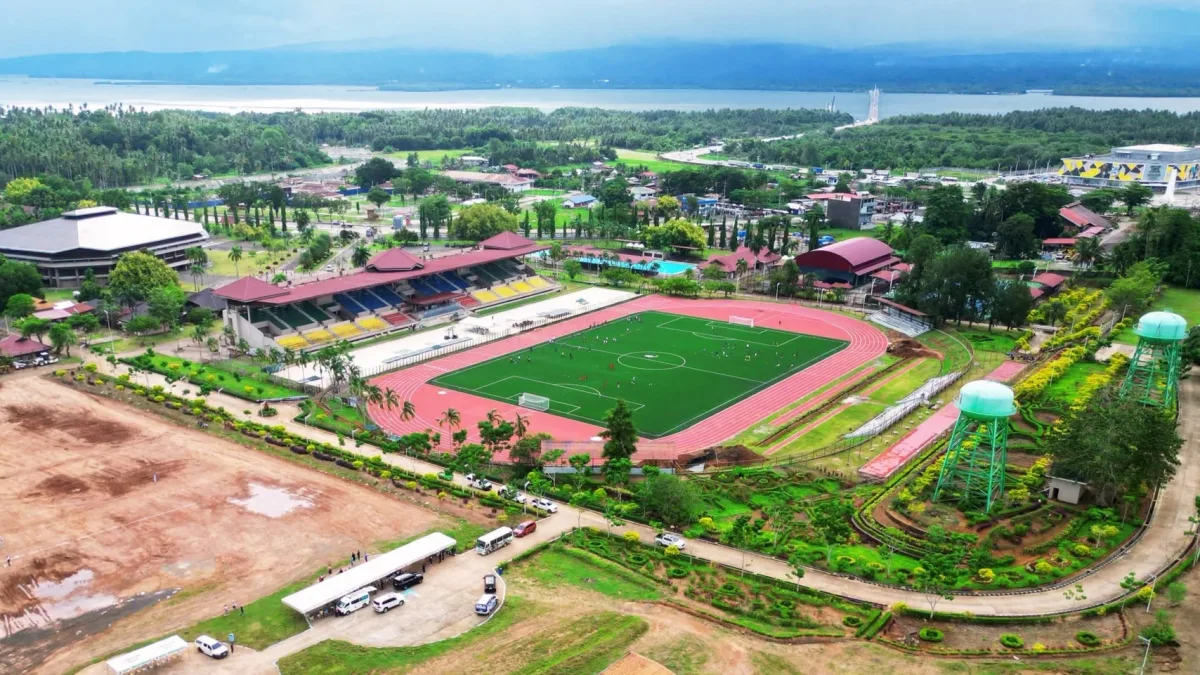
Homegrown student-athletes across Lanao del Norte no longer need to travel to Manila or Cebu to access elite training grounds, thanks to a newly certified world-class sports complex right in their backyard that sports officials say is now the best in the Philippines.
With the Mindanao Civic Center (MCC) Sports Complex securing both FIFA and World Athletics certifications, the 66.4-hectare venue in Tubod is quietly changing the trajectory for grassroots athletes while giving the local economy a major boost.
Home-Field Advantage
For decades, provincial athletes often had to travel to Cebu or Manila to train on certified, regulation-grade tracks and pitches. Today, student-athletes from Tubod, Baroy, Lala, and nearby municipalities can train on a World Athletics Class 2 Track Oval and a FIFA-standard football pitch.
“I think you have the best sports facilities in the country. Maybe you don't realize it, but it is really world-class,” Philippine Sports Commission (PSC) Chairman John Patrick Gregorio said following a recent inspection of the facility.
This level of infrastructure gives local youth a genuine competitive edge during regional meets like the NMRAA and national events like the Batang Pinoy and Palarong Pambansa. Having internationally recognized facilities at home opens direct pathways to college varsity scholarships, national team tryouts, and athletic recruitment without requiring families to bear the heavy financial burden of sending young athletes to train far from home.
Local Business Win
The benefits of the world-class complex stretch far beyond the stadium gates. Every time the MCC hosts regional tournaments, PBA games, or national sporting events, the surrounding communities feel an immediate financial lift.
Carinderias, sari-sari stores, and local food vendors around the complex see dramatic surges in daily sales whenever games draw thousands of spectators and visiting delegations. Transport operators—from tricycle and habal-habal drivers to local jeepney operators across Tubod and neighboring municipalities—experience steady, heightened demand throughout multi-day meets. Hoteliers and innkeepers in commercial hubs like Lala and Baroy similarly fill to capacity.
With the sports commission now eyeing the venue for bigger stages, those economic ripples are set to grow even wider.
“It is now the responsibility of the Philippine Sports Commission to collaborate with the Provincial Government para makagawa tayo ng national and even international sporting events dito sa Lanao del Norte,” Gregorio added.
As these national partnerships take shape, the MCC Sports Complex stands as more than just a site of athletic pride—it is proving to be a reliable economic engine for families throughout Lanao del Norte.