GENERAL Santos City— The Department of Energy (DOE) has backed a civil society-led campaign to achieve a 50:50 share of renewable energy and fossil fuels in Mindanao’s power mix by 2030, setting a regional target more ambitious than the national government’s 35% renewable energy goal for the same year.
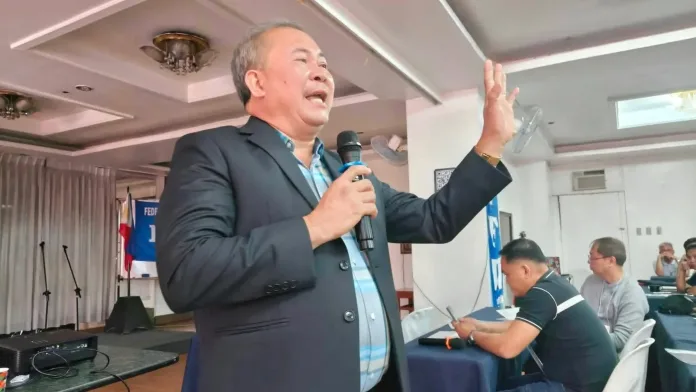
Energy Assistant Secretary Sabine Marie Romero expressed support for the target in her keynote address at the 4th Mindanao Clean Energy Forum on Thursday, October 22.
Romero said the goal was within reach, citing 1,029 megawatts (MW) of renewable energy projects committed for commissioning in 2029.
More than 2,000 MW of additional renewable energy projects are classified by the DOE as indicative.
Committed projects are scheduled for implementation, while indicative projects are still undergoing processes such as permit acquisition, financing and technical studies.
Research by the Mindanao Renewable Energy Acceleration and Coordination Hub (MINREACH) estimates that Mindanao needs at least 1,390 MW of additional renewable energy capacity by 2030 to achieve parity between renewable energy and fossil fuels.
BenCyrus Ellorin, project director of the Consumers for Renewable Energy Action in Mindanao (CREAM Project) and co-convenor of the forum, said the DOE’s support marked an important development for the campaign, which was launched during the first Mindanao Clean Energy Forum in Davao City in 2023.
“The buy-in by the DOE to the 50% renewable energy target for Mindanao is a very important development since the Mindanao 50:50 in 2030 was launched in the 1st MCEF in Davao City in 2023,” Ellorin said.
Mindanao shifted from a predominantly renewable energy mix toward greater dependence on fossil fuels in 2016, raising concerns about the island’s exposure to imported fuel prices and supply disruptions.
Reliance on imported coal and diesel has become a growing energy security concern, particularly amid sharp fuel price increases linked to the ongoing armed conflict in the Persian Gulf.
Data released by the DOE’s Mindanao Field Office in September showed that the island’s dependence on imported diesel rose from 18.1% to 20.3% this year. Meanwhile, coal-fired power plants’ share of the power grid declined from 49.1% last year to 48.1%, partly amid technical problems at several facilities.
Renewable energy advocates say solar power could help reduce this dependence while meeting the region’s growing electricity needs.
Studies estimate that Mindanao’s rooftops alone have the potential to accommodate around five gigawatts of solar capacity, enough to meet the island’s daytime peak electricity demand.
However, data from the Institute for Climate and Sustainable Cities (ICSC) show that only 0.34% of Mindanao’s rooftops currently have solar installations, indicating substantial room for expansion.
The fourth Mindanao Clean Energy Forum was convened by MINREACH, the Peace and Equity Foundation, the Mindanao Development Authority, the ICSC, Pinoy Aksyon for Governance and the Environment, the General Santos City government, the General Santos City Chamber of Commerce and Industry Inc., and the Regional Development Council of Region 12.