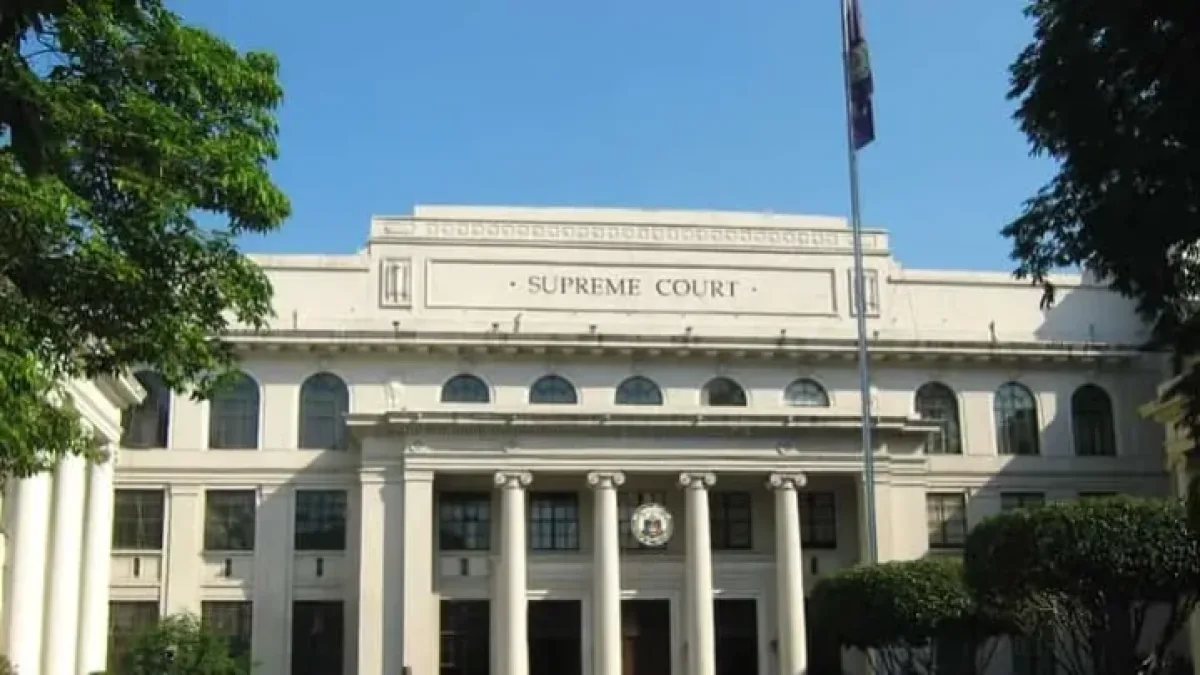
CAGAYAN de Oro City — Workers who reach age 60 cannot be forced out of their jobs simply because retirement becomes an option, the Supreme Court ruled.
The Federation of Free Workers (FFW), through its national president, Atty. Sonny Matula, welcomed the decision, saying it protects employees who want to continue working but are not yet financially ready to retire.
“60 is an age of choice to retire or not, hindi edad ng sapilitang pagpapaalis. Hindi porke may senior citizen ID ka na ay may termination notice ka na rin!” Matula said in a statement issued Wednesday, Oct. 28.
The ruling is particularly relevant to workers approaching retirement age, as it clarifies that an employer cannot simply impose early retirement without the employee’s explicit, free and voluntary consent, subject to applicable retirement agreements and labor laws.
Court rejects assumption of voluntary retirement. In Ondevilla v. Colegio de San Juan de Letran (Laguna), the Supreme Court ruled that an employee’s acceptance of an early-retirement option must be explicit, voluntary, free, and uncompelled.
The case involved Rodolfo C. Ondevilla, who had worked for the school since 2004.
After a management reorganization and reassignment, the school treated his appointment as expired in 2019. He challenged the action and filed a complaint for illegal dismissal.
The Court of Appeals found that he had been illegally dismissed but later treated him as having opted for retirement based on a letter he had sent to the school.
The Supreme Court rejected that interpretation, finding that the letter concerned the settlement of a cash advance and did not clearly show that Ondevilla had voluntarily chosen to retire.
The Court also noted that he had opposed his early retirement and pursued his dismissal complaint.
The justices ruled that he had been illegally dismissed rather than voluntarily retired.
What the ruling means for employees
Under Article 302 of the Labor Code (formerly Article 287), a collective bargaining agreement or other applicable employment contract may establish retirement terms.
In the absence of a retirement plan or agreement, employees who have rendered at least five years of service may generally opt to retire at age 60, while 65 is the compulsory retirement age under the law.
However, valid retirement arrangements may provide for a different age, subject to applicable legal requirements.
The ruling does not invalidate every retirement plan that sets an age below 65.
It underscores the need for genuine consent when an employer relies on an early-retirement option.
For workers in Cagayan de Oro and other parts of Northern Mindanao, the decision highlights the importance of checking employment contracts, collective bargaining agreements and company retirement policies before signing retirement documents.
Employees who believe they are being forced to retire should seek clarification from their human resources office, union, the Department of Labor and Employment or a qualified labor lawyer.
School ordered to pay benefits
The Supreme Court ordered the school to pay Ondevilla’s estate full backwages from his dismissal in August 2019 until he reached age 65 in August 2024.
It also awarded separation pay instead of reinstatement, retirement benefits covering his employment period, and attorney’s fees equivalent to 10% of the total monetary award.
The case was returned to the labor arbitration branch to compute the amount due.
Matula urged educational institutions and other employers to review their retirement plans in consultation with unions or employees.
Ma. Victoria Bellosillo, president of the Central Philippine University Rank-and-File Employees Union in Iloilo City, also welcomed the ruling, saying experience and knowledge remain valuable in academic work.
For employees nearing retirement, the key issue is whether their workplace rules comply with labor law and whether any early retirement is genuinely voluntary.
Reaching 60 does not, by itself, give an employer the right to force an employee to retire.