By Jigger J. Jerusalem, Correspondent
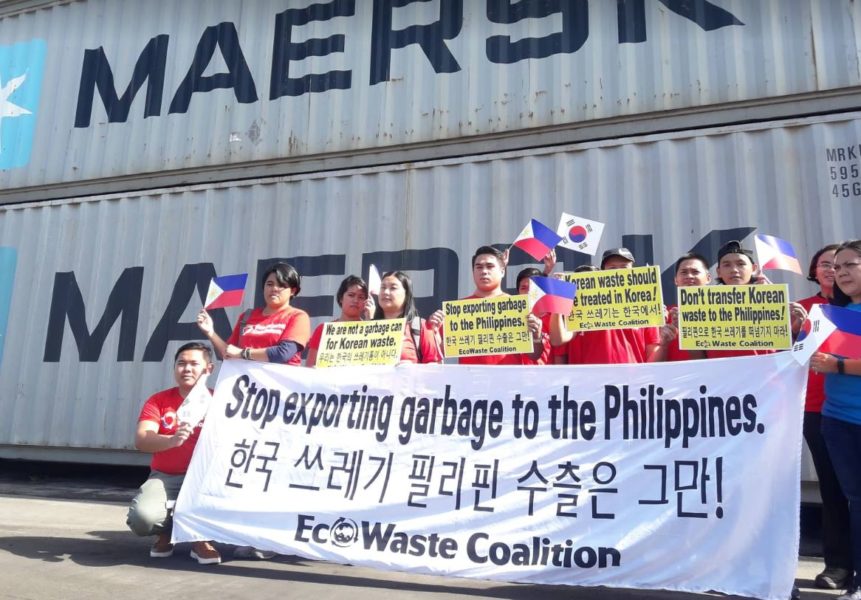
THE environmental group EcoWaste Coalition asked the government on Monday to bar the entry of electronic waste (e-waste) into the country and to amend an international treaty that would help reinforce the country’s campaign against importation of garbage to the Philippines.
The EcoWaste Coalition has reminded to Duterte administration to strictly enforce its environmental laws following an internal report that said the production of e-wastes has increased all over the world last year and will continue to do so in years to come if it will not be stopped.
The group has noted that 53.6 million tons of e-wastes were produced in 2019 due to higher consumption of electrical and electronic equipment.
The global generation of e-waste, which is classified as hazardous waste under the Basel Convention, which the Philippines is a signatory, due to the presence of brominated flame retardants, lead, mercury and toxic substances, is projected to reach 74.7 million tons by 2030.
Among those classified as electrical and electronic equipment (EEE) are personal computers, printers, televisions, mobile phones, refrigerators and air-conditioning units, according to the Basel Convention.
“The global surge in the production of e-waste is deeply concerning for developing countries like the Philippines that still allow the importation of electronic junks. End-of-life computers, TVs, mobile phones and other unwanted EEE from overseas might end up flooding our ports if no preventive action is taken,” said Roxanne Figueroa, EcoWaste Coalition e-waste campaigner.
As the demand for computers and other gadgets grows with their increased use in online activities amide the coronavirus pandemic, Figueroa said, “we need to be extra vigilant against the potential rise in shipments of pre-owned electronics nearing or at the end of their useful lives, which can only add to our toxic waste woes.”
Last year, Bureau of Customs officials in Northern Mindanao uncovered 2.56 tons of smashed electronic trash from Hong Kong, wrongfully declared as assorted electronic accessories, that arrived at the Mindanao Container Terminal sub-port in Tagoloan, Misamis Oriental on Feb. 2, 2019.
Quoting the latest Global E-Waste Monitor report, which came out this month, the coalition said a considerable amount of e-waste is still exported illegally or under the guise for reuse or pretending to be scrap metal.
“In middle- and low-income countries, the e-waste management infrastructure is not yet fully developed or, in some cases, is entirely absent. Hence, e-waste is managed mostly by the informal sector,” the report said.
“In this case, e-waste is often handled under inferior conditions, causing severe health effects to workers as well as to the children who often live, work and play near e-waste management activities,” it added.
The World Health Organization has noted that children’s health are being affected by these e-wastes, with one in four of them dying from avoidable environmental exposures.
For his part, Thony Dizon, EcoWaste Coalition chemical safety campaigner, said this environmental problem can be addressed once the Duterte government ratify the Basel Ban Amendment.
“To put a stop to the entry of e-waste and other wastes into our country and to protect public health and the environment, we need to plug loopholes in regulation and ratify the Basel Ban Amendment, an international law prohibiting all hazardous waste exports from developed to developing countries,” Dizon said.
He said such a bold action will encourage developed countries not to transfer their unwanted e-waste in the country, as well as drive the electronic industry to shift to clean production and take full responsibility for the environmental impacts of their products throughout the product life-cycle, including their reuse, buyback or recycling.
Last year, the group wrote to Department of Environment and Natural Resources (DENR) Secretary Roy Cimatu proposing a comprehensive ban on the importation of wastes, including plastic and electronic wastes, which is still permitted by the agency under DENR administrative order 2013-22.
DENR A.O. 2013-22 allows the importation of “recyclable materials” such as scrap metals, scrap plastics, electronic assemblies and scrap, used oil and fly ash subject to certain limiting conditions and compliance to the requirements set by the Environmental Management Bureau (EMB).
EMB, which is currently reviewing and revising the said administrative order to update the requirements and address emerging issues, has drafted the “Guidelines on the Environmentally Sound Management of Waste Electrical and Electronic Equipment,” which is yet to be issued.