NATIONAL Grid Corporation of the Philippines (NGCP) on Monday is teaming up with the National Intelligence Coordinating Agency (Nica) to protect the country’s power transmission assets.
“The NGCP reinforces its commitment to deliver reliable transmission services across the country,” said NGCP Government Relations and Regional Affairs Lead Specialist Mae Roselle L. Curiano.
Curiano even said by signing a Memorandum of Understanding with the Nica will enhance the safety and security of its transmission assets.
The power grid earlier condemned attacks on its towers, saying these only increased the burden of the people, who suffer from power interruptions every time transmission facilities are bombed.
Curiano said a memorandum of agreement has been signed between the NGCP and the Nica yesterday to provide intelligence information to support the protection of power transmission assets operated and maintained by the NGCP across the country.
The partnership was witnessed by President Ferdinand R. Marcos, Jr., during the signing of the agreement between NGCP President and CEO Mr. Anthony L. Almeda and NICA Director General Retired Police Lt. Gen. Ricardo F. De Leon, according to Curiano.
“NGCP is committed to providing technical assistance to Nica to support and further establish their cybersecurity capability,” said Curiano in a statement.
In October last year, an NGCP tower in Lanao del Norte was bombed, which resulted in outages in several areas of Mindanao.
“NGCP has dealt with sabotage and bombing incidents in the past years which affected not only the reliable delivery of power in the areas affected, but other incidents also resulted in the injury of transmission line personnel and military escorts patrolling the areas to conduct line clearing and maintenance activities,” Curiano said.
The power grid also said an attack within or along the power transmission corridor is punishable under the law with a fine of up to P200,000 or 12 years imprisonment or both.
“The (agreement) that NGCP and Nica will be signing (Monday) will be a shared commitment to exchange intelligence and provide support to accomplish our respective mandates,” the statement reads in part.
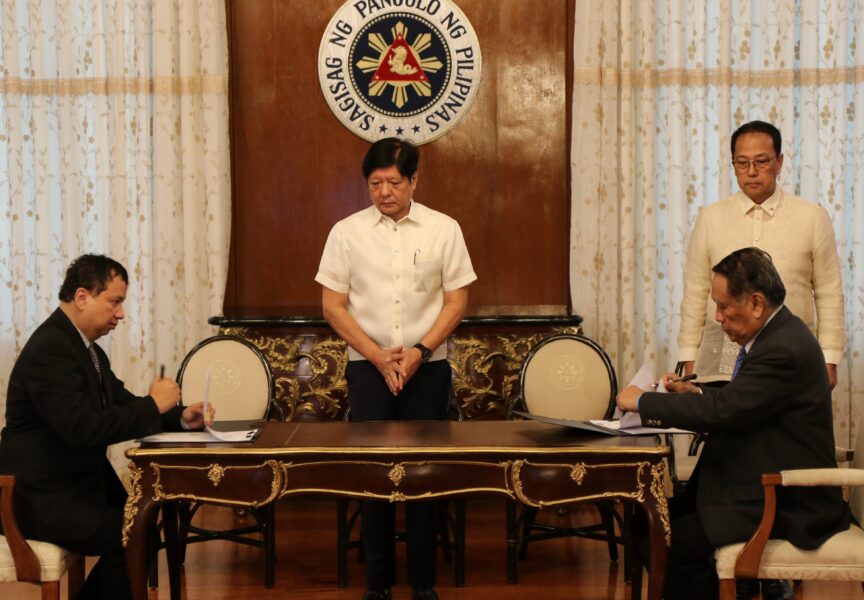
A speech delivered by President Marcos highlighted the importance of the agreement in reinforcing the country’s security measures.
"Since NGCP is a critical, (critical part of our security), we have made now more robust the defenses against any possible attacks on our power systems,” said Marcos, adding that require the exchange of secure information among ourselves in society on any other elements in our everyday lives that require power.
Marcos thanked NGCP for taking the initiative as there have been fears that the involvement of any foreign entity in the power transmission system would present a security threat to the Philippines.
“This is a very good step towards answering that challenge,” the President said.
The President also emphasized that “It is one step not only with NGCP but an effort of the government citing its importance in fending off cyber attacks on energy infrastructure and a continuing effort of the country to protect itself against any attacks in cyberspace.
“We are developing our cyber systems so that we are secure and so that the data that we need to collect and to disseminate is available to us, and we can do and securely handle the data without the risk of it being used somehow against the Philippines,” said Marcos.
Since the NGCP is in charge of a very critical aspect of the daily lives of Filipinos, Marcos said when it comes to war strategy, “we do – we conduct our wars in the same manner that we conduct our business.”
Let this be an example to all the other sectors that could be assessed to be at risk when it comes to cybersecurity, according to Marcos.
“It is a good signal to all of us who have concerns in this regard – that we are doing many things to make sure that the Philippines remains secure, by international law,” he said.
The agreement Signing was also witnessed by the Department of National Defense Officer-in-Charge Senior Undersecretary Carlito Galvez, Jr., and representatives from the National Security Council and the Department of Energy.