IF the then executive secretary Vic Rodriguez, the long-time aide of President Ferdinand Marcos Jr., evaded a question on will People Power be commemorated in 2023, the president himself declared today, a special non-working day to commemorate the Edsa People Power Revolt.
On Thursday evening, Malacañang announced that the historic 37th anniversary which falls on Saturday will be observed today.
In Proclamation No. 167, issued and signed on February 23 by Marcos Jr., the celebration of the EDSA People Power Revolution Anniversary may be moved from 25 February 2023 (Saturday) to 24 February 2023 (Friday).
“[T]o enable our countrymen to avail of the benefits of a long weekend according to the principle of holiday economics, provided that the historical significance of the EDSA People Power Revolution is maintained,” Marcos stated.
“That he is his own man,” said Cagayan de Oro City Council minority floor leader James Judith in an interview with this paper.
Judith also answered the question with President Marcos Jr. headed back to Malacañang, will the Filipino people still commemorate this key moment in the country’s national history? or will February 25 go the way of January 17, the by the now forgotten anniversary of the 2001 EDSA Dos ouster of Joseph Ejercito Estrada?
Judith said that he does not see the point of asking about whether there would be space to mark the EDSA anniversary as all administrations since the restoration of democracy in 1986 have.
“Now, I know that the thrust of his (Marcos) presidency is economic reforms as is evident in the charter change campaign of Rufus Rodriguez specifically on economic provisions only,” said Judith.
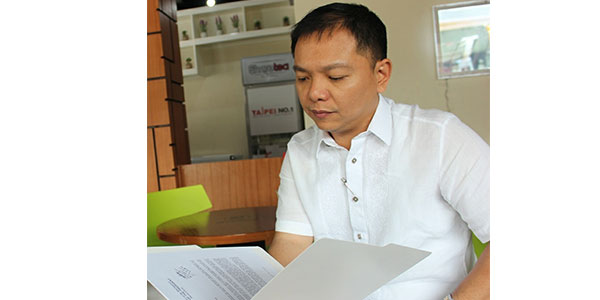
Judith doesn't even see any connection after Marcos Jr., issued Proclamation Order declaring EDSA People Power Revolution Anniversary be commemorated.
Judith’s answers were also likely the same as the then Secretary (Rodriguez), following a chance interview with reporters after Marcos was proclaimed president in May 2022 national election.
In the said press conference, after Marcos assumed office, his win also raised concerns of historical revisionism and, for the survivors and the families of victims of Martial Law, specters of a painful past.
After Marcos Jr. was proclaimed president, his first speech to the media said he is humbled by his win and asked for the Filipino people to pray for him instead.
In the said press conference, another question raised is that the country once celebrated Marcos’ fall, under his son, (Marcos Jr) has the country moved On?
The Philippine flags adorn the People Power Monument in Manila for the 30th anniversary 2016 of the revolution that ended the Ferdinand Marcos dictatorship. With Marcos Jr. now president, some worry the past is at risk of being forgotten.
In 1975, three years after President Ferdinand Marcos declared national martial law in the Philippines—a decade-long campaign in which approximately 70,000 people were allegedly imprisoned, 34,000 were tortured, and more than 3,000 were reportedly killed outside.
In addition, growing public discontent with the allegedly brutal and corrupt regime gave rise to a popular uprising that ousted Marcos on Feb. 25, 1986, and also exiled his family to Hawaii.
The date of that “People Power Revolution”—also known as the EDSA Revolution for the street in Manila where major protests took place, Epifanio de los Santos Avenue—has since been recognized as an annual national holiday and celebration of democracy.
A new Marcos is a president: the son, namesake, and half-image of his late father. For now, Marcos Jr. wants to forget the alleged sordid history of his father.
Since Marcos Jr., his siblings, and their mother returned to the Philippines after Marcos Sr.'s death. in 1989, they entered local and later national politics, culminating in the election of Marcos Jr. as president in June.
At the same time, they continue to refuse to apologize for the sins of their family's past and have been accused by historians of denial and revisionism when discussing the atrocities of the Marcos Sr. regime.
“We have got to move on,” Marcos Jr. posted on Facebook in 2012 on the 40th anniversary of his father’s declaration of martial law.