 Plagiarism and the Internet
The Internet has been a good help to us. It has made a lot of things easier at work and in school, and even at home. We can now get answers to questions in just a couple of minutes. In addition, getting and staying in touch with relatives and friends is a breeze. Sharing photos and memories has become a simple task. Best of all, the Internet is free, so you don’t have to worry about paying a fee every time you need to use it to find answers about or to connect to something or someone.
It is this very reason – that it is free and can be accessed by anybody – that has paved the way for problems like plagiarism to intensify. Nowadays, we hear about people using photos without acknowledging or crediting the photographer and owner. Some people also find it easy to copy content from a website or websites and then use this for a project, report, assignment, and even for a simple post on Facebook. This is called stealing a person’s creative or intellectual property – and this is what plagiarism is all about.
In an article that came out in The New York Times back in 2010, writer Trip Gabriel shared the story of a university student who thought that copying information from Wikipedia did not need crediting or appropriation because it was considered “common knowledge”. Gabriel further stated how this behavior proves that students still do not fully understand how copying other people’s work can be a serious crime. I agree.
The digital age has allowed us – especially the youth – to believe that everything we see and find online is free and not owned by anybody. This is true for works of art like photos, poetry, and the like. So if it is something we want our friends to see, we share it – without thinking about the person who originally created and posted it.
I have several friends who have been victims of plagiarism. Their photos, precious intellectual properties, have been used by other people without permission. Since the photos were watermarked, they were edited so my friends’ logos were cut out. I’ve also witnessed several cases of article stealing, i.e. someone posting a copied article on his website without properly acknowledging the writer.
These may sound like simple things to you, but to the owners of these creative works, they are more than just objects. They are personal representations of themselves. They are a means of expression. These intellectual properties are extensions of themselves, something that they achieved through hard work and by using their skills.
#makeITsafePH
The fact that plagiarism has become a major problem in the past few years is not something that can be fixed with a snap of the fingers, but there are things we can do to help lessen the number of victims (and perpetrators).
One of the first things that need to be done is a massive information campaign about plagiarism in the digital age. This is the aim of Globe Telecom’s #makeITsafePH campaign. Through its Globe Digital Thumbprint Program, students will experience and learn from cyber wellness and cybersecurity workshops, as well as learn more about plagiarism. It also intends to guide students to observe proper online behavior. Basically, the goal is to encourage students to become smart Internet users.
Teaching students about and helping them understand plagiarism is a big step towards the goal of someday putting a stop to the unauthorized copying of other people’s work. It’s time to be different; to be original. And the best time to start is now.
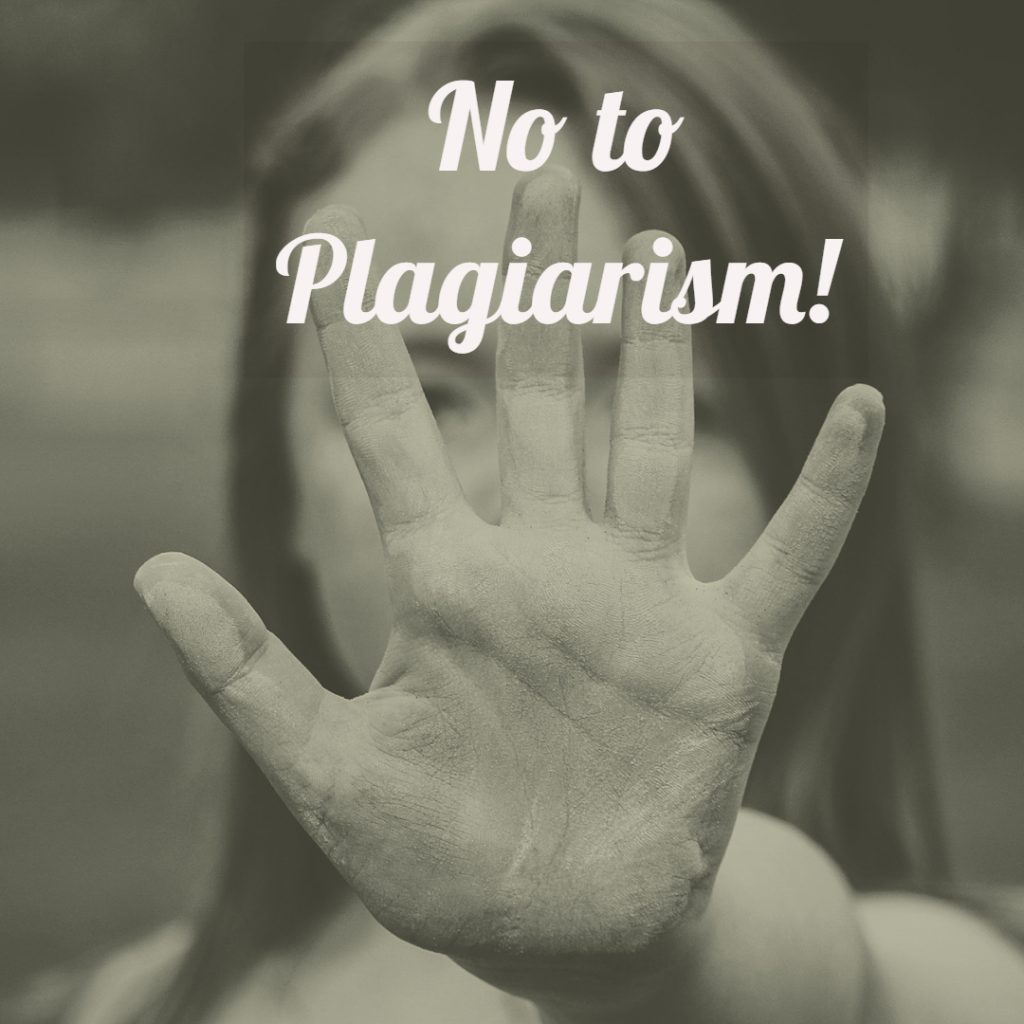
(Poster created using Adobe Spark Post. Photo on poster from Pixabay, free to download.)
Plagiarism and the Internet
The Internet has been a good help to us. It has made a lot of things easier at work and in school, and even at home. We can now get answers to questions in just a couple of minutes. In addition, getting and staying in touch with relatives and friends is a breeze. Sharing photos and memories has become a simple task. Best of all, the Internet is free, so you don’t have to worry about paying a fee every time you need to use it to find answers about or to connect to something or someone.
It is this very reason – that it is free and can be accessed by anybody – that has paved the way for problems like plagiarism to intensify. Nowadays, we hear about people using photos without acknowledging or crediting the photographer and owner. Some people also find it easy to copy content from a website or websites and then use this for a project, report, assignment, and even for a simple post on Facebook. This is called stealing a person’s creative or intellectual property – and this is what plagiarism is all about.
In an article that came out in The New York Times back in 2010, writer Trip Gabriel shared the story of a university student who thought that copying information from Wikipedia did not need crediting or appropriation because it was considered “common knowledge”. Gabriel further stated how this behavior proves that students still do not fully understand how copying other people’s work can be a serious crime. I agree.
The digital age has allowed us – especially the youth – to believe that everything we see and find online is free and not owned by anybody. This is true for works of art like photos, poetry, and the like. So if it is something we want our friends to see, we share it – without thinking about the person who originally created and posted it.
I have several friends who have been victims of plagiarism. Their photos, precious intellectual properties, have been used by other people without permission. Since the photos were watermarked, they were edited so my friends’ logos were cut out. I’ve also witnessed several cases of article stealing, i.e. someone posting a copied article on his website without properly acknowledging the writer.
These may sound like simple things to you, but to the owners of these creative works, they are more than just objects. They are personal representations of themselves. They are a means of expression. These intellectual properties are extensions of themselves, something that they achieved through hard work and by using their skills.
#makeITsafePH
The fact that plagiarism has become a major problem in the past few years is not something that can be fixed with a snap of the fingers, but there are things we can do to help lessen the number of victims (and perpetrators).
One of the first things that need to be done is a massive information campaign about plagiarism in the digital age. This is the aim of Globe Telecom’s #makeITsafePH campaign. Through its Globe Digital Thumbprint Program, students will experience and learn from cyber wellness and cybersecurity workshops, as well as learn more about plagiarism. It also intends to guide students to observe proper online behavior. Basically, the goal is to encourage students to become smart Internet users.
Teaching students about and helping them understand plagiarism is a big step towards the goal of someday putting a stop to the unauthorized copying of other people’s work. It’s time to be different; to be original. And the best time to start is now.
(Poster created using Adobe Spark Post. Photo on poster from Pixabay, free to download.) Plagiarism and the Internet
The Internet has been a good help to us. It has made a lot of things easier at work and in school, and even at home. We can now get answers to questions in just a couple of minutes. In addition, getting and staying in touch with relatives and friends is a breeze. Sharing photos and memories has become a simple task. Best of all, the Internet is free, so you don’t have to worry about paying a fee every time you need to use it to find answers about or to connect to something or someone.
It is this very reason – that it is free and can be accessed by anybody – that has paved the way for problems like plagiarism to intensify. Nowadays, we hear about people using photos without acknowledging or crediting the photographer and owner. Some people also find it easy to copy content from a website or websites and then use this for a project, report, assignment, and even for a simple post on Facebook. This is called stealing a person’s creative or intellectual property – and this is what plagiarism is all about.
In an article that came out in The New York Times back in 2010, writer Trip Gabriel shared the story of a university student who thought that copying information from Wikipedia did not need crediting or appropriation because it was considered “common knowledge”. Gabriel further stated how this behavior proves that students still do not fully understand how copying other people’s work can be a serious crime. I agree.
The digital age has allowed us – especially the youth – to believe that everything we see and find online is free and not owned by anybody. This is true for works of art like photos, poetry, and the like. So if it is something we want our friends to see, we share it – without thinking about the person who originally created and posted it.
I have several friends who have been victims of plagiarism. Their photos, precious intellectual properties, have been used by other people without permission. Since the photos were watermarked, they were edited so my friends’ logos were cut out. I’ve also witnessed several cases of article stealing, i.e. someone posting a copied article on his website without properly acknowledging the writer.
These may sound like simple things to you, but to the owners of these creative works, they are more than just objects. They are personal representations of themselves. They are a means of expression. These intellectual properties are extensions of themselves, something that they achieved through hard work and by using their skills.
#makeITsafePH
The fact that plagiarism has become a major problem in the past few years is not something that can be fixed with a snap of the fingers, but there are things we can do to help lessen the number of victims (and perpetrators).
One of the first things that need to be done is a massive information campaign about plagiarism in the digital age. This is the aim of Globe Telecom’s #makeITsafePH campaign. Through its Globe Digital Thumbprint Program, students will experience and learn from cyber wellness and cybersecurity workshops, as well as learn more about plagiarism. It also intends to guide students to observe proper online behavior. Basically, the goal is to encourage students to become smart Internet users.
Teaching students about and helping them understand plagiarism is a big step towards the goal of someday putting a stop to the unauthorized copying of other people’s work. It’s time to be different; to be original. And the best time to start is now.
(Poster created using Adobe Spark Post. Photo on poster from Pixabay, free to download.)
Plagiarism and the Internet
The Internet has been a good help to us. It has made a lot of things easier at work and in school, and even at home. We can now get answers to questions in just a couple of minutes. In addition, getting and staying in touch with relatives and friends is a breeze. Sharing photos and memories has become a simple task. Best of all, the Internet is free, so you don’t have to worry about paying a fee every time you need to use it to find answers about or to connect to something or someone.
It is this very reason – that it is free and can be accessed by anybody – that has paved the way for problems like plagiarism to intensify. Nowadays, we hear about people using photos without acknowledging or crediting the photographer and owner. Some people also find it easy to copy content from a website or websites and then use this for a project, report, assignment, and even for a simple post on Facebook. This is called stealing a person’s creative or intellectual property – and this is what plagiarism is all about.
In an article that came out in The New York Times back in 2010, writer Trip Gabriel shared the story of a university student who thought that copying information from Wikipedia did not need crediting or appropriation because it was considered “common knowledge”. Gabriel further stated how this behavior proves that students still do not fully understand how copying other people’s work can be a serious crime. I agree.
The digital age has allowed us – especially the youth – to believe that everything we see and find online is free and not owned by anybody. This is true for works of art like photos, poetry, and the like. So if it is something we want our friends to see, we share it – without thinking about the person who originally created and posted it.
I have several friends who have been victims of plagiarism. Their photos, precious intellectual properties, have been used by other people without permission. Since the photos were watermarked, they were edited so my friends’ logos were cut out. I’ve also witnessed several cases of article stealing, i.e. someone posting a copied article on his website without properly acknowledging the writer.
These may sound like simple things to you, but to the owners of these creative works, they are more than just objects. They are personal representations of themselves. They are a means of expression. These intellectual properties are extensions of themselves, something that they achieved through hard work and by using their skills.
#makeITsafePH
The fact that plagiarism has become a major problem in the past few years is not something that can be fixed with a snap of the fingers, but there are things we can do to help lessen the number of victims (and perpetrators).
One of the first things that need to be done is a massive information campaign about plagiarism in the digital age. This is the aim of Globe Telecom’s #makeITsafePH campaign. Through its Globe Digital Thumbprint Program, students will experience and learn from cyber wellness and cybersecurity workshops, as well as learn more about plagiarism. It also intends to guide students to observe proper online behavior. Basically, the goal is to encourage students to become smart Internet users.
Teaching students about and helping them understand plagiarism is a big step towards the goal of someday putting a stop to the unauthorized copying of other people’s work. It’s time to be different; to be original. And the best time to start is now.
(Poster created using Adobe Spark Post. Photo on poster from Pixabay, free to download.)