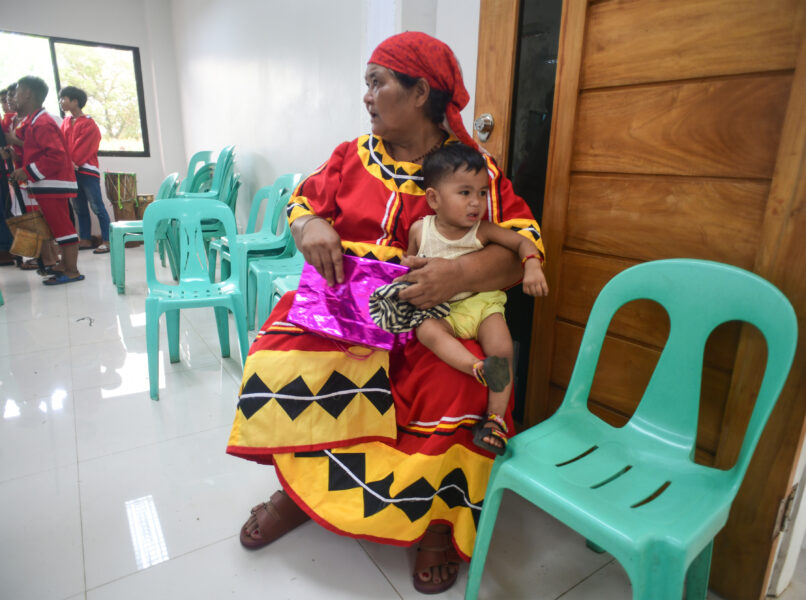
WHEN friends or relatives come to Bae Kalalagan to ask her for advice for their illnesses, she would advise them to get medicinal plants or go see their medicine man or “baylan.”
The 52-year-old Bae Kalalagan, a respected woman elder of the Higaonon tribe in Cagayan de Oro, would not advise them to go to a doctor or visit the health centers in the villages.
“Even if the woman shows symptoms of breast cancer, I would still advise her to see a “baylan,” our doctor. Our traditional medicine has the answers to all illnesses,” she said.
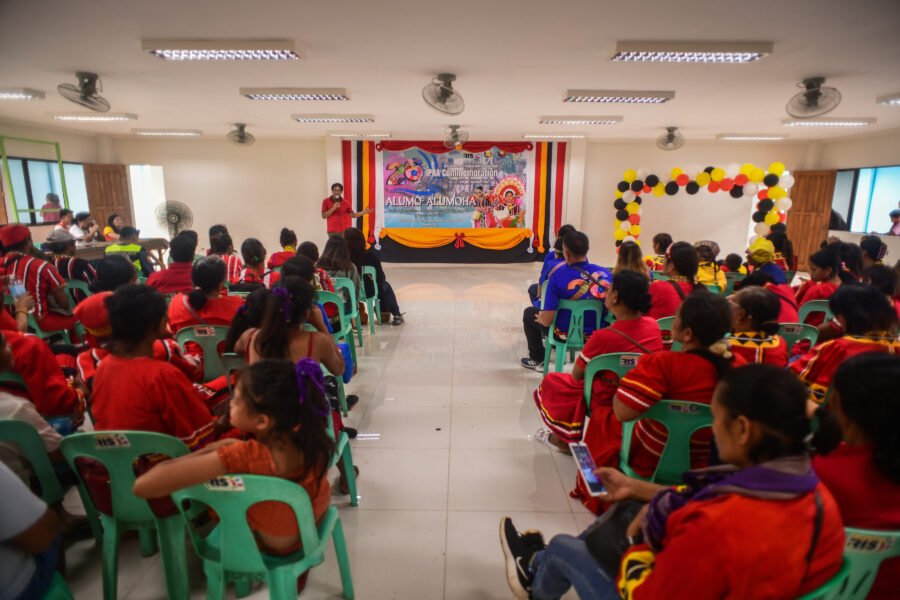
Bae Kalalagan is one of the 12,000 Higaonon residents here who still cling to the traditional healing of their Higaonon tribe despite the modern health support system offered by the local government.
Many Higaonons still cling to their traditional medicine rather than see a doctor for treatment.
The Higaonons are one of the largest tribal groups living in five provinces —Misamis Oriental, Bukidnon, Agusan del Norte, Lanao del Sur, and Camiiguin — in Northern Mindanao.
According to the National Commission on Indigenous People, between 10,000 to 20,000 Higaonons live in Misamis Oriental and Cagayan de Oro City.
The City Social Welfare and Development Office in Cagayan de Oro said 12,000 Higaonons residents earned their living in 16 hinterland villages of the city.
The City Health Office here operates health centers in all 80 barangays including the 16 villages where the Higaonon, the original settlers of Cagayan de Oro, reside.
City Health Officer Dr. Rachel Dilla said while many Higaonon residents visit the health centers for coughs and influenza treatment, none come for treatment for breast cancer and other major illnesses.
Dilla said the City Health Office does not have data on how many lumad women are sick with breast cancer.
“If the Higaonon women come to the centers, it’s for coughs, flu, and other respiratory diseases not for breast cancer or other major illness,” Dilla said.
In a small health center in barangay F.S. Catanico, some 11 kilometers east of Cagayan de Oro, barangay health worker Janeth Dulay waits patiently for any of its 2, 502 residents to come for treatment.
It was a hot Friday afternoon but Dulay endured the heat and waited for her patients to arrive. She said she averaged six to ten visits a week from residents who are mostly Higaonons.
“They would come to ask for medicines for coughs and fever but I never had a patient complaining about breast cancer in my five years of work in this health center,” Dulay said.
Dulay said a few years ago, a Higaonon resident came to their health center showing early symptoms of breast cancer. She said she took one look at the patient and sent her to the J.R. Borja Memorial Hospital in Cagayan de Oro.
“This is how our officials instructed us to do. We send those major medical cases to the hospital for treatment,” she explained.
Dulay said she never heard what happened to her patient. She was later told that her suspicion was unfounded. The woman did not have breast cancer.
She said their team of barangay health workers regularly visits the houses of Higaonons in the nearby mountains to lecture the women about breast cancer screening.
Dulay said they taught them how to spot early signs of breast cancer by early self-examination of the female bodies.
“We found that the Higaonon women were very attentive when we asked them to practice breast self-exams,” Dulay said.
The Philippines has one of the highest breast cancer mortality rates in the world. According to the International Agency for Research on Cancer, Filipino women face higher risks of developing breast cancer.
The Department of Health said 3 in every 100 Filipino women will be diagnosed with breast cancer in their lifetime. 27, 163 cases of breast cancer were recorded in the country in 2020.
Data from the DOH said 9,926 Filipino women died of the disease. There is however few data or narratives of lumad women suffering from breast cancer.
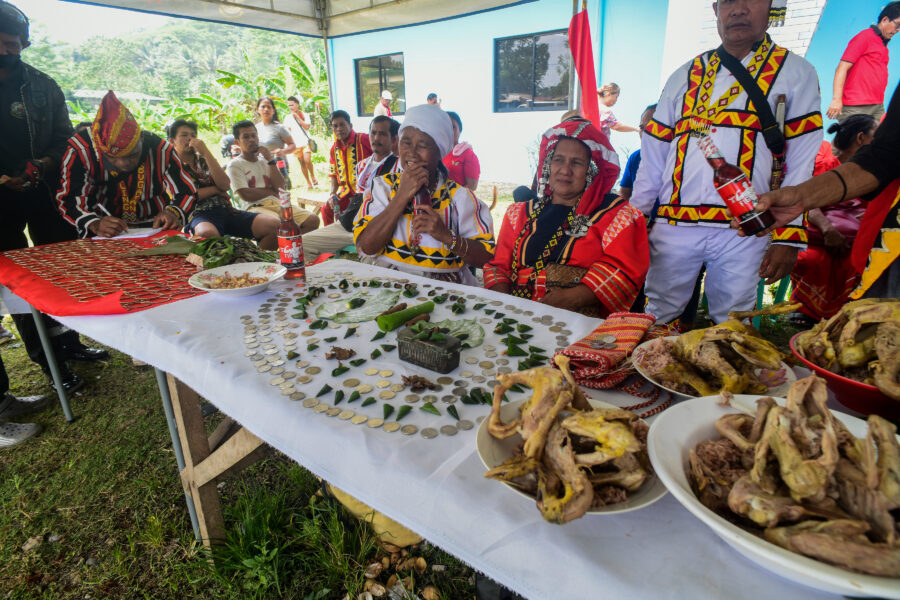
Bernie Malinda or Datu Sumagayan, a Higaonon leader said breast cancer among Higaonon women is rare because they believe in their traditional ways and medicine.
Sumagayan said the nearby mountains of Cagayan de Oro have abundant plant resources that are available for the Higaonon women.
“When our women think they are sick, they can go to the mountains to get the specific herb that could heal the illness. We do not need to go to the health centers,” Sumagayan said.
Sumagayan said their medicinal plants are comparable to commercial drugs and can treat coughs, fever, diarrhea, and even major illnesses like breast cancer.
Rose Undag, another respected leader said poverty is also one major reason why Higaonon women prefer their traditional medicine.
“To buy medicines means expenses. Higaonon families barely eke a living farming vegetables,” she said.
Undag narrated her experience when one of her relatives got sick with breast cancer and their family was too poor to buy medicine.
She said their family first consulted a doctor at a public hospital who advised surgery to cut out the cancer or chemotherapy to shrink or kill the cancer cells.
“The family of my relative did not go back to the doctor and instead went to a baylan or medicine man who prescribed some medicinal herbs that are readily available along the river,” Undag said.
Undag said the family later learned that two government agencies—the Philippine Health Insurance Corporation and the Philippine Charity Sweepstakes Office—give medical assistance to indigents.
The Philippine Health Insurance Corporation or Philhealth offers Z benefits for early-stage breast cancer (stage O to III-A) amounting to P100,000 in medical assistance inclusive of surgery and chemotherapy.
“Anybody can avail with these especially residents of barangays who have availed of Philhealth cards,” Merlyn Ybanez, head of the Philhealth 10 public affairs unit, said.
Ybanez said PhilHealth 10 inked an agreement with the seven tribes of Bukidnon including the Higaonon tribe to improve access to lumad communities.
For their part, PCSO Misamis Oriental manager Divina Salvacion said their office has given P13 million in medical assistance for all cancer-stricken patients in Northern Mindanao in 2022.
She said all the patients have to do is apply in their office along Corrales Avenue in Cagayan de Oro. (This story is published with the support of the Philippine Press Institute, Novartis, and ICanServe Foundation)