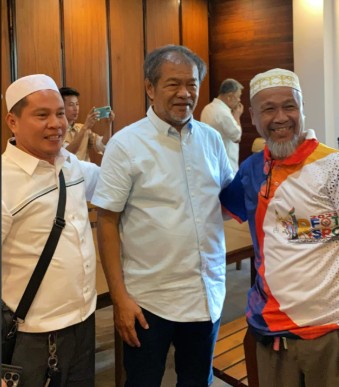
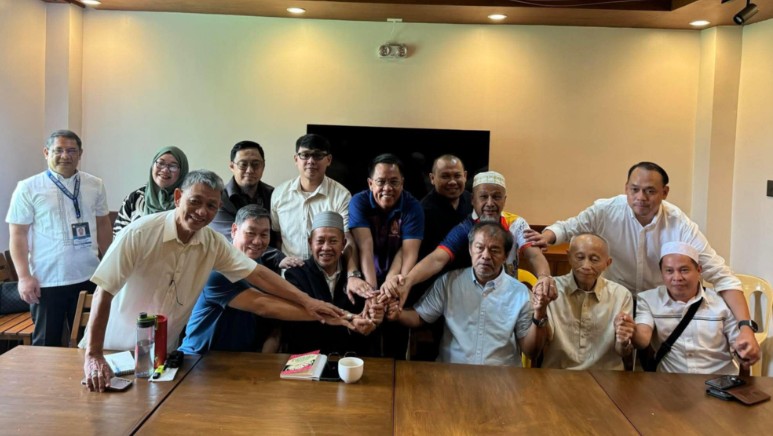
AFTER more than an hour of a closed-door meeting, bishops, imams, and Misamis Oriental Gov. Peter Unabia emerged shaking hands, signaling that the controversy sparked by his anti-Muslim remarks may be coming to a close.
Iglesia Filipina Independiente Bishop Felixberto Calang said Muslim leaders saw the sincerity in Unabia’s apology to the Muslim members of the Cagayan de Oro Interfaith Forum for Peace, Harmony and Solidarity, which initiated the reconciliation meeting held Monday at the Archbishop’s Residence at St. Augustine Metropolitan Cathedral in Cagayan de Oro.
“Governor Unabia humbled himself before the Muslim leaders and us, saying he did not mean any harm to the Maranaos, and the imams accepted his apology,” said Cagayan de Oro Archbishop Jose Cabantan.
Calang, Cabantan, and Cagayan de Oro Archbishop Emeritus Antonio Ledesma attended the meeting as leaders of the interfaith dialogue, who previously spearheaded the failed peace talks between the National Democratic Front and the Philippine government.
Among the Muslim leaders present were Ustadj Aliasa Alinog of the Ulama League Northern Mindanao, lawyers Mohammad Hussein Lucman and Alama Pangandaman-Pumbaya, and Chief Jamaloddin Muti of the National Commission on Muslim Filipinos.
Calang noted that Unabia was accompanied by Rep. Yevgeny Emano of Misamis Oriental’s 2nd District.
He said the group decided last Saturday to initiate the meeting in response to a social media backlash over Unabia’s remarks, which were widely criticized as perpetuating harmful stereotypes against residents from the Bangsamoro region.
“The Muslim leaders were very agitated during our Saturday meeting and feared a possible escalation of physical violence,” Calang said.
However, some Muslim groups from Lanao del Sur were dissatisfied with the outcome of the dialogue, saying participants had not consulted them.
The multi-sectoral group One Bangsamoro Movement called the dialogue “exclusive” to Muslims in Cagayan de Oro and said it did not represent other groups whose reputation was harmed by Unabia’s statements.
One Bangsamoro Movement President Maulana Balangi said the dialogue might have been a success locally, but Unabia’s apology fell short for Muslims in other parts of Mindanao.
“Unabia insulted the Muslims from the Bangsamoro, and it’s only right that he ask forgiveness from all of us,” Balangi said.
He added that the boycott against Unabia’s popular business, Sr. San Pedro Lechon Manok, should continue and urged Muslim voters in Misamis Oriental not to support his candidacy.
Leah Tarhata Mehila of the Young Moro Professional Network said the dialogue did not resolve the issue.
“That dialogue did not douse the fire that Unabia started,” Mehila said.
Aslani Montila, chairperson of the Marawi-based Siyap Ko Pagtaw Inc., said young lawyers in Lanao del Sur are planning to file a case against Unabia or assist the Commission on Elections in gathering evidence against him.
The Comelec’s Task Force on Safeguarding Against Fear and Exclusions in Elections (Task Force SAFE) has ordered Unabia to respond in writing within a non-extendible period of three days to explain why a disqualification case should not be filed.