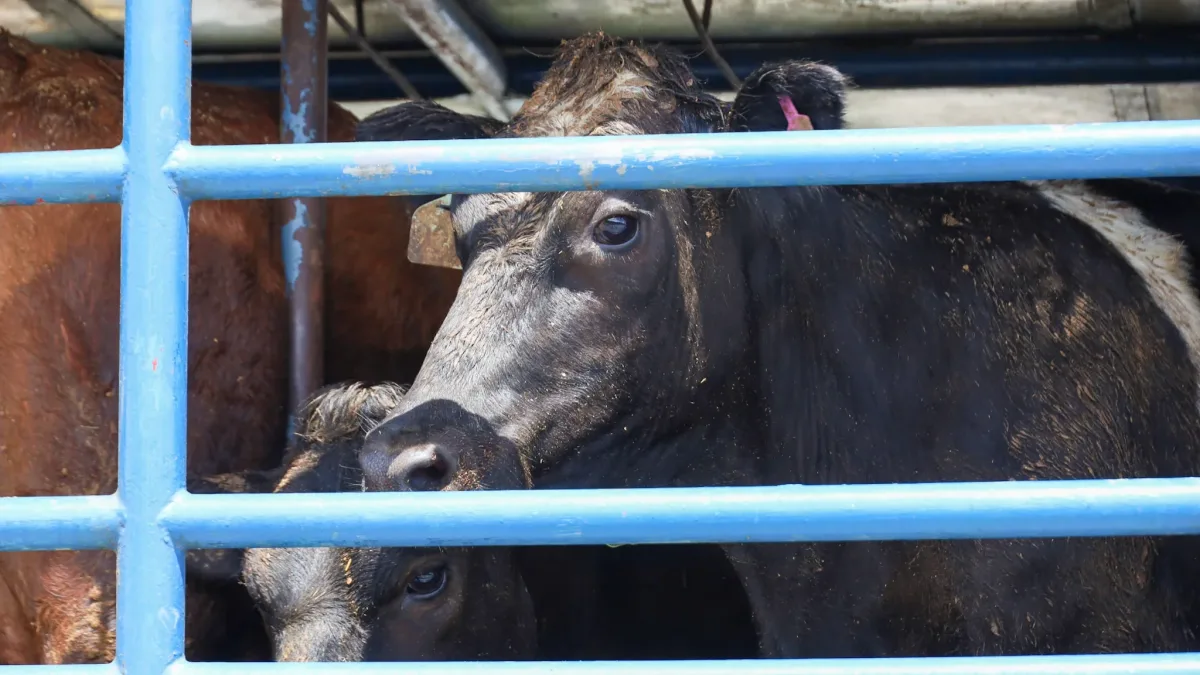
CAGAYAN de Oro City — More than 1,100 pregnant dairy cattle imported from Australia are undergoing quarantine and health monitoring in Bukidnon, as the government looks to increase local milk production and expand livelihood opportunities for Filipino farmers.
The National Dairy Authority (NDA) said 1,119 of the 1,419 imported cattle were assigned to the Del Monte Feed Lot in Bukidnon following the shipment's arrival at the Port of Cagayan de Oro on October 18.
NDA Administrator Atty. Marcus Antonius T. Andaya inspected the animals at the Bukidnon facility on November 5, when they were undergoing a 30-day quarantine and health monitoring period before proceeding with the government's herd development program.
The remaining 300 cattle were assigned to NDA stock farms, with 150 heads sent to General Tinio, Nueva Ecija, and another 150 to Ubay, Bohol.
The imported animals include Holstein-Jersey, purebred Holstein and Holstein-Jersey cross breeds. The shipment marks the NDA's first importation of dairy cattle in nearly three years.
The agency projects that the imported animals and their offspring will build up a herd of about 2,527 heads, contributing an estimated 5.9 million liters of milk in 2027. This would account for about 20% of the country's targeted cattle milk production for that year.
For farmers and cooperatives, the program is expected to provide access to quality dairy cattle that could help them expand their herds and increase milk production.
Andaya said the importation was not only intended to increase the country's dairy population but also to give qualified farmers opportunities to strengthen their livelihoods through dairy farming.
"After almost three years, the NDA has resumed the importation of dairy cattle and we now have a source of good quality animals to be dispersed to farmers by way of a grant to help expand the country's dairy herd and increase local milk production," Andaya said.
He added that the initiative would help farmers and cooperatives grow their herds, produce more milk and improve their income.
The NDA's stock farms will serve as breeding and herd development facilities. Imported cattle will be allowed to adjust to local conditions and reproduce before their offspring are distributed to qualified farmer-beneficiaries.
Andaya said the facilities were established to build up the country's dairy herd and make more animals available to local producers.
"Our stock farms serve a clear purpose in developing the local dairy industry: to build up the herd and help make dairy cattle available to farmers and cooperatives," he said.
The initiative is also expected to benefit 176 individual coconut farmers, cooperatives and associations under the Coconut Farmers and Industry Development Plan (CFIDP).
Through the partnership between the NDA and the Philippine Coconut Authority (PCA), coconut farmers will have opportunities to diversify their livelihoods by entering the dairy industry.
The cattle importation is funded through the General Appropriations Act and the CFIDP as part of the government's efforts to strengthen domestic dairy production.
The program comes as the country's dairy industry continues to record growth. Milk production reached 25.38 million liters as of June 2026, up 21.2% from 20.394 million liters during the same period in 2025.
The country's dairy herd also increased by 6.5%, from 155,662 heads in June 2025 to 167,785 heads in June 2026.
However, increasing the number of dairy cattle does not automatically translate into higher milk production or better farmer income. The animals must remain healthy, produce offspring and generate sufficient milk, while farmers also need access to feed, veterinary services, processing facilities and reliable buyers.
The government's milk feeding program is expected to provide an additional market for locally produced milk by creating demand for dairy products from local producers.
The Sagip Saka Act, which allows government agencies to directly purchase agricultural products from farmers and their cooperatives, also provides a potential market for local dairy producers.
Through its herd development, stock farm operations and animal dispersal programs, the NDA aims to increase the supply of locally produced milk and strengthen the capacity of farmers and cooperatives to participate in the country's dairy industry.