Cagayan de Oro – September 15, 2023 – Edwin Ando, who is deaf, stared at the letter he once received, but to him it was an inscrutable series of meaningless symbols. He knew the document was important because of the official seal on the envelope, but no amount of concentration would help him understand it on his own.
“I felt lonely and misunderstood by people. I thought to myself that home was the only safe space for an illiterate person like me,” said Edwin. “From that perspective, I found myself immersed in the world of isolation.
Another deaf person named Rogelly Nalugon expressed: “I don’t understand other people. My life was extremely boring.” Sadly, Rogelly was unable to go to school to learn basic communication skills at an early age.
Illiteracy is not an isolated problem in the Philippines. According to the World Bank’s statistics back in 2021, at least nine out of 10 children aged 10 find it hard to read and write simple text. Worldwide, this number is estimated to be 771 million, up from 763 million before the pandemic.
To bring attention to this ongoing global issue, UNESCO has organized its 56th annual
International Literacy Day, to be observed on September 8, 2023. In response to falling
literacy rates exacerbated by the pandemic, the theme chosen for this year’s event is
“Promoting literacy for a world in transition: Building the foundation for sustainable and
peaceful societies.”
Jehovah’s Witnesses have long understood the connection between literacy skills and
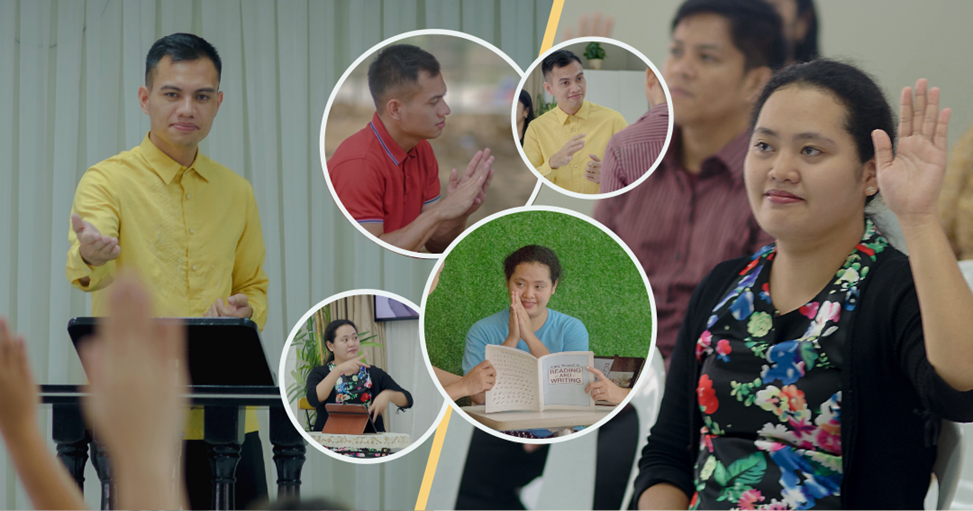
peaceful communities. Starting in the 1940s, they have continuously operated free literacy classes around the world using the study aids Learn to Read and Write and
Apply Yourself to Reading and Writing. Edwin and Rogelly quoted above were among those worldwide that have benefited from this program.
“One of Jehovah’s Witness patiently helped me learn sign language. The world that I once believed was bleak and confined turned out to be warm and broad. To be able to read, write, and communicate with others opened a whole new world of opportunity for me. It gave me a fresh start in my life, it was so liberating,” said Edwin, who is now one of Jehovah’s Witnesses.
“I was deeply moved and grateful for God’s gift of language. Not only that I can communicate well, read and write, but I also have the privilege of teaching other deaf ones to learn from the Creator,” says Rogelly.
“For many people, the ability to speak and be understood by others is a source of genuine fulfillment. They feel like they belong and integrate into the community when they can read and write.” said Ruel Palle, a volunteer and minister of Jehovah’s Witnesses residing in Cagayan de Oro. “But besides all of these benefits, what gives them real happiness is the hope that is in store for them found in the Bible.”
In addition to offering literacy classes, Jehovah’s Witnesses have also incorporated
such textbooks as Benefit from Theocratic Ministry School Education and Apply
Yourself to Reading and Teaching into their weekly meeting programs. Even during the
pandemic, when their meetings were held primarily by videoconference, families
continued to benefit from this instruction.
Normito Zapata Jr., a father of two, from Los Baños, Laguna, encouraged his children not to neglect their literacy skills. He says: “Literacy is a foundation skill that is important in almost all aspects of life. Mental, emotional and spiritual developments cannot be achieved without literacy.”
Normito adds that his children benefit from the training provided at the midweek meeting of Jehovah’s Witnesses. “The midweek meetings definitely help our children improve their reading and communication skills. The kids use the audio recording of the Bible to check correct pronunciation and modulation. It helps them read with conviction and confidence. Their participation in Bible reading helped them to develop public speaking skills, good posture and proper dress and grooming,” he said.
The public is invited to attend meetings of Jehovah’s Witnesses. No collections are
taken. Those in attendance are taught how to improve their literacy skills with the
objective of learning more about the Bible. Selected meetings are held in Filipino Sign Language. Admission is free and no registration is required. Details on when and where these meetings are held locally, as well as articles on the efforts of the Witnesses to promote literacy, are available on jw.org, the official website of Jehovah’s Witnesses.