Skip to main content 
THE country’s cooperative sector is emerging out of the footnotes of Philippine economic development as it formally offers to Malacanang its bid to acquire, operate and manage the Agus-Pulangi Hydro Electric Power Plant.
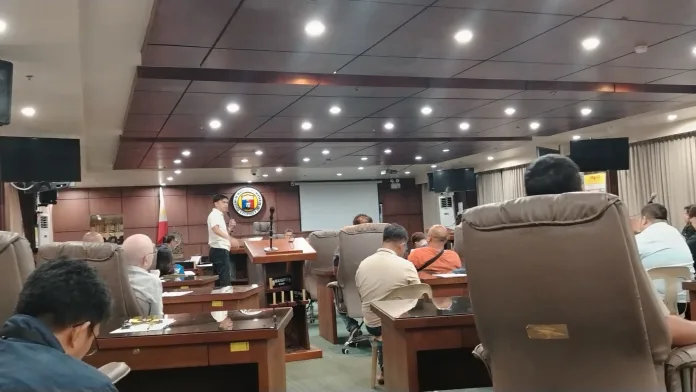
In yet another show of force, more than 5,000 cooperative members from all over country will converge at the Atrium of the Limketkai Center today to formally offer to Malacanang their bid to operate and manage the Agus-Pulangi Hydro Electric Power Plants (HEPP) which has the capacity of supplying half of Mindanao’s power needs.
1Mindanao Energy Cooperative (1MIECOOP) federation chairman Glicerio Tan said that the cooperatives’ bid to “acquire, operate and manage the privatization-bound Agus Pulangi hydropower complex is not as a capitalist representing a financial interest, but as consumer-owners who continue to should all the cost electricity.”
He said the alternative being offered by 1MIECOOP is a better alternative to giving the Agus-Pulangi HEPP to private corporations who are blamed for exorbitant power rates in the country.
If realized, the acquisition of the Agus-Pulangi will be in accordance with cooperatives’ mandate of promoting the equitable distribution of wealth, primarily to the electricity consumers of Mindanao and serve as a socio-economic model that would spur inclusive growth and development in Mindanao and will give real life to the meaning of transformative cooperative development.
Cooperative Development Authority Chairman Orlando Ravanera, a Cagayanon who was appointed to head CDA for the next six years last March, has crafted a roadmap for cooperatives to fulfil the social contract of President Aquino with the Filipino people (as manifested by E.O. 43, series of 2011). The President’s social contract focuses on government to address (1) Transparent, accountable, and participatory governance; (2) Poverty reduction and empowerment of the poor and the vulnerable; (3). Rapid, inclusive, and sustained economic growth; (4) Just and lasting peace and the rule of law; 5. Integrity of the environment and climate change adaptation and mitigation.
Ravanera also said that the 1MIECOOP’s bid to acquire, operate manage the Agus-Pulangi is a manifestation of the development path of the country’s cooperative movement.
President Aquino expressed his appreciation to the cooperatives’ efforts saying he is grateful for the cooperatives “solidarity in his agenda of change.” He referred the bid of the cooperatives to the Department of Energy.
His partymate and former energy secretary Jericho Petilla along with Department of Energy Officer-in-Charge Zenaida Monsada are attending today’s event to accept the bid of the 1MIECOOP. Ravanera, along with Petilla and Monsada will ceremonially turnover to the 1MIECOOP’s certificate of registration as a cooperative federation from the CDA.
1MIECOOP will raise the needed capital to operate and manage the Agus-Pulangi HEPP. To address the capital requirements to acquire the operations and management agreement of the Agus Pulangi, the 1MIECOOP will raise capital by collecting P100 a month for one year from members of cooperatives that have joined the 1MIECOOP – a cooperative federation. With around three million members, 1MIECOOP projects is seen to raise P3.6 billion in one year.
1MIECOOP can even raise the stake higher with billionaire cooperative throughout the country shelling out bigger capital contribution.
While acknowledging the opposition to the privatization of the Agus Pulangi hydro facilities as provided by the Energy and Power Industry Reform Act (Epira), Pete Ilagan, president of the National Association of Electricity Consumers for Reform (Nasecore), said the cooperative option is a better option.
“Lamentably though, privatization has also unreasonably increased the cost of basic services beyond consumer affordability, allowing the accumulation of enormous private profits,” Ilagan admits.
“But there is a better way to privatization: cooperativization. Yes, the cooperative way, meaning, cooperatives bidding for government assets and undertaking public infrastructure projects,” Ilagan argues.
The 1MIECOOP in a position paper said giving them the operation and management of the Agus-Pulangi HEPP would “put consumers’ interest above the interest of the private and public corporations.” It added that their offer is also most expedient.
Ravanera meanwhile said that “cooperativising” the Agus-Pulangi “is simply putting the power generation facility in the right hands and away from the profit-taking,” adding that the CDA, as the government’s regulatory agency for cooperatives would make sure that once the operation and management of the Agus-Pulangi HEPP is given to 1MIECOOP, the CDA would closely monitor it to protect the interests of the power consumer-owners.
Under the EPIRA, all government-owned generation plants should be privatized. Opposition to the privatization of the Agus-Pulangi over fears of drastic power rate hikes has delayed the implementation of this mandate of the law in Mindanao.
Under the operation and management of the cooperative, 1MIECOOP said the low generation cost of the Agus Pulangi HEPP will be protected and maintained. Currently, the hydro power plants’ generation rate is at P2.96 per kilowatt hour.
The Napocor sells this at P5 per kilowatt hour to power distribution utilities. Under a privatization scheme run by corporations, there are fears that the price per kilowatt hour of the Agus Pulangi will double or triple to be in parity and with diesel and coal.
The 1MIECOOP proposes the acquisition, maintenance, operation and rehabilitation of the Agus-Pulangi HEPP with no adjustment to its current price for the next 15-20 years, except for price adjustments to cope with inflation. It also plans to absorb all current personnel of Napocor operating the Agus-Pulangi HEPP.
Currently, because of maintenance constraints, the hydro electric facility is only generating a third of its installed capacity, resulting in power shortage in the country’s second biggest island, discouraging domestic and foreign investments.
The 1MIECOOP includes rehabilitation of the generation facility to get optimal production and cope with the island’s increasing demand.
“Not many Filipinos know the financial strength of cooperatives; in fact, a number of billionaire cooperatives exist in their midst. Realizing this financial power, cooperative leaders of the six Mindanao regions have formed 1 Mindanao Energy Cooperative,” Ilagan said.
“Cooperativizing” the biggest power plant in Mindanao is not only democratization of the power sector, but as Ilagan adds, “genuine people’s cooperatives are offering an economic model for social entrepreneurship that can address poverty and conflict in Mindanao.”
For his part, Tan said, 1MIECOOP represents the interest of all electricity consumers in Mindanao, with electric meters to their names; and it is committed to invest their combined financial resources in the cause of advancing consumer empowerment with the end in view of alleviating poverty in Mindanao.”
The Agus power plant complex consists of six cascading power plants snaking from the mouth of Lake Lanao in Marawi City down to the Maria Cristina Falls in Iligan City.
Strategically located along the Agus River, these hydroelectric power plants help fuel the economy of Mindanao by providing a steady supply of cheap and reliable electricity.
Meanwhile, the Pulangi facility is a 255-mw hydroelectric power plant located in Maramag, Bukidnon and has three generating units using the most advanced hydro electric power technology.
Sections