THE Misamis Oriental Regional Trial Court Branch 38, presided over by Judge Emmanuel P. Pasal, has denied the issuance of a Temporary Restraining Order (TRO) sought by several petitioners against the Local Water Utilities Administration (LWUA).
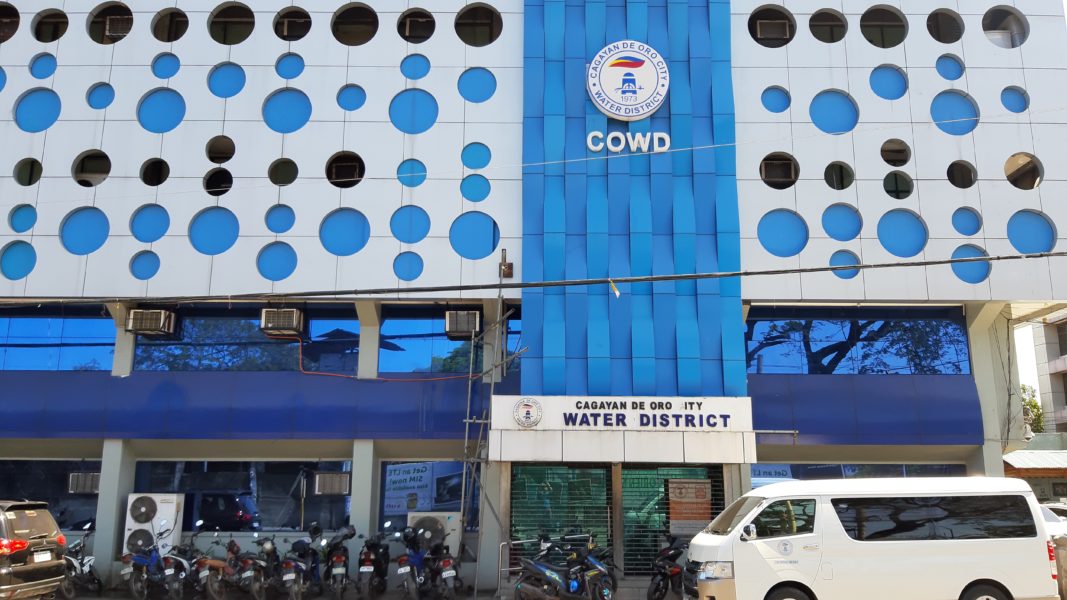
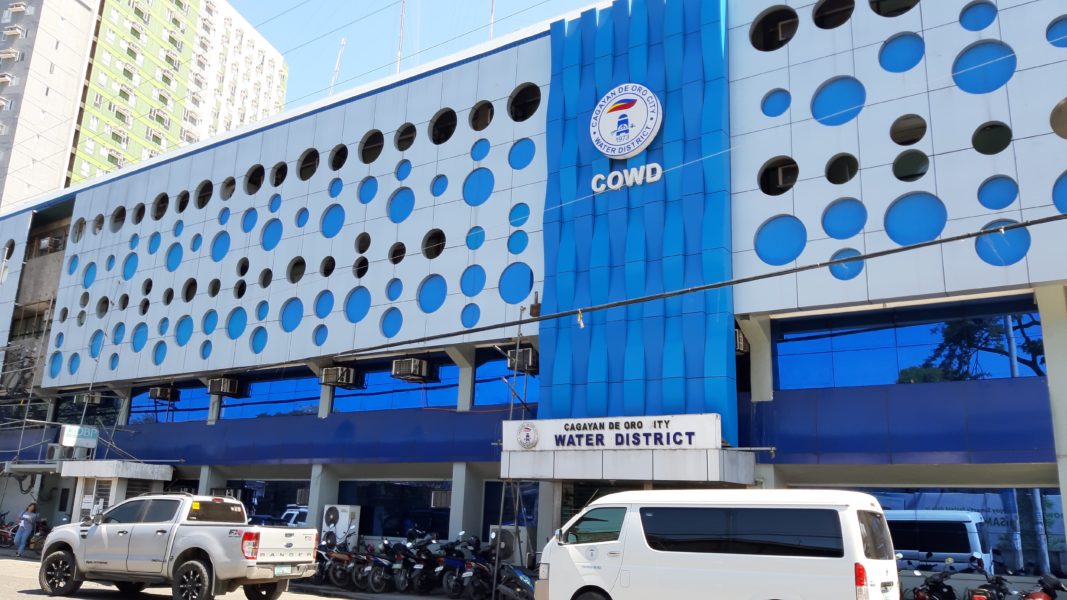
The case, docketed as Civil Case No. R-CDO-24-02070-SC involves petitioners Nelia Balandra Lee, Gerry J. Cano, Janet Carvero Floirendo, and Antonio B. Young, who challenged LWUA’s intervention in the operations of the Cagayan de Oro City Water District (COWD).
Following the court’s decision, Antonio Young provided an update via text message last Friday.
“Naka MR (Motion for reconsideration) na at na raffle na sa branch 41 dahil nag inhibit si Judge Pasal. For [schedule] hearing pa,” Young told Gold Star Daily.
The case’s reassignment to a new branch suggests that the petitioners are hoping for a different outcome under a new presiding judge.
The dispute began when COWD received a letter from LWUA on May 29, 2024. The letter indicated that LWUA would take full control of COWD’s operations, setting aside the regular board of directors and limiting the powers of the General Manager.
LWUA’s intervention was purportedly due to COWD’s failure to meet certain operational standards.
The petitioners argued that LWUA’s intervention was unwarranted, citing Section 36 of Presidential Decree 198, which stipulates that such intervention is only applicable when COWD is in default of its payments to LWUA.
In this case, it was contended that COWD had overpaid LWUA, making the intervention unjustified.
In their plea, the petitioners requested the court to issue a status quo ante order, which would restore the situation to its state before LWUA's intervention.
However, the court treated this request as a plea for a TRO due to procedural constraints and the specific nature of status quo ante orders.
Pasal noted that a status quo ante order is a unique remedy that can only be issued by the Supreme Court. Unlike TROs and preliminary injunctions, a bond is not required for a status quo ante order.
Consequently, lower courts lack the authority to issue such orders. The court thus proceeded to evaluate the petitioners' plea as a request for a TRO.
Under the law, the issuance of a TRO requires the presence of four requisites: a clear and unmistakable right to be protected, a substantial invasion of that right, an urgent need to prevent irreparable injury, and the absence of other adequate remedies.
The Supreme Court has consistently emphasized these criteria in its rulings.
Judge Pasal acknowledged that the petitioners, as members of the COWD board and its General Manager, had a right to perform their duties.
However, he pointed out that COWD had failed to supply water to the residents of Cagayan de Oro City for some time, which justified LWUA’s intervention to some extent.
Crucially, the judge found that the petitioners did not demonstrate that they would suffer “grave and irreparable injury” if the TRO was not issued.
The court noted that the deprivation of their right to exercise their duties did not constitute irreparable harm, particularly in the absence of claims that their compensation was being withheld.
Judge Pasal concluded that the question of whether LWUA had the authority under PD 198 to take over COWD’s operations could only be resolved in a full trial. Therefore, the court denied the petitioners’ request for a TRO.
In his order issued on June 13, 2024, Judge Pasal stated, “Depriving them of their right to exercise their duties will not result in injury absent allegations that their usual compensation was also withheld.
Even if withheld without basis, the same is capable of pecuniary estimation.”
Both parties are now preparing for the next phase of the legal battle, which will involve a detailed examination of the merits of the case.
The outcome of the trial will determine the future operations of COWD and the extent of LWUA’s authority in managing local water districts.