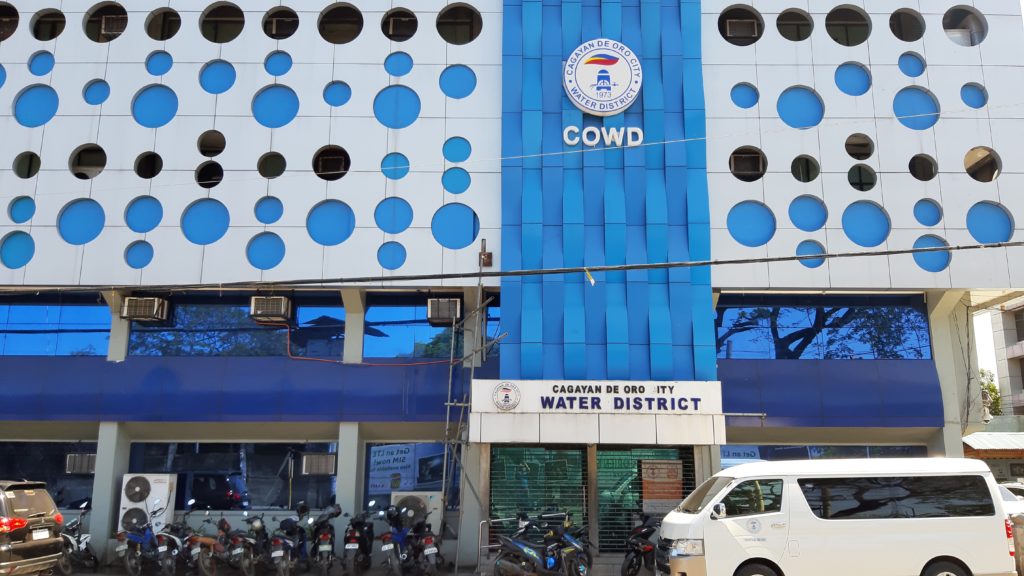
THE regular management of the Cagayan de Oro Water District (COWD), led by General Manager Antonio Young and the board of directors, has likely regained control of the COWD after taking back the general manager’s office yesterday.
“I am sure the reasons are not the same as why the interim officer ransacked, changed the lock, assigned a dedicated guard 24 hours, and occupied the COWD GM office without due notice,” said COWD Board of Director Gerry Caño.
He said this was even different from the controversial takeover by the Local Water Utilities Administration (LWUA) on May 29, and the Interim General Manager occupied the General Manager’s office.
Like Caño, Young mentioned that their return caused significant employee unrest, with reports of threats and harassment from the interim management.
“Tensions have been escalating since the takeover, leading to a climate of fear and uncertainty within the office,” said Young.
Young also led a group that entered the COWD building during a rally outside and went to the General Manager’s office on the second floor.
Fermin Jarales, the interim general manager, was not in the office then and later claimed that Young’s group had acted unfairly. He accused them of ransacking the office, further fueling the conflict.
“That’s ransacking,” remarked Jarales, noting that it occurred openly in front of the public.
To solidify their position in front of some media reporters, Young’s group changed the lock on the General Manager’s office door and occupied it.
This aggressive move was met with strong opposition from Jarales, who insisted he had been legitimately appointed as the interim General Manager by LWUA.
The interim management, appointed by LWUA, earlier issued a cease and desist order to Young and the board of directors, demanding they stop interfering with their investigation.
According to Jarales, this legal maneuver aimed to maintain the interim management’s control over the office and its operations.
A dedicated guard was assigned to the office 24 hours a day, highlighting the seriousness of the conflict and efforts to secure the premises against further disputes.
From the beginning, the COWD board and management opposed LWUA’s takeover, calling it illegal and unsupported by necessary legal documents.
They argued that the takeover was an overreach and lacked the proper legal foundation.
Young pointed out several legal points supporting their opposition. He cited PD 198 Sections 36 and 61(e), which outline the governance of water districts, as well as opinions from the Office of the Government Corporate Counsel (OGCC), Department of Justice (DOJ), and Commission on Audit (COA).
“These opinions, along with a local government resolution, opposed the intervention,” Young said.
However, there is a memorandum circular of the Department of Interior and Local Government 2016-146 that reminds local authorities that water districts are not under the jurisdiction of any political subdivision and that these water districts are autonomous agencies independent of local governments.
Young also explained that tension inside the COWD office has increased due to alleged threats and harassment from the interim management.
Employees have reported a hostile work environment, complicating the situation further.
He cited the Financial Assistance Contract between COWD and LWUA from May 1996 to support the board’s position. According to Section 5, Article V of this contract, LWUA can only take over the water district’s operations without judicial process if arrears reach the equivalent of six months’ payments.
Young said that according to a letter from LWUA dated April 11, 2024, the COWD Loan balance is P11,920,508.35. Young highlighted that this balance includes an overpayment of P609,726.55.
The contract details the financial arrangement and penalties for arrears, emphasizing that only significant, prolonged financial delinquency would justify LWUA’s intervention.
Young argued that the interim management’s actions were premature and unjustified.
Caño echoed Young’s sentiments, questioning the motives behind the interim takeover.
He suggested that the reasons given by the interim officers were not truthful and that their actions lacked due notice and proper justification.
The unrest has reinforced the board’s resolve to oppose the takeover.
They argue that the takeover was based on incorrect interpretations of the financial health and governance of COWD.
According to COWD officials, LWUA’s intervention has disrupted normal operations and created a hostile work environment.
The climate of fear and intimidation reported by employees has further strained the situation.
COWD’s management and board are determined to restore stability and proper governance.
They are calling for an independent investigation into the takeover and the actions of the interim management.
Young asserted the need to ensure that such overreach does not happen again.
In the coming days, COWD plans to engage with stakeholders, including the local government and regulatory bodies, to address the fallout from the takeover and seek support for their position.
They aim to ensure that the water district can operate within the established legal framework without unwarranted interference.
As the situation develops, the COWD board and management remain committed to serving the community and maintaining the integrity of their operations.
They are hopeful that their efforts will lead to a resolution that upholds the rule of law and principles of good governance.