By SHIELA MAE BUTLIG, Correspondent
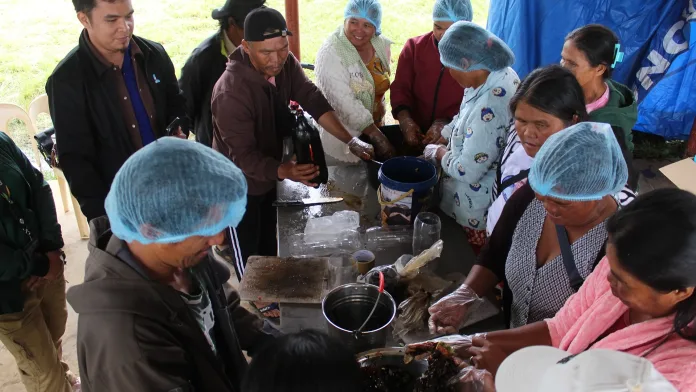
NORTHERN Mindanao is now boosting the production of patented, better textile designs and products following the Department of Science and Technology's (DOST) Philippines Textile Research Institute (PTRI) launched the silk filature facility in Villanueva, Misamis Oriental, Tuesday.
Under the DOST, PTRI was the one who takes the research and mandated to conduct the search for fabrics that can only be seen here in the Philippines.
PTRI science research analyst Vincent Salon, said the process of silk fabrics started on growing the worms by making them eat mull berries.
“The worm will eventually produce cocoons, the cocoons will then be extracted and processed through the help of this newly installed filature facility to get raw silk,” said Salon.
This raw silk was being processed and was weaved to make it a fabric, he said.
Salon added the filature machine worth P10 million was purchased in India, last year, that will be used on extracting the silk yarn from cocoons.
The said launching were attended by former presidential spokesperson Salvador Panelo, Department of Tourism Region-10 regional director May Salvaña Unchuan, and presidential fashion consultant Mimi Parrel Pimentel, a Mindanao silk advocate.
Pimentel who is a long-time fashion designer said that silk is globally in demand but the problem is the difficulty to produce silk fabrics due to lack of machinery.
“Now it has ended since the filature facility is officially installed and launched,” said Pimentel.
The market for silk is big and it is global, said Pimentel, adding that the production is the problem because it’s still weak due to the lack of machineries.
Since, 2016, Pimentel said she started with series of fashion shows abroad promoting the Mindanao silk.
“Clients are looking for filipinianas and barongs. Patok sya sa ibang bansa,” she added.
Pimentel continued that once these silk farmers could already produce a volume of silks she will eventually continue to promote the fabric abroad.
"Each yard costs P600 medyo mahal kasi handwoven s'ya, so the weavers can finish only one yard a day,” she said.
Pure silk barong costs like P10,000 to P15,000 as she explained.
In addition, former presidential spokesman Panelo promised to help silk farmers by giving capital once seated in the Senate.
“Kailangan iyong gustong mag invest dito bigyan mo nang capital, bigyan nang incentives para maraming mag invest para lumago ang industriya nang silk,” he said.
He added that it's a must to train the Filipinos to create like this silk fabric.
Meanwhile, DOT regional director May Salvaña Unchuan said filature machine is needed in order for the weavers to produce more silk fabrics.
For the DOT's part, Unchuan promised to give pieces of training for women who are interested to weave much more that there is a big demand for silk globally.