CAGAYAN de Oro City — Fake scholarship announcements, fraudulent job offers and hacked social media accounts can put entire communities at risk, prompting the Department of Information and Communications Technology (DICT)-10 to urge youth leaders to strengthen cybersecurity awareness.
The agency called on Sangguniang Kabataan (SK) officials to promote safer online practices, protect their digital accounts and report cyber incidents to authorities.
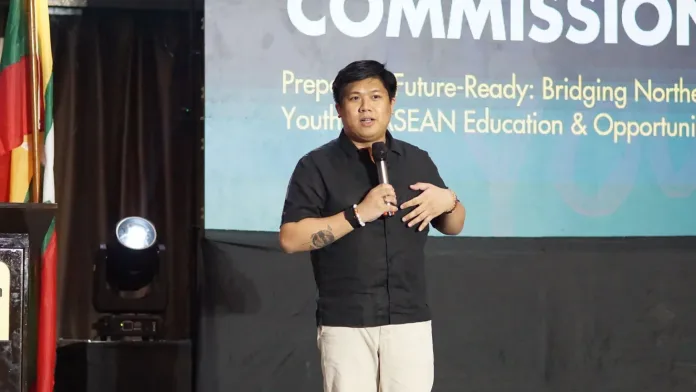
“Cybersecurity is a shared responsibility,” said Acmilah M. Macabuat, administrative and finance division chief of DICT-10, during the ASEAN Multisectoral Forum in Cagayan de Oro City on Oct. 29.
She said SK officials have an important role in protecting young people because their social media pages and other digital platforms serve as communication channels for their communities.
A compromised SK account, for instance, could be used to circulate fake scholarship announcements or fraudulent grant offers, potentially misleading residents who trust official youth council pages.
Macabuat identified phishing, fake scholarship and job offers, cyberbullying, deepfakes, misinformation and privacy violations among the common online threats facing young people.
She also warned that scammers may trick users into surrendering bank verification codes, or one-time passwords (OTPs), by posing as legitimate service providers.
To reduce these risks, she advised users to create long, unique passwords, avoid predictable combinations such as names and birthdays, and never reuse passwords for social media, email and online banking accounts. She also recommended using password managers.
With artificial intelligence making manipulated images, videos and voices more convincing, Macabuat urged users to verify suspicious messages and requests, especially those involving money or sensitive information.
“Digital confidence is not the same as digital security. We can be very comfortable with technology while unknowingly exposing ourselves to risk,” she said.
She also encouraged victims of online scams and account hacking to report incidents instead of keeping silent out of embarrassment.
“The bigger mistake is allowing criminals to continue without taking action,” Macabuat said, explaining that incident reports help authorities identify patterns, assess problems and coordinate responses.
Her discussion was part of the ASEAN Multisectoral Forum organized by the Philippine Information Agency in Cagayan de Oro City on Oct. 29, with the theme “Connecting Northern Mindanao to ASEAN Through Innovation, Education and Digital Transformation.” (With a report from Apipa Bagumbaran/PIA-10