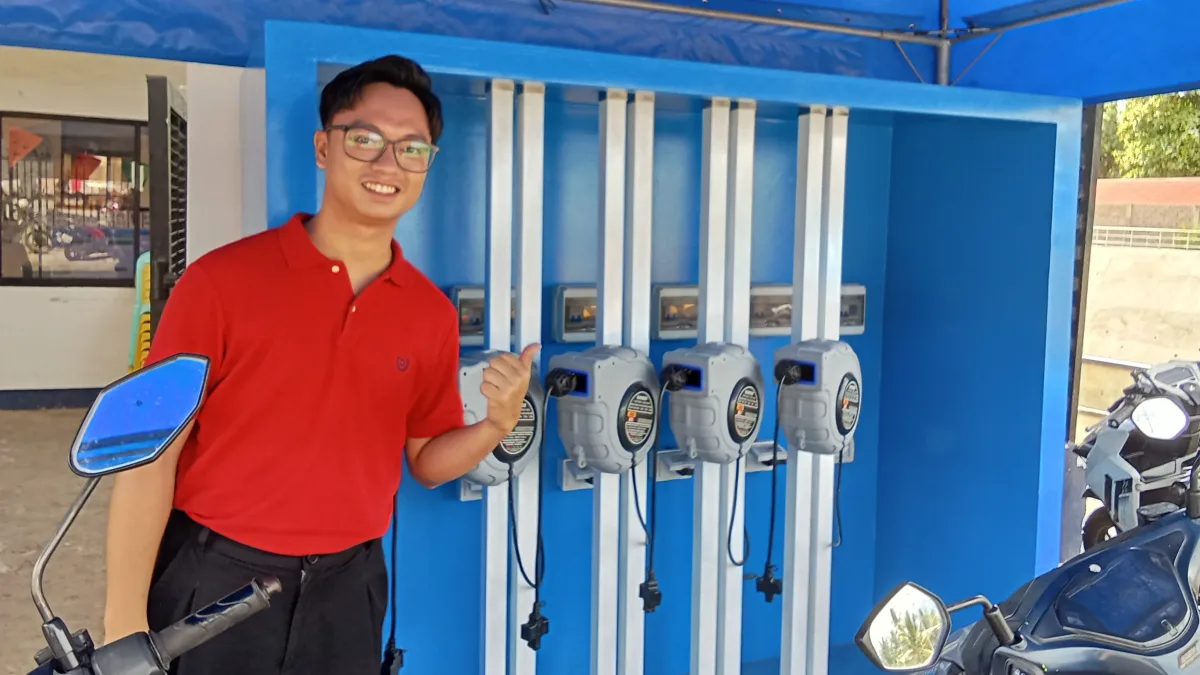
GINGOOG City — Residents of Barangay 9 will soon be able to charge their electric bikes for free as the barangay prepares to open four solar-powered charging stations at its hall.
The stations, worth ₱80,000, have already been installed, but still need electrical connections before they can operate, Punong Barangay Louie James C. Jaminal said.
The initiative aims to help e-bike owners reduce transportation expenses amid rising electricity and fuel costs. Jaminal estimated that seven to 10 households in the barangay currently own e-bikes.
The project is part of the barangay's energy-saving efforts under Project NOYBE, or Nurturing of Opportunities and Yielding Better Economies, which includes energy security among its five priority areas.
In April, Jaminal issued an executive order creating a task force to address the energy crisis at the barangay level as fuel and electricity costs rose amid tensions in the Middle East.
The barangay hall already provides free cellphone charging and charging for other electronic devices, particularly during power interruptions. These services are available around the clock.
The e-bike stations are part of a larger solar power project at the three-storey barangay hall, which cost an estimated ₱600,000 and was funded through the barangay's 20-percent development fund.
Since 2025, the building has been using 16 solar panels with a combined capacity of 21 kilowatts.
Its hybrid system stores solar energy in batteries and automatically switches to electricity supplied by the Misamis Oriental II Rural Electric Service Cooperative (MORESCO II) when stored power runs out.
Jaminal said the barangay hall's monthly electricity bill has dropped to around ₱600 to ₱800 from ₱2,500 to ₱3,000 before the solar installation.
He said the earlier bills were recorded when the building had no air-conditioning units and fewer appliances. Despite the addition of two air-conditioning units, a refrigerator and computers, the monthly bill has remained within the lower range.
Based on the savings, Jaminal estimated that the barangay could recover its investment in the solar project within three to five years.
Once operational, the four charging stations are expected to extend the benefits of the barangay's solar investment to residents who rely on electric bikes for daily transportation.