CAGAYAN de Oro City — Borrowers should check whether a lending company is authorized to operate before taking out a loan and know their rights when collectors use threats, harassment, or other prohibited practices, a Securities and Exchange Commission (SEC) official said.
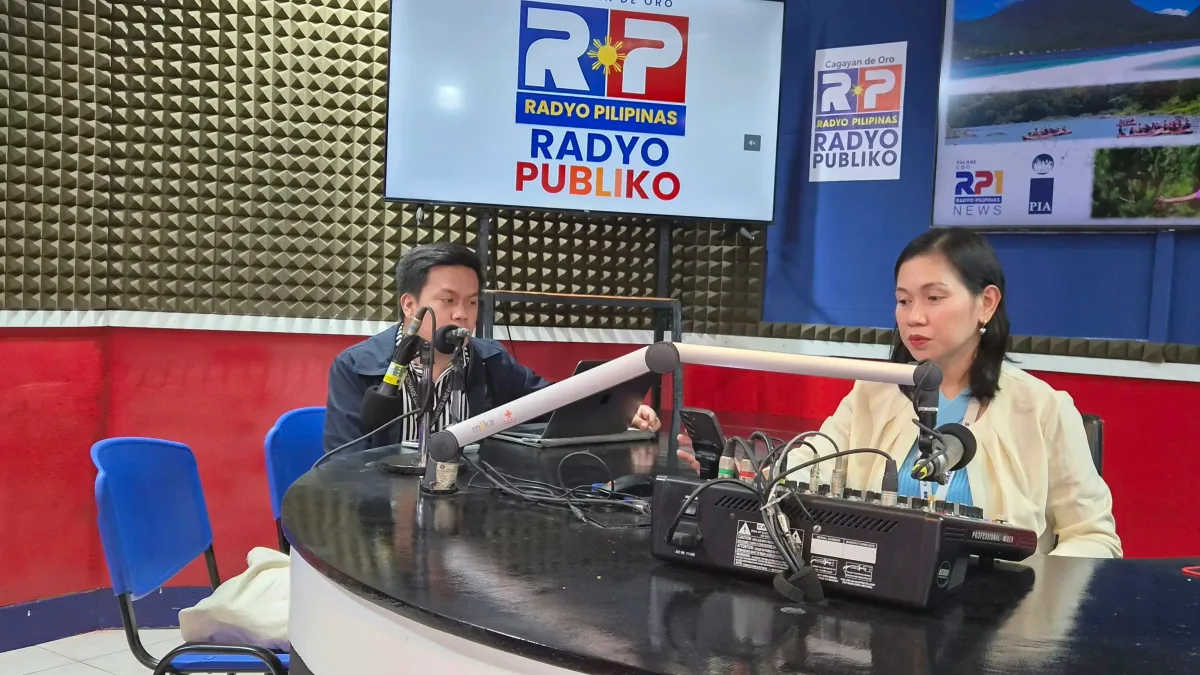
Neil Maynard Conde, communication officer of the SEC-Cagayan de Oro Extension Office, discussed the agency’s online services, corporate reporting requirements and borrowers’ rights during his guesting on the Philippine Information Agency-10’s Lambo Dyes radio program on Oct. 7 over DXIM Radyo Pilipinas Cagayan de Oro.
Conde also explained how corporations can use the SEC’s online platforms to register, submit required reports, and request documents.
“Everything is online. All corporations that wish to register with the SEC must go to esparc.sec.gov.ph,” he said.
Applicants must submit the required information and documents for their incorporators and officers. Once the requirements are met, they must submit hard copies to the SEC office for verification and issuance of the Certificate of Registration, Conde said.
Other online services include the Electronic Filing and Submission Tool (eFAST) for corporate reports, eSECURE for secure access to SEC services, ePAYSEC for online payments, and the SEC Express System for requesting corporate documents.
Corporations must also meet applicable reporting deadlines. The General Information Sheet (GIS), for example, must generally be filed within 30 days after the annual stockholders’ meeting. Late or missing submissions may result in penalties under applicable SEC rules.
Know a lender before taking a loan
For borrowers, one important safeguard is to verify both the company and the lending platform before signing a loan agreement.
Conde advised the public to use the SEC Check App, available through the Google Play Store and Apple App Store, and consult the SEC’s official lists of registered and authorized lending and financing companies.
The SEC also maintains a list of online lending platforms reported by companies. Checking a company’s name alone may not be enough, particularly when an online app or website uses a legitimate lender’s identity without authorization.
Borrowers may ask a lender to present its Certificate of Registration and the appropriate authority to conduct lending or financing activities before agreeing.
Debt collection has limits
Conde said lending and financing companies must not use unfair debt collection practices, even when borrowers have overdue payments.
Prohibited practices include threats of violence, threats to take legal action that cannot lawfully be taken, obscene or profane language, false or deceptive statements, and disclosing or threatening to disclose a borrower’s loan information to improperly pressure payment.
Collectors are also prohibited from contacting borrowers before 6 a.m. or after 10 p.m., subject to applicable rules and exceptions, and from contacting people in a borrower’s contact list who are not guarantors or co-makers.
Conde said penalties depend on the type of company and the offense. He cited fines of up to P25,000 for a lending company and P50,000 for a financing company for a first offense.
For a second offense, the fines may reach P50,000 and P100,000, respectively.
A third offense may result in a fine of up to P1 million or suspension, depending on the circumstances and applicable regulations.
Borrowers who experience harassment should preserve relevant evidence, such as messages, call logs and screenshots, and report suspected violations to the SEC through its official complaint channels.
The SEC’s guidance gives borrowers ways to check lenders and recognize prohibited collection tactics. But consumers still need to verify the specific company and platform, understand the loan terms and keep records in case a dispute arises.
The public can consult the SEC’s official website for updated lists, advisories, and complaint procedures. (With a report from Recthie T. Paculba/PIA-10)