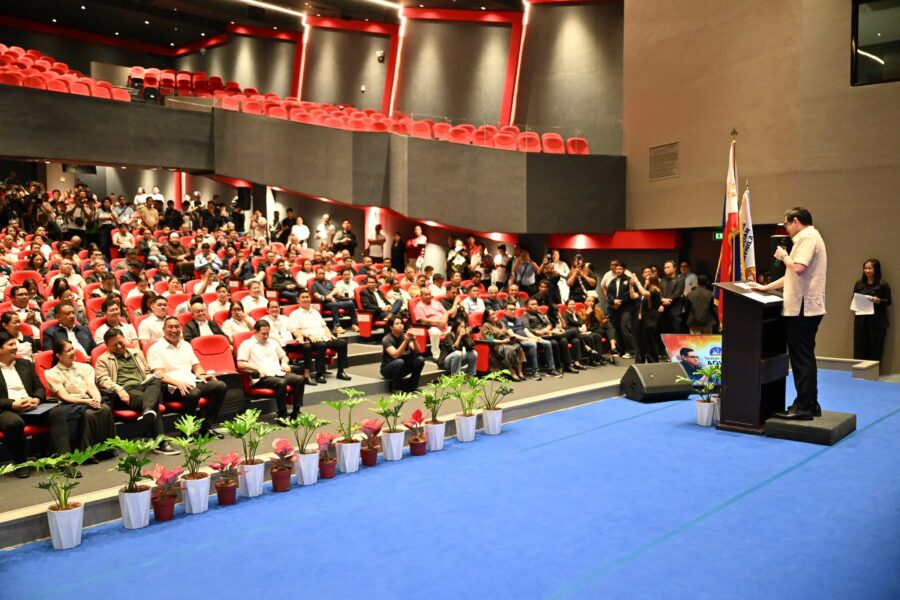
In a landmark “Bayanihan” summit, more than 200 mayors from across the Philippines gathered on Wednesday, January 28, to support a bold decentralization plan aimed at addressing the country’s chronic classroom shortage.
The Mayor’s Dialogue on Accelerating Classroom-Building was held as the Senate unanimously passed the Classroom-Building Acceleration Program (CAP) Act (SB 1482) with a 22–0 vote. Certified as “urgent” by Malacañang, the measure transfers classroom construction authority from national agencies directly to local government units (LGUs).
The initiative comes amid alarming figures. The national classroom backlog reached 166,000 units in late 2025 and could rise to 230,000 by 2028 if existing construction systems remain unchanged.
“I honestly think that the only way we can fulfill 25,000 to 30,000 classrooms for this year is if all of us build at the same time,” said Senator Paolo Benigno “Bam” Aquino IV, the bill’s principal author.
“Kung sabay-sabay po tayong gagawa ng classroom, may tyansa po tayong mapunuan yung target,” he added.
The local government edge
Under the proposed LGU-led model, funds will be directly downloaded to cities and municipalities, bypassing bureaucratic delays that have long hampered school construction.
Supporters say the shift is expected to:
Reduce costs: Classroom construction is projected to fall to ₱1.5 million–₱1.8 million per unit, down from previous estimates of ₱3.5 million.
Reach remote areas: Local leaders can better identify underserved communities often missed by national programs.
Generate jobs: The ₱66-billion allocation is expected to create more than 100,000 local jobs this year.
San Juan City Mayor and League of Cities President Francis Zamora said simultaneous construction by the country’s 1,600 municipalities and 149 cities could deliver unprecedented efficiency.
“We are ready to go,” Aquino told the mayors, noting that special provisions in the proposed 2026 national budget already allow LGUs to begin classroom projects even before the measure is fully enacted.
The summit underscored growing consensus among local leaders that decentralization may be key to closing the country’s widening education infrastructure gap and ensuring that more Filipino students have access to safe and adequate learning spaces.