CAGAYAN de Oro City — When serious allegations dominate the news, the public needs more than the claims.
Readers need to know who is making the claims, what evidence supports them, what has been checked, and what remains unproven.
This matters when different allegations involving public officials, government agencies and public funds receive different levels of attention.
Two cases show why consistent scrutiny matters: the allegations of dismissed police officer Rodulfo Gracioso Jr. and the claims made by 18 people who identified themselves as former Marines in the investigation into alleged corruption in flood-control projects.
The two cases do not have to receive exactly the same amount of coverage.
Newsrooms have to consider the news value, evidence, developments and public interest.
But the basic standards should remain the same.
Gracioso allegations need context
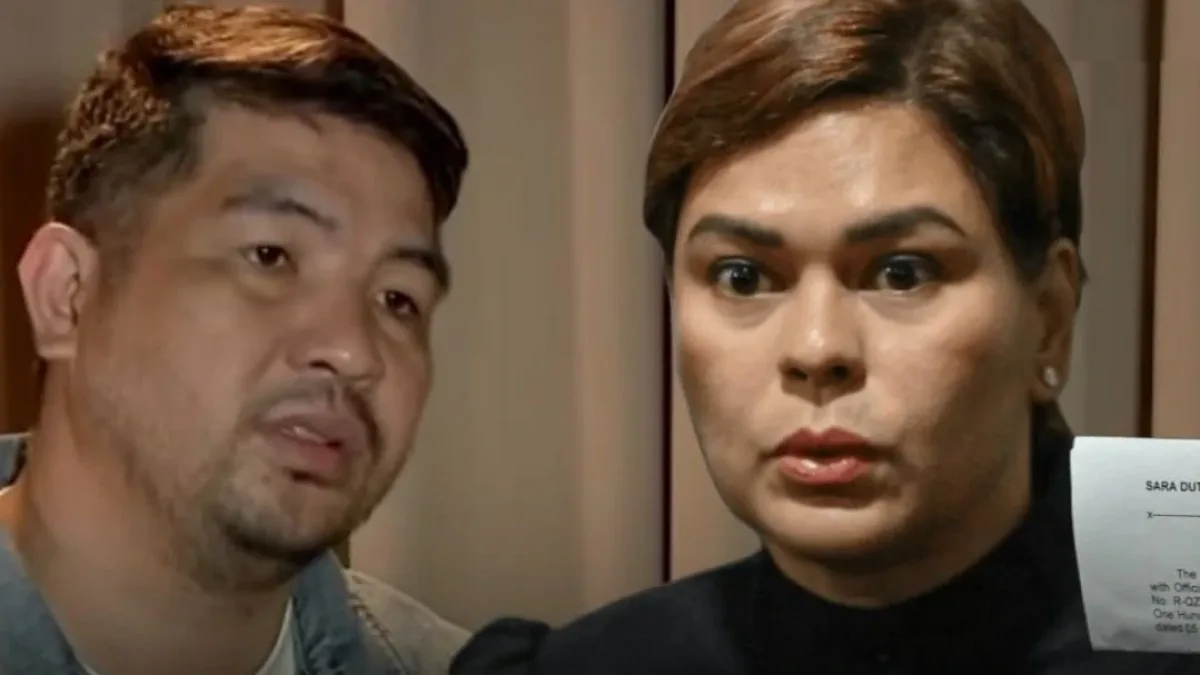
Gracioso has alleged that he delivered more than ₱2 billion in cash to Vice President Sara Duterte and other members of the Duterte family while he was working as a security aide to former House Speaker Lord Allan Velasco.
The National Bureau of Investigation has received his affidavit, and the Department of Justice is looking into his claims.
HOLDING THE LINE ON ACCUSATIONS. Vice President Sara Duterte has said she does not know Gracioso and has never received money from him. Her lawyers are preparing legal action against him over the allegations.
That response is part of the story and should be given proper space in coverage.
So is Gracioso's background.
PNP Chief Gen. Jose Melencio Nartatez Jr. confirmed that Gracioso was part of the security team assigned to Velasco. Nartatez also said Gracioso had faced an administrative case and a criminal complaint before his dismissal.
These details do not prove that Gracioso's allegations are true or false.
They are relevant because readers need enough information to assess the source of a serious claim.
The same applies to the evidence.
Claims involving alleged cash deliveries should be checked against documents, official records, financial records, photographs, communications and other independent evidence where these are available.
The public should also know what the people named in the allegations say.
What about the 18 former Marines?
The 18 people who appeared in the flood-control investigation have made separate allegations involving alleged cash deliveries to government officials.
But the term “18 former Marines” also needs context.
The Armed Forces of the Philippines said some of the individuals were no longer in active military service when the alleged acts took place. It also clarified that not all of them were former members of the Philippine Marine Corps.
The NBI has said it would investigate the allegations and examine the different angles surrounding the claims.
Again, the number of people making a claim does not by itself establish that the claim is true.
Their identities, backgrounds, individual statements and the evidence behind their allegations all need to be checked.
Investigators and journalists can examine project documents, procurement records, contracts, audit findings, payment records and other documents that may confirm or contradict the claims.
That is the same standard that should be applied to Gracioso.
The standard should remain the same
Fair journalism does not mean giving every allegation the same amount of space.
It means using the same basic standards when deciding what to publish, what to follow up and what to highlight.
For Gracioso's case, readers should be able to ask:
What do PNP and court records show about his service and disciplinary history?
Can his reported role as a security aide to Velasco be independently confirmed?
What evidence supports his allegations?
What do Sara Duterte, Velasco and the other people named in his claims say?
For the 18 people in the flood-control investigation, readers should ask:
What do official records show about their identities and military backgrounds?
What exactly did each person say?
What evidence supports their claims?
What do government audits, procurement records and project documents show?
What do the agencies and individuals named in their allegations say?
These questions do not decide which claims are true.
They help readers separate allegations from facts that have been independently established.
Accountability also applies to news coverage
The public can also ask how news organizations handle major allegations.
Are important details about the sources disclosed?
Are serious claims supported by independent evidence?
Are people accused of wrongdoing given a chance to respond?
Are allegations clearly identified as allegations?
Are follow-up reports done when new evidence becomes available?
And are the same standards used when the political circumstances are different?
These questions matter because news coverage shapes what people see, understand and remember.
The goal is not to give every allegation equal prominence simply because it exists.
The goal is to make sure that evidence, verification, news value and public interest guide coverage.
That is how journalism can hold the line between reporting an allegation and presenting it as fact.