CAGAYAN DE ORO CITY — A Lumad support network in Mindanao is urging stronger protection for Indigenous communities, teachers, and human rights workers after the Commission on Human Rights released findings calling for decisive action against red-tagging.
In a press advisory sent Wednesday, the Save Our Schools Network welcomed the CHR’s National Inquiry, saying the findings validate long-standing concerns raised by Lumad communities, church groups, and educators in Mindanao.
For communities on the ground, the issue goes beyond political labels. Advocates warned that red-tagging can expose teachers, students, volunteers, and Indigenous leaders to threats, harassment, displacement, and even violence.
Raymond Ambray said the case of the “Talaingod 13” remains one of the clearest examples of how red-tagging can affect humanitarian and education work.
Read also: Educators, clergy rally for Talaingod 13 acquittal
“Long before the filing of charges and eventual conviction, Lumad teachers, students, church workers, humanitarian advocates, and solidarity networks linked to the mission had already been subjected to relentless red-tagging and public vilification,” Ambray said.
The network said the case unfolded during heightened counterinsurgency operations under the Duterte administration, when Lumad schools and community initiatives were often accused of links to armed groups.
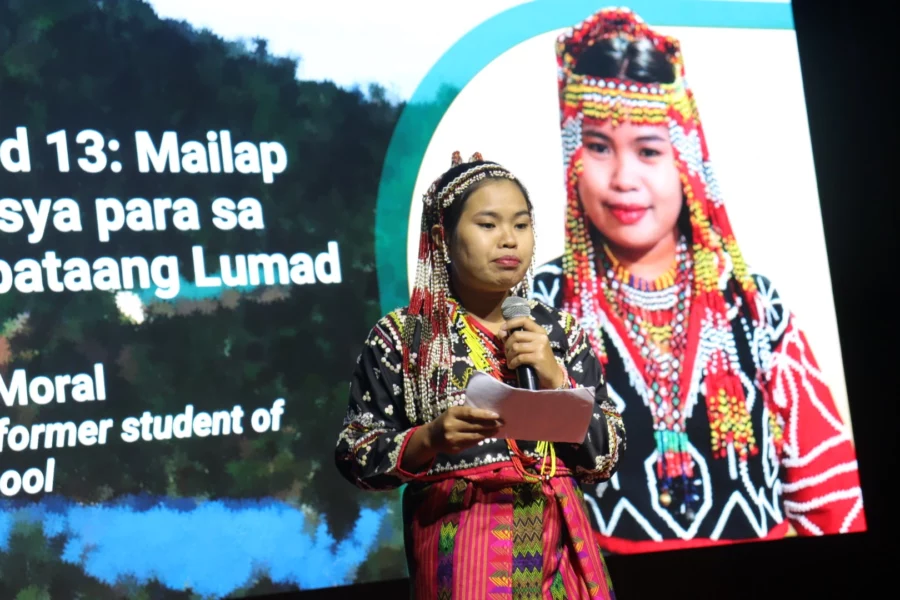
Angelika Moral said Lumad schools were established to address the lack of access to education and other basic services in remote Indigenous communities.
“Defending Indigenous children’s right to education is not terrorism,” Moral said, stressing that providing sanctuary to displaced families and advocating ancestral land rights should not be treated as criminal acts.
The group also cited the CHR’s earlier Haran Report, which documented the displacement and militarization that pushed Lumad families to seek refuge at the United Church of Christ in the Philippines Haran sanctuary in Davao City.
You may also like: Talaingod 13 ruling sets ‘dangerous precedent’ for rights defenders
The SOS Network is now urging all branches of government to prohibit red-tagging, hold accountable those responsible for rights abuses, and ensure Indigenous Peoples can access education and community services without fear or persecution.