By Cong B. Corrales,
and Joselle R. Badilla
DAVAO CITY ― In the farming village of San Jose in Lupon town, Davao Oriental, a concrete house stood out in the neighborhood for its unusual festiveness, the family hosting crowds of people over liquor almost every day.
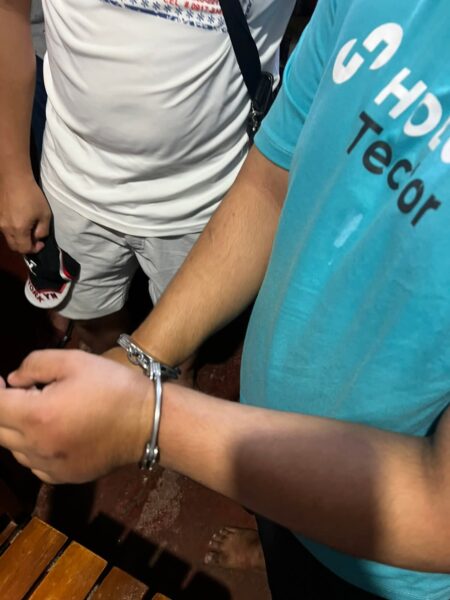
This caught the eye of law enforcers checking on a reported online sex trafficking traced to the area. When they searched the family’s home on July 1 last year on force of a warrant, authorities caught a couple and another parent directing a livestreamed sex show involving their children inside an eight-square-meter room.
NBI Southeastern Mindanao Director Arcelito Albao oversaw the rescue of five children and the apprehension of three relatives on July 1. During the investigation, the victims disclosed to social workers that their parents used harassment to ensure they followed orders inside the eight-square-meter room.
Seized from the suspects were equipment that contained digital evidence, sex toys and money transfer receipts that evidenced payments for the livestreams. The pay varies; one transaction was for P16,000, another for P125,000, depending on the client.
Read also: Combating new forms of trafficking: Internet ushers sex predators into distant homes (Part 1)
NBI agent Vicente Essex Minguez said the show “is available anytime of the day as long as there is a client” on a pay-per-view basis and is mostly for foreign audiences. The online sex den, Albao said, is likely part of a network of producers with “international handlers.”
Stern law
Authorities are banking on raids such as this to dissuade the commission of similar offenses which are now the subject of a stern law.
To address the nuances of online sex trafficking, Congress enacted on May 23, 2022, Republic Act No. 11930, or the Anti-Online Sexual Abuse or Exploitation of Children (OSAEC) and Anti-Child Sexual Abuse or Exploitation Materials (CSAEM) Act. Then President Rodrigo Duterte did not sign the measure but it lapsed into law on July 30, 2022.
The measure, which repealed the Anti-Child Pornography Act of 2009, penalizes the production, distribution, and possession of CSAEM, and imposes stricter liabilities on involved internet intermediaries and financial institutions. It carries a penalty of at least 20-year imprisonment and fines of up to P10 million.
But the law’s test is in implementation.

“It’s hard to trace (the crime) right now because it is online-based,” admits lawyer Hannah Lizette Manalili, Inter-Agency Council Against Trafficking executive director, noting how traffickers hide in encrypted channels like Telegram and the dark web.
For Staff Sgt. Idy Ann Flor Aca-ac of the Regional Anti-Cybercrime Unit in Northern Mindanao (RACU-10), staying ahead of tech-savvy traffickers is a daily challenge. Her unit now taps into the system of the National Center for Missing and Exploited Children in the United States, which feeds cyber-tip reports of abuse directly to Philippine authorities.
“We have seen results in our case buildup,” Aca-ac says, noting how the platform has improved their ability to identify offenders despite anonymized online accounts.
International cooperation
Once a suspect is identified, the cybercrime team launches intensive digital forensics work and coordinates with local police for entrapment operations.
Given that OSAEC is “a transnational crime,” the Philippine National Police—Women and Children Protection Center (WCPC) had said that combatting it requires “sustained international cooperation, advanced digital investigative capabilities and unwavering resolve.”
It highlighted the successful prosecution of several cases in the US using evidence gathered in domestic law enforcement operations and investigations.
One is that of Bradley Hounsell, 44, of Wisconsin, who pleaded guilty to “coercing and enticing a minor to engage in unlawful sexual conduct” through a local perpetrator whom he paid online. The local suspect was sentenced to 15 years in prison while Hounsell is set for sentencing by a federal court on May 14 this year.
Another is the case of John Prentice Robertson, 65, of Texas, who paid two local perpetrators more than $8,000 from 2015 to 2021 to produce for him images and videos of under 12-year-old children engaged in explicit conduct. A raid in Ozamiz City in Misamis Occidental on Sept. 27, 2023, uncovered evidence directly linked to Robertson, who was meted a 30-year prison term by a district court, for producing child pornography.
“These cases demonstrate the effectiveness of coordinated, cross-border law enforcement efforts in rescuing victims, securing digital evidence, and pursuing accountability for offenders,” the WCPC had said.
“It takes a network to defeat a network,” one US Embassy official said, citing partnerships among the Philippines, US, Australia, Germany, and others against online child abuse, bolstering local capacity – from equipment and software to investigative know-how.
Back to the streets
Locally, successful court battles, albeit taking some time, have made a dent on OSAEC incidence. In Iligan City, which used to be among the top 20 areas in the country, authorities cited the 133 convictions since 2023 as having a deterrent effect as OSAEC cases there went down.
Col. Mario Baquiran Jr., head of WCPC’s Mindanao Field Unit, said it takes an ecosystem of enforcers, tech experts, social workers, and community tipsters working in unison to win the war against OSAEC.
Col. Lemuel Gonda, RACU-10 chief, emphasizes prevention as much as enforcement. “Think before you click,” he tells parents and children at community forums – urging “zero trust” online and skepticism of anyone asking for personal details and money.

In Cagayan de Oro, Prosecutor Charisse Galarrita-Bitoon said community vigilance is still “the first line of defense,” pointing to the rumor networks as potential “unexpected allies.” She pointed to the need to teach residents to watch out for red flags in order to cultivate their ability to churn out credible reports to authorities when they notice something amiss.
The red flags include children inexplicably frequenting a particular house with permanently covered windows, a neighbor without clear income suddenly able to buy new gadgets or appliances, or adults making regular trips to money remittance centers – often the telltale signs of OSAEC operations, according to Rebelander Basilan, IJM’s media engagement officer.
In the bust in Lupon, Davao Oriental, Albao said villagers who have grown suspicious about the real activities of the suspects provided helpful information to law enforcers.
“Every report, every witness, every child we rescue – it all counts,” Bitoon said.
(This story was produced with grant support from the Philippine Center for Investigative Journalism.)