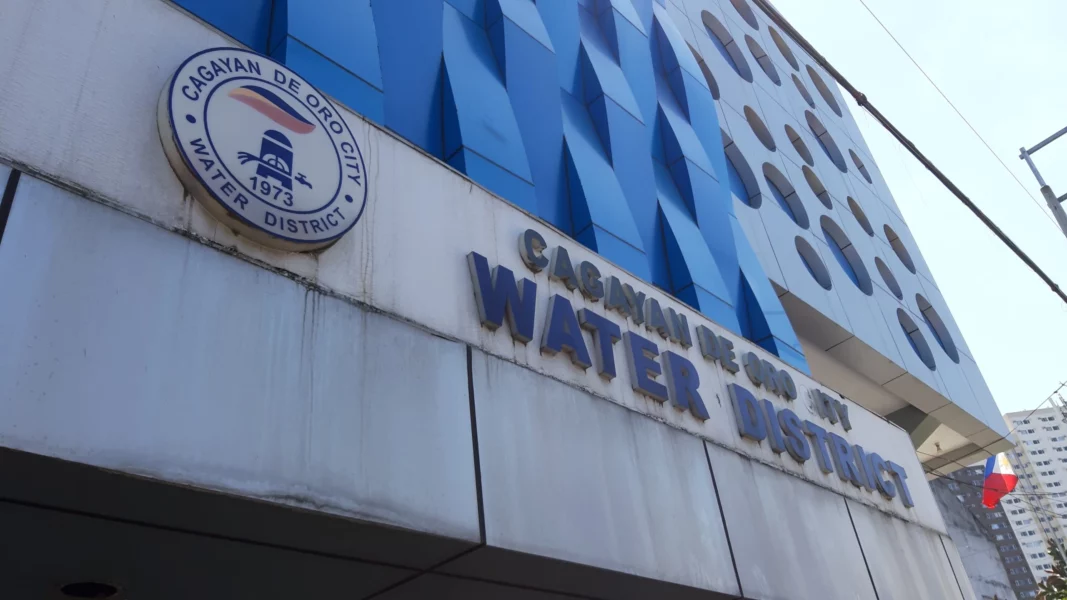
CAGAYAN DE ORO CITY — For thousands of households in Cagayan de Oro, turning on the faucet is no longer just about access to water—it is increasingly about affordability, reliability, and whether the city is getting the service it was promised.
Those concerns moved to the forefront after the Commission on Audit (COA) released a special audit report questioning the Cagayan de Oro City Water District's (COWD) bulk water supply agreement with Metro Pacific Water Investments Corp. (MPWIC).
State auditors concluded that the joint venture, originally promoted as a long-term solution to improve water supply, resulted in significantly higher costs for consumers while failing to fully deliver key infrastructure and service improvements.
Consumers paying more
At the center of the audit is a sharp increase in the cost of bulk water. Related: Higher water bills in CDO? Here’s what the COA found
Before the joint venture, COWD purchased water from Rio Verde Water Consortium Inc. at rates ranging from ₱10.45 to ₱11.52 per cubic meter. Related story: Higher water bills in CDO? Here’s what the COA found
Under the agreement with Cagayan de Oro Bulk Water Inc. (COBI), the joint venture company formed under MPWIC, the rate started at around ₱16 per cubic meter and climbed to as much as ₱21.60 per cubic meter by 2024.
COA described the arrangement as disadvantageous not only to the water district but also to consumers who ultimately shoulder the higher costs.
Auditors noted that instead of constructing an independent water treatment facility worth an estimated ₱2.4 billion—one of the project's original selling points—COBI opted to buy treated water from the same supplier already serving COWD.
As a result, auditors said the company effectively acted as a "broker" or intermediary between Rio Verde and the water district.

What residents are experiencing
Beyond the financial impact, the audit paints a mixed picture of actual service delivery.
A survey of 290 consumers revealed major gaps in water utility performance. While 62% of respondents receive a continuous 24-hour water supply, perceptions of safety are worryingly low; only 57% consider the water clean, and just 33% describe it as potable.
Physical infrastructure and service issues are further compounded by poor customer support. About 44% of consumers rated their water pressure as low, and a mere 19% expressed satisfaction with how their complaints were handled, highlighting a critical need for operational improvements.
For families dealing with weak water pressure, intermittent supply, or unresolved complaints, the findings validate concerns that have persisted despite years of rate increases.
COA warned that these deficiencies could affect public health, service reliability, and public confidence in the water district.
Infrastructure goals still unfinished
The audit also found that portions of the project's transmission facilities remained incomplete beyond the 12-month completion period required under the agreement.
Such delays, auditors said, raise questions about whether contractual obligations were fully met and whether the expected improvements in water delivery can be achieved within the intended timeframe.
The report further identified several material changes between the original proposal and the final agreement, including revisions to project scope, capitalization arrangements, and dispute resolution provisions.
Auditors also noted that the final draft of the agreement did not secure approval from the Office of the Government Corporate Counsel (OGCC), a step they said should have been completed before implementation.
A costly problem beneath the ground
The audit highlighted another long-standing challenge affecting consumers: non-revenue water (NRW), or water that is produced but never reaches paying customers due to leaks, illegal connections, or system inefficiencies.
COA found that COWD's NRW levels remained alarmingly high, ranging from nearly 50 percent to over 54 percent in recent years—more than double the 20-percent benchmark set by the Local Water Utilities Administration (LWUA).
According to COWD management, the losses are largely caused by aging pipelines, deteriorating infrastructure, illegal connections, and resource limitations.
Although the district reported reducing NRW from 57.67 percent in 2019 to 49.08 percent in 2023 through a ₱203-million rehabilitation program funded by the Development Bank of the Philippines, auditors said the figures remain far above acceptable levels.
For consumers, high NRW translates into higher operating costs, reduced efficiency, and less water available for distribution.
Failure to meet LWUA standards can also affect a water district's eligibility for incentives, financing opportunities, and future rate adjustment approvals.
COWD's response
In its official response, COWD defended the joint venture, saying it was intended to ensure the continuity of water supply and address issues raised in previous COA findings involving Rio Verde.
The water district stressed that the agreement was not designed to generate profits but to secure a stable source of water for the city's growing population.
Management also said concerns raised by auditors and government lawyers were either incorporated into the agreement, addressed through alternative measures, or could not be adopted because of legal and financial limitations.
For its part, COBI maintained that the scheduled rate increases were contractually agreed upon and necessary to account for market conditions. The company also argued that purchasing water from Rio Verde was an option explicitly allowed under the joint venture agreement.
What happens next?
COA recommended that COWD pursue legal remedies to address deficiencies in the agreement, improve service reliability, strengthen customer complaint systems, reduce water losses, and explore ways to lower bulk water costs.
The findings place renewed attention on a fundamental public service issue: whether residents are receiving value for the water rates they pay.
As water demand continues to grow, the audit shifts the debate from boardrooms and contracts to kitchen sinks and household budgets—where the real impact of every peso increase is felt.
For consumers, the question is no longer where the city's water comes from.
It is whether the higher costs are translating into the reliable, affordable service they were promised.