By Mitzi Louise Tapang, and
Dhalia Goling
CAGAYAN DE ORO CITY — Farmers across Northern Mindanao are being urged to prepare immediately as a prolonged dry spell threatens crops and livelihoods throughout Region 10.
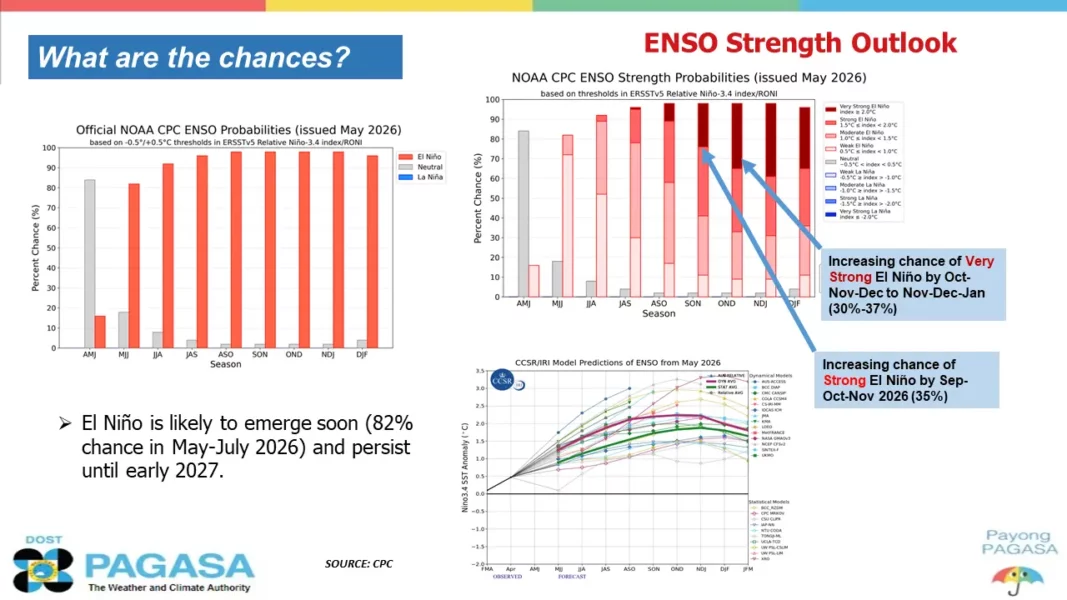
State weather bureau PAGASA reported that while Bukidnon soil conditions remain “wet” as of late June 2026, the rest of the region is already under “dry” conditions. By July, Misamis Occidental is expected to face severe dryness, with drought conditions projected to spread across all remaining regional provinces, including Camiguin, Lanao del Norte, and Misamis Oriental, before the end of the year.
Agricultural authorities warned that over 150,000 hectares of rice fields in Mindanao are highly vulnerable to drought. This systemic threat is pushing farmers to immediately adopt climate-resilient farming measures.
The Department of Agriculture-10 (DA-10) and the Philippine Rice Research Institute (PhilRice) are distributing early-maturing and drought-tolerant rice seeds. These assets are funded under the Rice Competitiveness Enhancement Fund Seed Program.
Farmers must coordinate with local agriculture offices to access recommended varieties such as PSB Rc 10, NSIC Rc 480, and Rc 572, which can withstand low-rainfall conditions. Authorities also recommend early-maturing varieties like NSIC Rc 594, Rc 596, Rc 732, and Rc 740, which can be harvested within 106 to 113 days. This timeline represents a reduction of several weeks compared to traditional rice varieties.
For areas already experiencing limited water supplies, agricultural officials advise shifting completely to low-water alternative crops. Recommended varieties include sweet potato, mung bean, peanut, and soybean.
Farmers in upland and rain-fed communities are encouraged to adopt water-saving methods to survive the dry spell. One recommended strategy is Alternate Wetting and Drying, which allows rice fields to dry for several days before reflooding.
Studies show the practice can cut water use by up to 30 percent without reducing yield. Communities are also encouraged to build small rainwater catchments and detention ponds through bayanihan efforts to store water for irrigation during prolonged drought periods.
Local government units are likewise rolling out support programs for low-deterioration irrigation systems and solar-powered irrigation facilities.
The Philippine Crop Insurance Corporation (PCIC) is urging producers to enroll in government-backed crop insurance programs before actual drought damage occurs. Farmers must first verify their registration under the Registry System for Basic Sectors in Agriculture database, which remains a core requirement for government assistance.
Under existing guidelines, registered subsistence farmers may qualify for free insurance coverage for rice, corn, and selected high-value crops. Authorities reminded producers to report crop damage within 15 days of occurrence so insurance claims can be processed promptly.
Farmers in the Kitaotao and Damulog towns of Bukidnon were identified in climate-risk assessments as among the most vulnerable due to low adaptive capacity. Agriculture officials urged farmers in these two municipalities to prioritize seed adjustments, water-saving practices, and insurance applications, as government mitigation assistance will focus on high-risk communities.