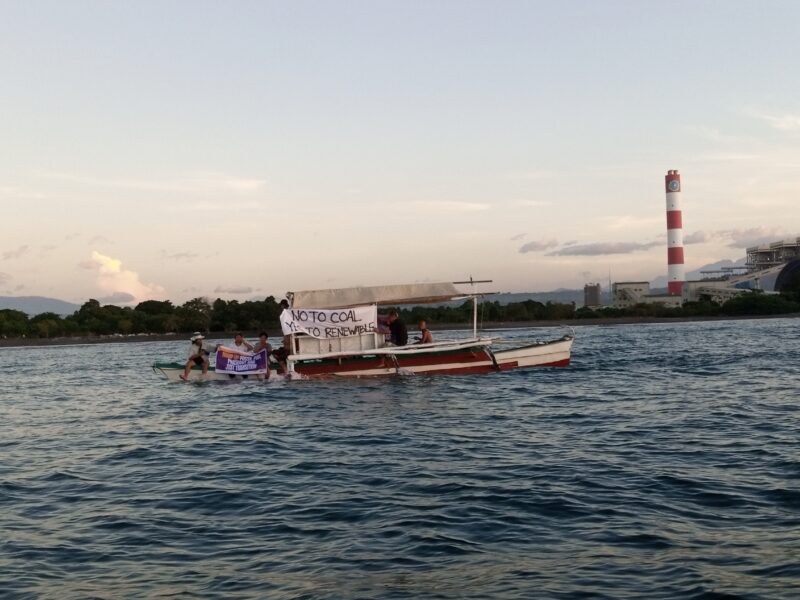
DISPLACED fisherfolk from Misamis Oriental marked World Fisheries Day with a fluvial procession near two coal-fired power plants (CFCCs) in Villanueva, calling for an end to fossil fuel use and the restoration of their fishing livelihoods.
“Diha to among balay sauna. Wala pa na ang mga planta sa coal,” said Nora Awa, a veteran fisherfolk, pointing toward an overgrown patch of vegetation between the Steag and FDC Misamis coal plants.
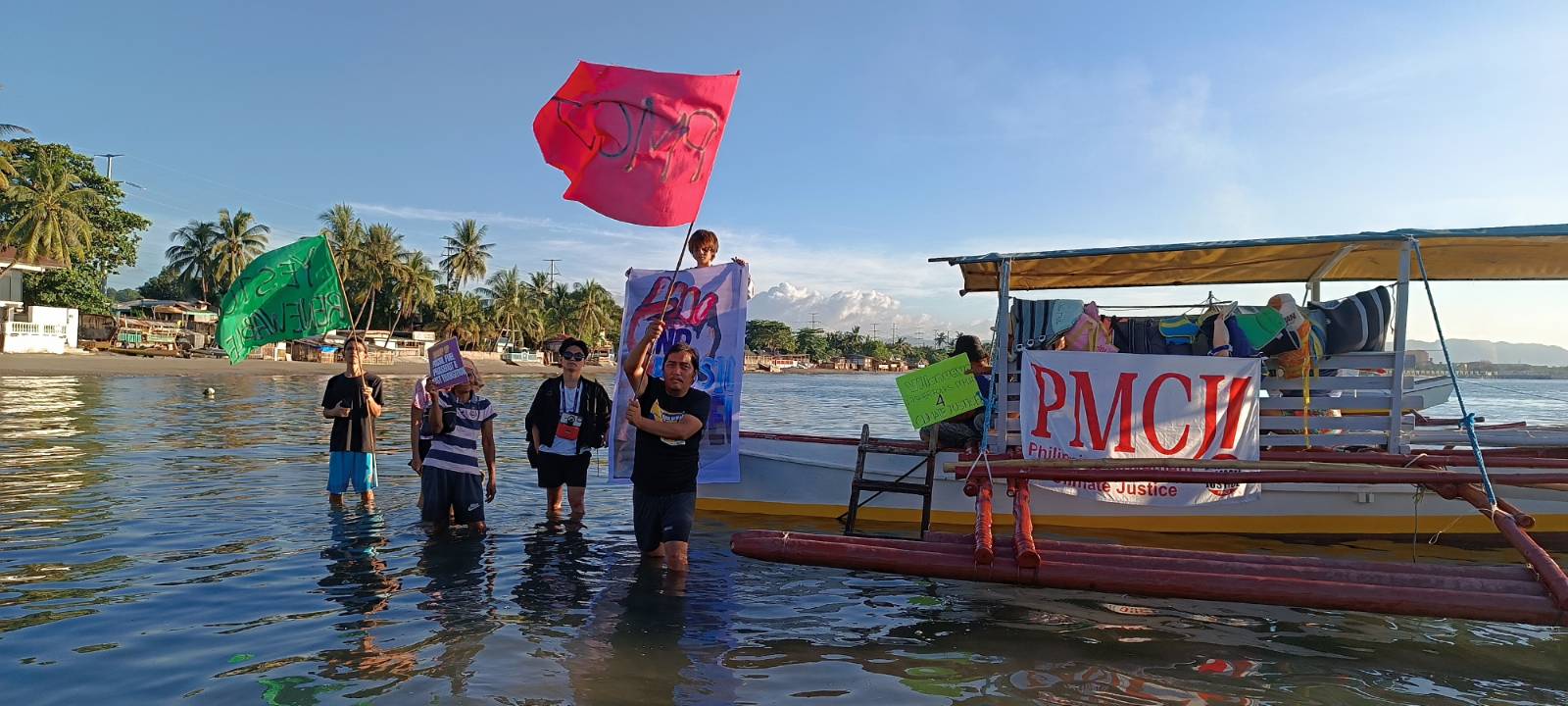
Awa and other displaced residents rode motor bancas, carrying banners and sailing past the plants in protest.
The flotilla, organized by groups such as the Old Balacanas Fisherfolk Organization, Barug Villanueva for Climate Justice, and the Philippine Movement for Climate Justice (PMCJ), was part of a global commemoration of World Fisheries Day.
Villanueva has earned the informal moniker “coal corridor of Misamis Oriental,” housing two adjacent CFCCs. A third plant, operated by Minergy Power Corporation, lies just 30 kilometers away in Balingasag.
Residents of barangays Tambobong and Balacanas were relocated to mountainous areas when the CFCCs were constructed, depriving them of their traditional fishing livelihoods.
“They were taken away from their source of livelihood,” said Lyn Sabellano, PMCJ Climate Advocate.
“In the relocation site, they can’t farm because they have no land to till. Fishing was their only means of living, and now it’s gone.”
Some residents still fish despite the distance from the coast, while others have shifted to alternative work like driving habal-habal motorcycles, a common informal transport in remote areas.
The fisherfolk are appealing to the government to allow them to return to their coastal communities and restore their access to the sea.
“Bring us back to our abundant fishing grounds, to our previous way of life!” they pleaded.
The protest highlights ongoing struggles between industrial development and the preservation of traditional livelihoods in vulnerable communities, further amplified by the growing calls for climate justice.