JOURNALISTS, civil society organizations, and fact-checking advocates across the Philippines have strongly criticized Meta’s recent decision to discontinue its third-party fact-checking program in the United States.
The move, which shifts the social media giant’s approach to a crowd-sourced “Community Notes” model, is seen by many as a dangerous rollback of safeguards against disinformation, particularly as global electoral activity intensifies.
The National Union of Journalists of the Philippines (NUJP) has denounced Meta Platforms Inc.'s plan to abandon its fact-checking initiative, warning that the move will significantly weaken safeguards against disinformation and misinformation on social media.
Meta, the parent company of Facebook, initially announced the cessation of its fact-checking partnerships in the United States, a change that observers believe will likely extend to other markets, including the Philippines. NUJP said this decision compromises the platform’s responsibility to its users, many of whom rely on it as their primary source of news and information.
“This measure benefits those in power – those with the resources to spend millions on influence operations, especially during elections,” NUJP said in a statement.
NUJP highlighted the critical role fact-checking has played in countering false narratives on social media platforms. The group stressed that fact-checking has long been part of the journalistic process, predating Facebook’s rise as a dominant information source.
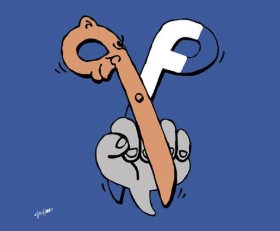
“The act of fact-checking is and has always been an essential part of our profession’s workflow, even before social media platforms came online,” NUJP said.
The Movement Against Disinformation (MAD) labeled the decision a grave threat to democratic discourse, warning that Meta’s policy change could unleash a torrent of unchecked false information.
“This shift in content moderation poses a grave threat to the already fragile information ecosystem,” MAD said in a statement, calling on Meta to reinstate third-party fact-checking and adopt stronger oversight mechanisms.
Cagayan de Oro-based Gold Star Daily echoed the concern, highlighting the critical role of fact-checking in countering disinformation, especially during election years.
“Meta’s recent announcement will undo all the efforts of netizens and civil society in combating disinformation,” Gold Star Daily’s statement reads. “Without fact-checking mechanisms, social media will become a breeding ground for more false narratives, deepening polarization and eroding trust in democratic processes.”
Local journalists and advocacy groups fear that Meta’s changes could have significant repercussions in the Philippines, where social media is a primary source of news for millions of citizens.
The country’s experience with the harmful effects of disinformation is well-documented, particularly during the 2022 national elections, when false narratives spread online were used to discredit journalists, activists, and political opponents.
Pitik Bulag, a collective of political cartoonists, expressed disappointment over Meta’s decision, noting that the removal of independent fact-checkers will exacerbate the challenges of combating disinformation.
“We are disappointed with Meta’s decision. Community Notes are insufficient warnings for users who are already struggling to discern what is true,” the group said.
The cartoonists also pointed to the arbitrary takedown of their work on Facebook, describing how Meta’s content moderation policies have already stifled their ability to raise awareness about critical issues.
“Disinformation in Philippine social media has already had a terrible effect on our democracy, as evidenced by the ongoing harassment of journalists, activists, artists, and lawyers,” Pitik Bulag said.
The sentiment was echoed by Maria Ressa, co-founder of Rappler and Nobel Peace Prize laureate.
In her Nobel speech, Ressa emphasized the importance of facts in maintaining a shared reality and trust within democratic societies.
“Without facts, you can’t have truth. Without truth, you can’t have trust. Without trust, we have no shared reality, no democracy,” Ressa said.
Critics argue that Meta’s replacement of professional fact-checking with the Community Notes model is a step backward. While the crowd-sourced notes aim to provide context and additional information on posts, experts say they lack the rigor, accountability, and transparency of third-party fact-checking.
The Iloilo-based Daily Guardian published an editorial criticizing Meta’s move, calling it a fundamental misunderstanding of the role fact-checking plays in fostering healthy democratic discourse.
“Fact-checking does not impede free speech. It enhances it by providing context and accountability,” the editorial read.
The newspaper cited research from the Proceedings of the National Academy of Sciences, which found that professional fact-checking can reduce belief in misinformation by up to 50% when implemented effectively.
The European Fact-Checking Standards Network has established protocols to ensure accountability and transparency in fact-checking processes, both of which are absent from Meta’s new model, the Daily Guardian noted.
“Meta’s withdrawal of support leaves a critical gap in our information ecosystem, particularly as we enter a period of heightened electoral activity worldwide,” the editorial warned.
One of the underlying issues is the sustainability of professional fact-checking efforts.
The Philippine Fact-Checkers Network, a coalition of media organizations and civic groups, noted that many fact-checking initiatives operate on limited resources.
The network called for sustainable funding models to ensure that fact-checking remains a vital part of public discourse.
“The solution is not to abandon professional fact-checking but to strengthen it through improved distribution mechanisms and financial support,” the group said.
The impact of Meta’s policy change is particularly concerning in the Philippines, where social media plays a critical role in shaping public opinion during elections.
A 2021 study by We Are Social and Hootsuite found that the average Filipino spends nearly four hours a day on social media, making the country one of the most active social media users in the world.
As the Philippines prepares for upcoming local elections, the risk of disinformation spreading unchecked on platforms like Facebook could undermine the democratic process, critics warn.
“Voters rely heavily on digital platforms for information. Without fact-checking mechanisms, these platforms will be fertile ground for false narratives, conspiracy theories, and political propaganda,” MAD said.
Advocates across the country are urging Meta to reconsider its decision and reinstate third-party fact-checking programs.
“Our democracy depends on an informed citizenry, and professional fact-checking remains one of our most effective tools for achieving this goal,” the Daily Guardian’s editorial concluded.
The call for action is not limited to journalists and advocacy groups. Political leaders, academic institutions, and even private sector organizations have joined the chorus, emphasizing that the battle against disinformation is a shared responsibility.
The fate of Meta’s decision remains uncertain, but critics believe that the stakes are too high to ignore.
“Meta must reconsider its decision to ensure that truth and accountability remain at the forefront of public engagement online,” Gold Star Daily’s statement reads. “This is a matter of protecting democracy, not just in the Philippines, but around the world.”