The deadly shooting at a high school in Tacloban City has reignited a long-running national debate: Does the country's juvenile justice system still strike the right balance between protecting children and ensuring public safety?
What was supposed to be an ordinary school day at San Jose National High School on June 22 ended in tragedy after a shooting left several students dead and others wounded.
Police placed two junior high school students, aged 14 and 15, under the custody of the City Social Welfare and Development Office as authorities pursue an investigation under procedures governing children in conflict with the law.
Read related story: Beyond the gates: The real challenge of campus safety
Initial findings suggest the attack may have stemmed from a grudge linked to alleged bullying, although investigators emphasized that the motive has yet to be fully established.
Authorities said the suspects allegedly entered the campus and opened fire using a .38-caliber revolver and a 9mm pistol, later traced to a security agency and a relative of one of the minors.
The incident has shaken communities nationwide and renewed questions about school safety, access to firearms, bullying, mental health interventions, and the effectiveness of the country's juvenile justice framework.
At the center of the debate is the Juvenile Justice and Welfare Act of 2006, principally authored by then-Senator Francis "Kiko" Pangilinan.
The landmark law sets the minimum age of criminal responsibility at 15 years old and prioritizes diversion, intervention, rehabilitation, and reintegration over punitive measures.
Supporters consider the law a major child rights reform, arguing that children who commit offenses often come from environments marked by poverty, abuse, neglect, family dysfunction, or lack of social support.
They maintain that young offenders should be guided back into society rather than exposed to the risks of incarceration.
However, critics say recent violent incidents have exposed gaps in implementation and weaknesses in the existing framework.
Among the primary criticisms is the perception that some minors involved in serious crimes may avoid meaningful accountability because they fall below the age threshold for criminal liability.
Critics also argue that organized criminal groups have allegedly exploited the law by using minors as couriers, lookouts, or participants in illegal activities, knowing they may face limited sanctions.
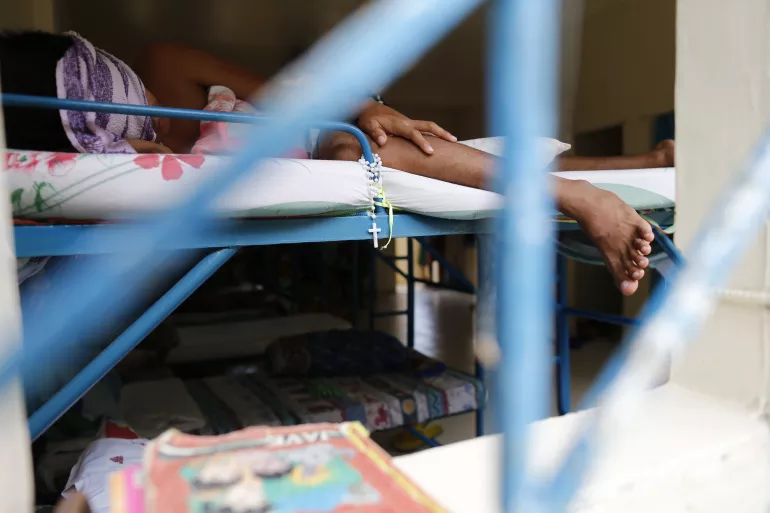
Others point to shortcomings in rehabilitation programs, noting that many local government units lack adequately funded intervention centers, trained social workers, psychologists, and counselors needed to effectively reform young offenders.
Questions have also been raised about monitoring mechanisms after minors complete diversion programs, with some sectors expressing concern that repeat offenses may occur when support systems remain weak.
Senator Robin Padilla has renewed calls to amend the law by lowering the minimum age of criminal responsibility to 10 years old, arguing that some children today possess a greater understanding of their actions and consequences.
"People are asking whether the current law still addresses today's realities," Padilla said in earlier statements urging lawmakers to revisit the measure.
Child rights advocates, however, caution against equating isolated but tragic incidents with a broader trend of youth criminality. Related story: Beyond police: Parents key to safe schools
Youth organizations and educators argue that punitive measures alone cannot solve deeper problems within schools and communities.
They cite persistent concerns such as bullying, overcrowded classrooms, a shortage of guidance counselors, and limited access to mental health services.
Education experts note that warning signs often emerge long before acts of violence occur, but schools frequently struggle to respond because teachers are burdened with large class sizes and administrative tasks.
The Tacloban tragedy has also highlighted acts of courage amid loss. Family members and classmates continue to remember Chris Lorenz Fabian, one of the students killed, who reportedly tried to stop the attacker from entering their classroom in an effort to protect others.
As Tacloban mourns, policymakers are again confronted with difficult questions: Should the law be revised to impose greater accountability on younger offenders, or should government focus on strengthening rehabilitation, school-based interventions, and mental health services?
For many families, the answer may lie not in choosing between accountability and compassion, but in building a system capable of providing both.
The tragedy serves as a painful reminder that keeping schools safe requires more than security measures. It demands early intervention, accessible mental health care, effective anti-bullying programs, responsible gun ownership, and a juvenile justice system that protects communities while recognizing that children who go astray may also be children who were failed by the adults and institutions meant to guide them.