By Hasmeyya L. Tiboron,
Contributor
Every year, Muslims in the Philippines look to the sky to mark the beginning of Ramadan. However, they do not always start fasting on the same day.
This recurring difference is not a simple miscommunication. Islamic jurisprudence offers two distinct views on sighting and verifying the new moon.
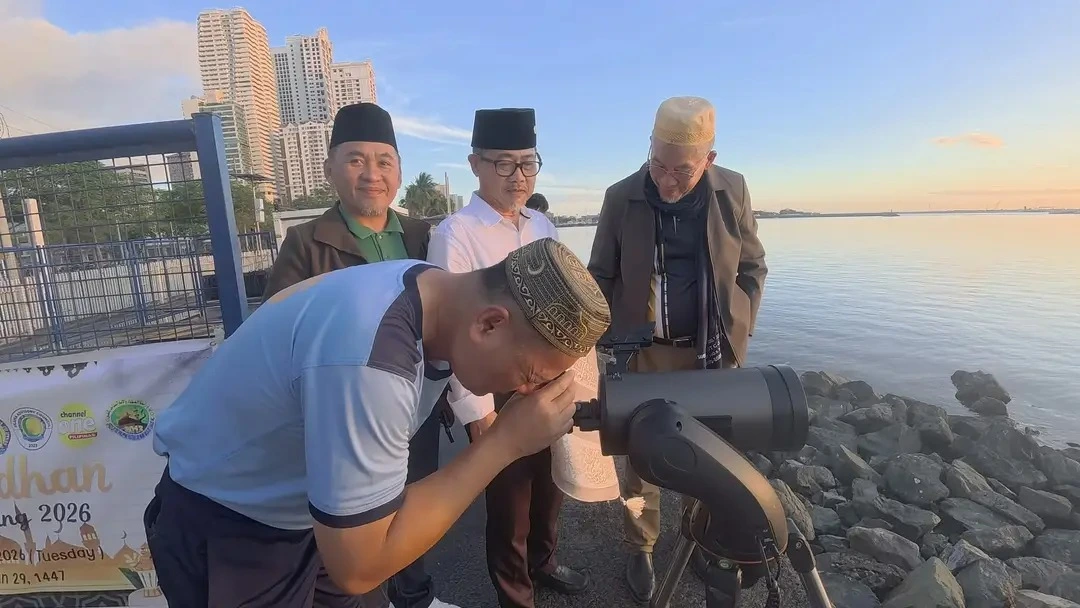
Members of the Imam Council set up a telescope along Roxas Boulevard around 5:30 p.m. on Feb. 17. The group is formally known as the Integrated Moon Sighting Access Movement Council of the Philippines.
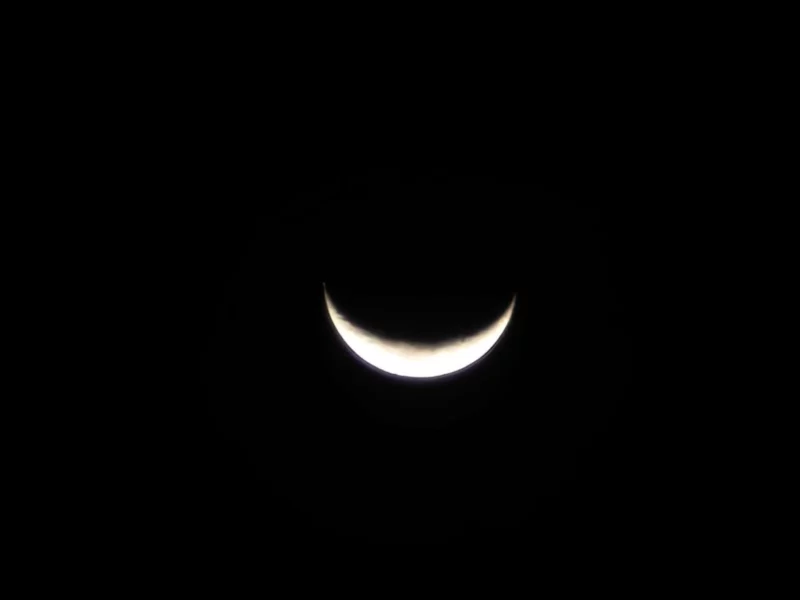
They were searching for the thin crescent moon—barely visible to the naked eye—that signals the start of Ramadan.
That evening marked the 29th day of Sha’ban, the Islamic month before Ramadan. The Gregorian calendar follows the Earth’s orbit around the sun. In contrast, the Islamic Hijri calendar is based entirely on the lunar cycle. The Islamic Hijri calendar requires a visible crescent moon to begin a new month.
Because the moon takes about 29.5 days to orbit the Earth, Islamic months may last either 29 or 30 days. A successful sighting on the 29th night signals the start of Ramadan the next day. Otherwise, Sha’ban completes a full 30 days.
Several other groups scanned the skies that night. These included 14 provincial teams from the Bangsamoro Darul Ifta (BDI) and the Imam Council. Hours later, the teams reached different conclusions, resulting in two separate start dates for Ramadan.
For Muslim communities, the announcement shapes daily life. In Muslim-majority areas, schools shorten class hours while government offices adjust work schedules in line with Civil Service Commission guidelines.
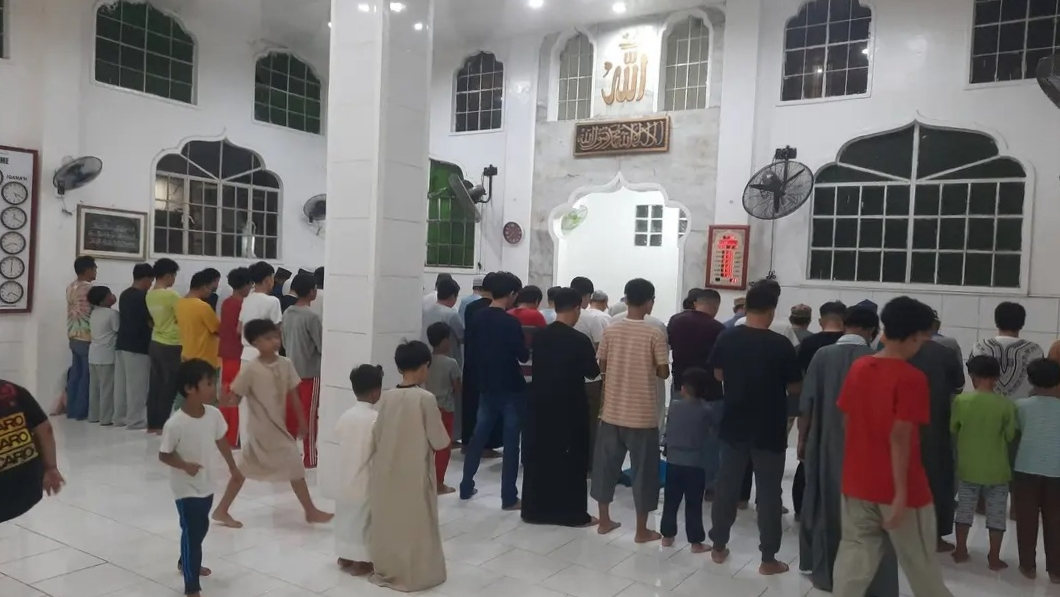
Following the differing announcements, some Muslims began fasting and performing the first taraweeh prayers that night, while others waited another day.
The split sparked online debates among Filipino Muslims. Many questioned why local groups conduct independent sightings when Saudi Arabia already has an official tracking system.
The answer lies in differing interpretations of Islamic law.
The Umm al-Qura calendar governs dates in countries like Saudi Arabia. It relies on both scientific astronomical data and official sightings in Mecca.
In Muslim-minority countries like the Philippines, however, local scholars often guide the decision.
The Bangsamoro Darul Ifta is the recognized authority in BARMM. This region is home to about 65 percent of the country’s Muslim population.
“We in the Philippines follow the Shafi’i school of thought, so we follow the Matla,” explained Sheikh Mohammad Pangca, a lecturer at the BDI.
Matla refers to geographical zones where the crescent moon is expected to appear at roughly the same time.
Under this view, the Philippines should rely on sightings from nearby Southeast Asian countries rather than distant locations like Saudi Arabia.
“We in Southeast Asia belong to one matla, the Middle East is another, Australia is another, and so on,” Pangca explained.
Although the BDI uses astronomical tools such as Stellarium to predict the moon’s position, the key principle remains ru’yah—the actual sighting of the crescent.
This is why BDI teams were deployed to observation sites including Manila Bay, Initao, and General Santos City.
However, the Philippines also protects religious freedom, allowing other groups to follow different interpretations.
The Imam Council, registered in 1999 as a national organization of Muslim religious leaders, advocates a global approach.
“Our late chairman used to say: one world, one moon,” said Imam Council President Ebra Moxsir.
“There is only one moon on Earth. The moon seen in Saudi Arabia and the moon seen in the Philippines is the same,” he added, citing prophetic teachings that instruct Muslims to begin fasting when the new moon is sighted.
This view reflects the principle known as “Jumhoor,” the majority opinion among Islamic scholars, which holds that a moon sighted anywhere on Earth can be valid for Muslims everywhere.
Despite these differences, the varying start dates do not necessarily signal division within the community.
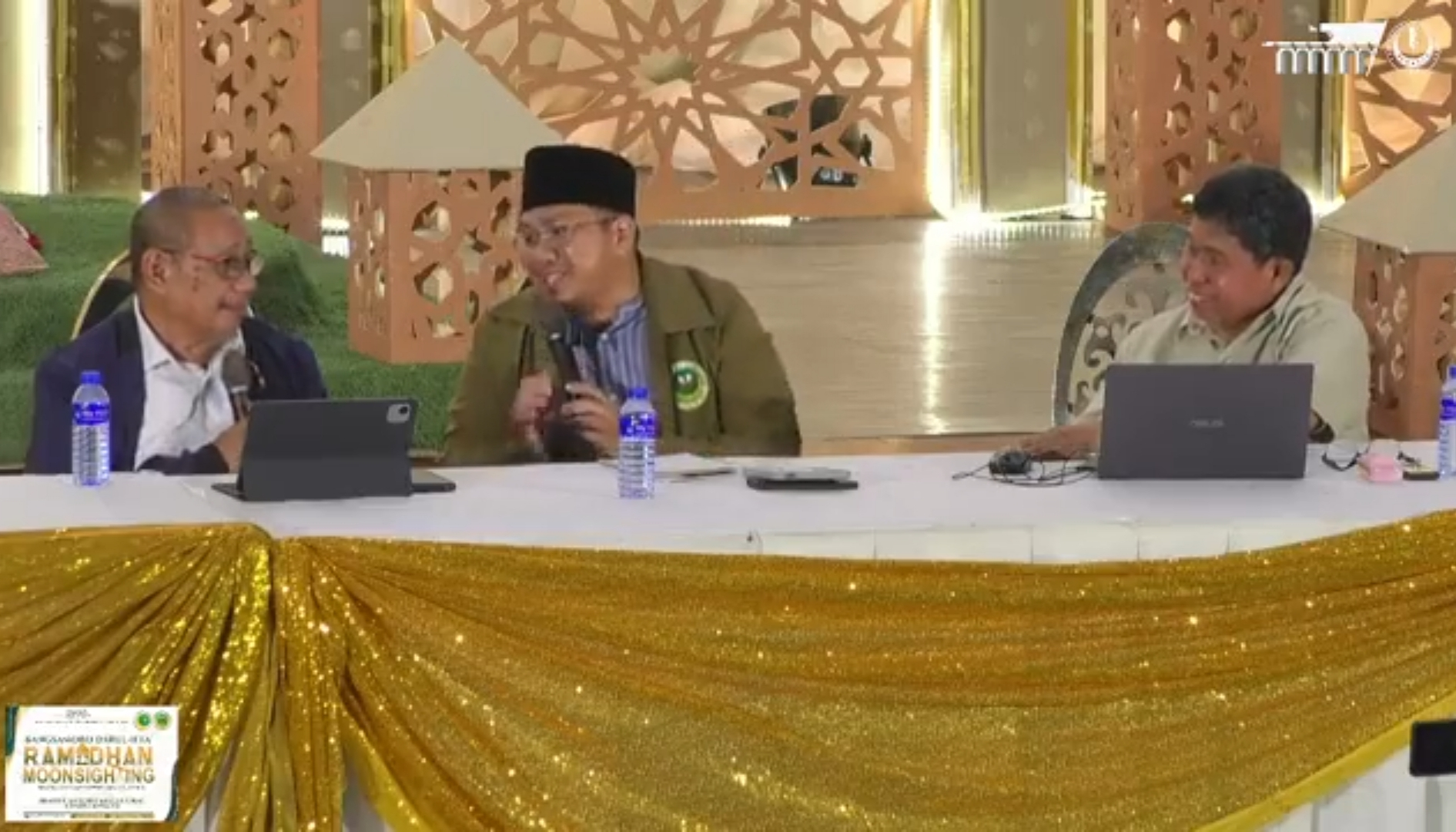
In 2022, the National Commission on Muslim Filipinos (NCMF) began coordinating more closely with the Bangsamoro Darul Ifta to help harmonize moon-sighting efforts.
“We ask different organizations to cooperate with us. Our office is always open for coordination so that when they sight the moon, we can help validate it,” said Sheikh Camaludin Esmail, Chief Administrative Officer of the BDI’s Fatwa Division.
Ultimately, the discussion reflects how deeply Ramadan matters to Filipino Muslims.
As the holy month draws to a close, communities once again gather along coastlines and open spaces to search for the next crescent moon—looking to the same sky to welcome Eid al-Fitr.