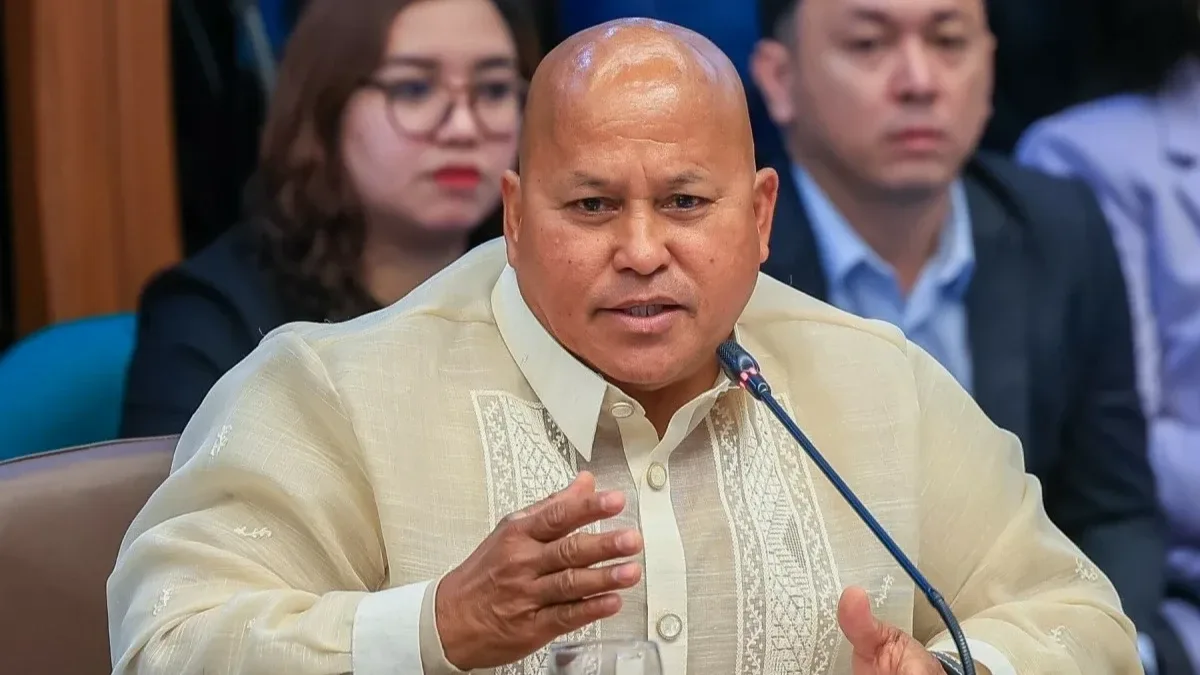
CAGAYAN de Oro city— Retired Police General Filmore Escobal has questioned the government’s reported ₱50-million reward for information leading to Senator Ronald “Bato” dela Rosa’s arrest, raising concerns over the use of Filipino taxpayers’ money in an operation linked to an arrest warrant issued by the International Criminal Court (ICC).
“Dayuhan na may warrant of arrest, Pilipino taxpayers money ang reward?” Escobal asked in a statement attributed to him, challenging the decision to offer public funds for information that could lead to the senator’s arrest.
Interior Secretary Jonvic Remulla announced the reward on October 23, saying the money would come from intelligence funds of the Department of the Interior and Local Government (DILG) and the Philippine National Police (PNP).
The announcement has raised questions about the legal basis for the reward, the necessity of the amount and the safeguards governing the use of public funds.
For Escobal, the central concern is whether Filipino taxpayers should shoulder the cost of an operation connected to an arrest warrant issued by an international court, particularly after the Philippines withdrew from the ICC in 2019.
However, the country’s withdrawal from the Rome Statute does not automatically remove the ICC’s jurisdiction over alleged crimes committed while the Philippines was still a member. The ICC unsealed Dela Rosa’s arrest warrant on May 11, 2026, over alleged crimes against humanity linked to the Duterte administration’s anti-drug campaign. The allegations remain subject to judicial proceedings, and Dela Rosa is entitled to the presumption of innocence.
The question of the ICC’s jurisdiction is separate from whether Philippine agencies have the legal authority to implement the warrant and finance the reward.
Public funds under scrutiny
The reported source of the bounty has placed intelligence spending under scrutiny. The government has yet to publicly establish, through the announcement alone, the specific authorization and conditions governing the proposed payout.
Taxpayers deserve clarity on whether the ₱50 million has been formally allocated, what legal provisions permit its use for the reward and how authorities will verify information before releasing any payment.
The government should also explain why the amount is necessary and what additional information it expects the bounty to produce.
These questions carry particular weight for households struggling with food, electricity, transportation and other essential expenses. While law enforcement is a legitimate government responsibility, public spending must still comply with the law and remain subject to appropriate accountability mechanisms.
Intelligence operations may require confidentiality, but that does not eliminate the government's obligation to account for public funds through authorized oversight processes.
A question of accountability
Escobal’s criticism puts the focus on a broader issue: how the government justifies extraordinary expenditures involving public money.
The reward does not, by itself, establish that officials have acted improperly. Nor does Escobal’s objection settle the legal questions surrounding the warrant or the use of intelligence funds.
The government, however, should provide a clear explanation of the reward’s legal basis, its intended purpose, and the safeguards against improper payments.
For taxpayers, the issue is not simply where the arrest warrant originated. It is whether the government can demonstrate that spending ₱50 million to obtain information leading to an arrest is lawful, necessary and properly accounted for.
Escobal’s challenge puts the burden on the government to explain why taxpayers should finance the reward and how the public will be assured that the money is being used lawfully.