SOME years ago, I wrote about a foreigner, a white Canadian, who wanted to be a Filipino. Published by the Inquirer, that story went viral. Maybe because it was so unbelievable, so unlikely. Why would a non-Filipino want to be one?
The Canadian went on to explain what he admired in Filipinos—our sense of family, our openness as a people, how we seem to find happiness in even the most difficult circumstances.
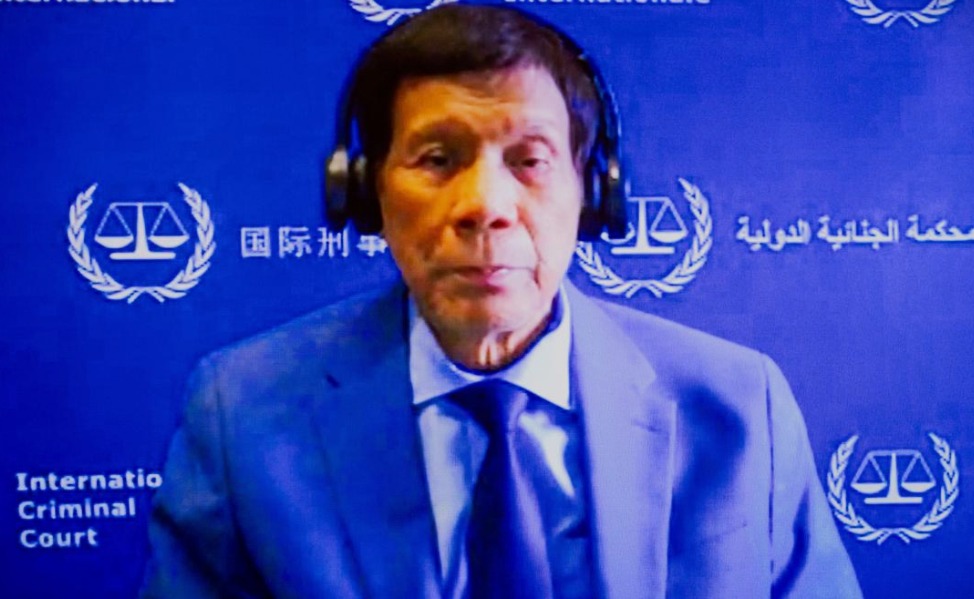
Following Duterte’s arrest, I find myself asking the question again: Why want to be Filipino? Yes, all the values that foreigners find endearing are all true. But, like everyone else, we are not only the sum of all our positive values.
We are conflicted, as I am conflicted following Duterte’s arrest.
We seem to have a broken moral compass. North is South, East is West. Wrong is right.
How else can so many of us cry that an injustice has been done when Duterte was in fact brought to The Hague in the interest of justice for the over 6,000 drug war deaths? He will be tried, he will be prosecuted, he will be given the chance to defend himself. And hopefully justice will have been rendered when the trial concludes.
I say again: our sense of right and wrong is broken. How else can you agree with a narrative that the 6,000+ killed in police operations were all shot because they fought back? Nanlaban lahat? Perhaps some were criminals. But how would we know for sure when in all 6,000+ deaths, guilt was never established because, yes, there was no due process.
Some of us have seen how multiple casualties look like. Over 1,200 people died in the aftermath of the worst natural disaster that struck Cagayan de Oro and Iligan cities in 2011. In CDO alone, over 900 bodies were retrieved following Sendong, causing mortuaries to overflow with the dead. All casualties of a natural catastrophe, killed by an unthinking, unfeeling Nature.
Now visualize 6,000+ deaths. Not victims of a natural disaster but willfully, purposefully killed in a drug war that targeted users and dealers from mostly impoverished communities. Because surely, drug addicts and dealers only come from the slums, not from gated communities, correct?
So when people festoon trees with red ribbons with the words “Bring FPRRD home” I ask, WTF? When people go out on motorcades, loud and proud, demanding ‘justice’ for the man being accorded by a court of law due process I say, “Really?”
I understand our frustration as a people. Our government has time and again failed to decisively fight criminality. But Duterte is not like you and me. Here was a man who was President, who was given six years, a man who won the Presidency on the promise that “Change was coming.”
Every President is given a mandate, an expressed authority to act in a certain way in behalf of us, the people. That mandate comes with immense powers so he can fix wrongs—curb corruption, correct social ills, fight criminality, promote justice. That mandate is given so he can improve the people’s, not just one or two segments of society, quality of life.
This now is what I do not get, what I do not understand because clearly, there was a betrayal of that mandate. Hours after Duterte was spirited to the ICC, a sizable crowd spontaneously gathered in Gaston Park fronting the Cathedral and shouted in unison, in shrill voices ripe with indignation, “Duterte! Duterte! Duterte!” This is the same almost everywhere. And, nearly two weeks hence, the anger of his supporters have shown no signs of abating, a gathering storm with clouds dark with rain.
As a people, are we supposed to have shared values? Can’t we anymore agree that wrong is wrong and right, right? Surely, laws are meant to be followed by all and to benefit everyone, and not accorded to some and denied others. Because that is what the loud chants in support of Duterte sound like. That there are, among us, more “deserving” of justice. That people like Duterte, who now stand at The Hague accused with crimes against humanity (whether he should stand trial before a local court or before the ICC is not the point), deserve due process but others do not.
Because this is what it means when you say bring him home. Because when the veins bulge on your forehead as you shout Duterte’s name, you are in effect saying the victims of his drug war, all gunned down and denied due process, do not deserve your empathy.
Empathy.
US Army Captain G. M. Gilbert, the Army psychologist assigned to watching the defendants at the Nuremberg trials, was once asked to help make sense of the WW II genocide that killed 6 million Jews. This is what he said:
“In my work with the defendants (at the Nuremberg Trials 1945-1949) I was searching for the nature of evil and I now think I have come close to defining it. A lack of empathy. It’s the one characteristic that connects all the defendants, a genuine incapacity to feel with their fellow men.
Evil, I think, is the absence of empathy.”
Duterte showed no remorse, no guilt, when he sat, during a Senate inquiry on the drug war, with the families of the victims. Victims like Kian delos Santos, the 17 year-old who was dragged by policemen and summarily killed in a dark alley in Caloocan in 2017.
You can say that is not necessarily a lack of empathy; you can choose to believe him when he said he did the killings to protect Filipinos from the menace of drugs (never mind that he himself has been linked to criminal drug syndicates).
But please stop asking to bring him home. He is where he deserves to be: in a court of law.
Lastly, I am reminded by what the anthropologist Margaret Mead was said to have replied when asked by a student what she considered as the first sign of civilization. “A healed femur,” she answered. Mead went on to explain that a fractured femur meant certain death in ancient hunter-gatherer societies. The femur is the longest bone in the human body. A broken femur would make it nearly impossible for a man to hunt or gather food. Without sustenance, death would follow.
A healed femur then, Mead said, meant someone cared for the injured man; it meant someone gave him food, water, provided shelter, and perhaps protected him from predators. Compassion, she said, is the first sign of civilization.
So again, please stop asking King Charles of England to bring Duterte home. Stop calling for people power. Stop tying red ribbons in trees; the ribbons, as the song goes, are supposed to be yellow anyway and there are no ‘old oak trees’ here.
Stop rubbing salt on the broken femur. Empathize with those needing empathy.
Duterte has money, lawyers. Duterte is where he needs to be.