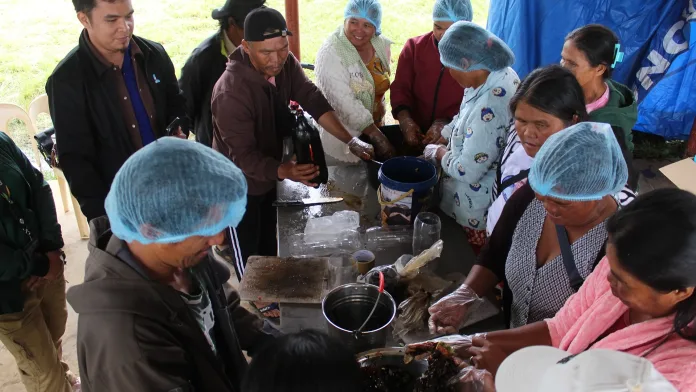
CAGAYAN de Oro City - For highland farmers in Bukidnon, coffee is emerging as a practical alternative to seasonal crops, offering the chance to cut production costs while earning from the same trees for years.
Unlike corn and other crops that must be replanted after every harvest, coffee trees can continue producing cherries once they reach maturity. A coffee tree generally starts bearing fruit after about three years, but farmers can earn from the same plants through succeeding harvests.
For Leonila Secadron, head of the Bayanihan Millennium Multi-Purpose Cooperative (BMMPC) in Pangantucan, the lower production cost is one reason her group chose coffee.
“We chose to grow coffee because it costs less to produce than corn and other crops. It also provides higher income while helping protect the environment by reducing the need for chemical sprays,” Secadron said.
What farmers gain
Coffee also gives farmers an option to diversify their income while waiting for young trees to become productive.
Farmers can plant other crops between coffee trees, allowing them to harvest food or earn additional income during the first few years.
Once the coffee trees mature, growers can continue harvesting cherries while maintaining suitable intercrops, creating a more diversified farm instead of depending on a single seasonal crop.
Coffee's tree-based production system may also help reduce repeated land clearing and dependence on chemical inputs. This can contribute to better soil protection and provide habitat for farm biodiversity.
But shifting to coffee does not automatically guarantee higher income.
Farmers still need access to quality planting materials, proper farm management, post-harvest equipment, reliable roads and stable buyers to make the crop profitable.
Support helps farmers shift
These needs are being addressed through the Rural Agro-enterprise Partnership for Inclusive Development and Growth (RAPID Growth) Project, which is helping farmer groups strengthen their coffee enterprises.
During a recent field visit by the International Fund for Agricultural Development (IFAD) and the Department of Trade and Industry (DTI), BMMPC was highlighted as one of the Bukidnon groups benefiting from the project.
Through RAPID Growth's Producer-Public-Private Partnership (4Ps) model, farmers are linked with government agencies and private companies for technology, infrastructure, and market support.
BMMPC, a RAPID Growth beneficiary and partner of Nestlé Philippines Inc., received equipment to improve production and post-harvest work. These include all-weather dryers, depulpers, a portable moisture tester, weighing scale, heavy-duty dehuller, chainsaws and a mechanical hole digger.
A 1.2-kilometer farm-to-market road is also being developed to make it easier to move farm products to markets.
Project Manager Mysol Booc said the partnership works by bringing farmers, government agencies and private companies together to address needs across the agricultural value chain.
RAPID Growth is funded by IFAD and implemented by DTI in partnership with the Department of Finance (DOF) and the Department of Economy, Planning, and Development (DEPDev).
The project supports the cacao, coffee, coconut, and processed fruits and nuts value chains in Mindanao and Eastern Visayas.
What this means for farmers
For Bukidnon farmers considering coffee, the experience of groups like BMMPC shows that the crop can offer benefits beyond its market price.
Lower recurring production costs, continued harvests from mature trees, intercropping opportunities and access to processing and market support can help make coffee a more resilient farm enterprise.
But farmers need to assess their location, available capital, suitable varieties, labor, market access and technical support before shifting large portions of their farms.
For those in Bukidnon's highland areas where coffee can thrive, the crop is increasingly being viewed not simply as a replacement for corn, but as a long-term investment that can provide income across several harvest seasons.