CAGAYAN de Oro City — The Commission on Elections (Comelec) is intensifying its voter education drive across the Bangsamoro Autonomous Region in Muslim Mindanao (BARMM) as the region prepares for its Sept. 14 First Parliamentary Elections.
The campaign is designed to help voters understand how the parliamentary government will work, how to properly cast their ballots, how vote-counting machines (VCMs) will be used, and how to avoid election-related misinformation and other violations.
Comelec spokesperson Lawyer John Rex Laudiangco said reaching voters remains a challenge, particularly in geographically isolated communities where access to election information may be limited.
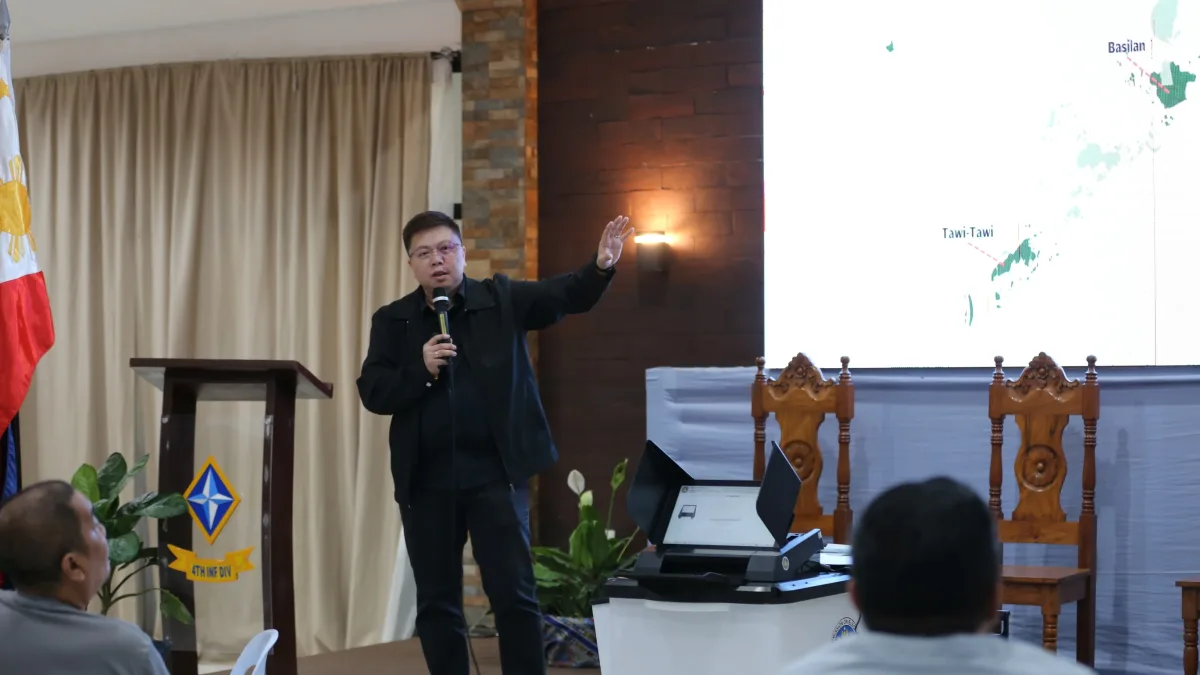
To widen its reach, the poll body is using social media, traditional media and community-based information activities, including actual demonstrations of VCMs.
“Isa sa nakita namin na pinakamalaking reach talaga ay ang social media at ang ating traditional media. Kaya po kami hindi humihinto dito,” Laudiangco said.
Helping voters understand the new system
A major part of the campaign is explaining how the BARMM parliamentary government will be formed.
Laudiangco said some voters still mistakenly think they will directly vote for the chief minister.
Under the parliamentary system, voters will elect members of the parliament, while the 80-member parliament will choose the chief minister, he said.
The Comelec is also reminding voters to follow the rules on the number of candidates they may select, particularly in sectoral representation.
Over-voting, or choosing more candidates than allowed, may result in votes being invalidated.
VCM demonstrations target first-time voters
To reduce confusion on election day, the Comelec is bringing VCMs to voter education activities.
The demonstrations show voters how to fill out and submit their ballots and how the machines read and process their votes.
The poll body is also working with media groups to provide communities with accurate and timely election information.
Laudiangco said journalists and other media practitioners can play an important role in helping voters distinguish verified information from misinformation, especially with election day approaching.
Media training activities have been conducted in coordination with the Office of the Presidential Adviser on Peace, Reconciliation and Unity, the Presidential Task Force on Media Security and the Bangsamoro Information Office.
Comelec prepares election workers
While voter education continues, the Comelec is also preparing personnel who will handle the actual conduct of the elections.
Training is being completed for electoral boards assigned to the region's 5,212 clustered precincts.
Police personnel are likewise being trained as possible replacements for electoral board members who may be unable to report for duty because of health or security concerns.
Laudiangco cited the 2022 elections in Cotabato City, when several teachers reportedly withdrew from election duties on election night. Trained police personnel were available to fill the vacancies.
For the coming elections, police personnel being prepared to operate VCMs will also undergo certification from the Department of Science and Technology, as required under Republic Act 9369.
Election equipment being prepared
The Comelec is also setting up election machine hubs across BARMM as part of its preparations.
Laudiangco said local treasurers are expected to receive the official ballots this month. VCMs, meanwhile, will be kept at designated Comelec offices for inventory and inspection.
In Lanao del Sur, the machine hub will be located at the Comelec office inside the Provincial Capitol Compound in Marawi City.
Laudiangco also encouraged media practitioners to coordinate with local Comelec offices and observe the inventory of VCMs once the equipment arrives.
With the parliamentary elections approaching, the Comelec is urging voters to familiarize themselves with the ballot, understand the new government system, and check election information through reliable sources before voting. (With a report from Apipa Bagumbaran of PIA-10)