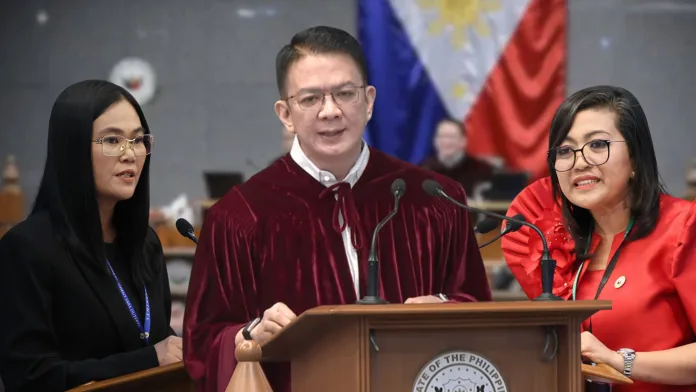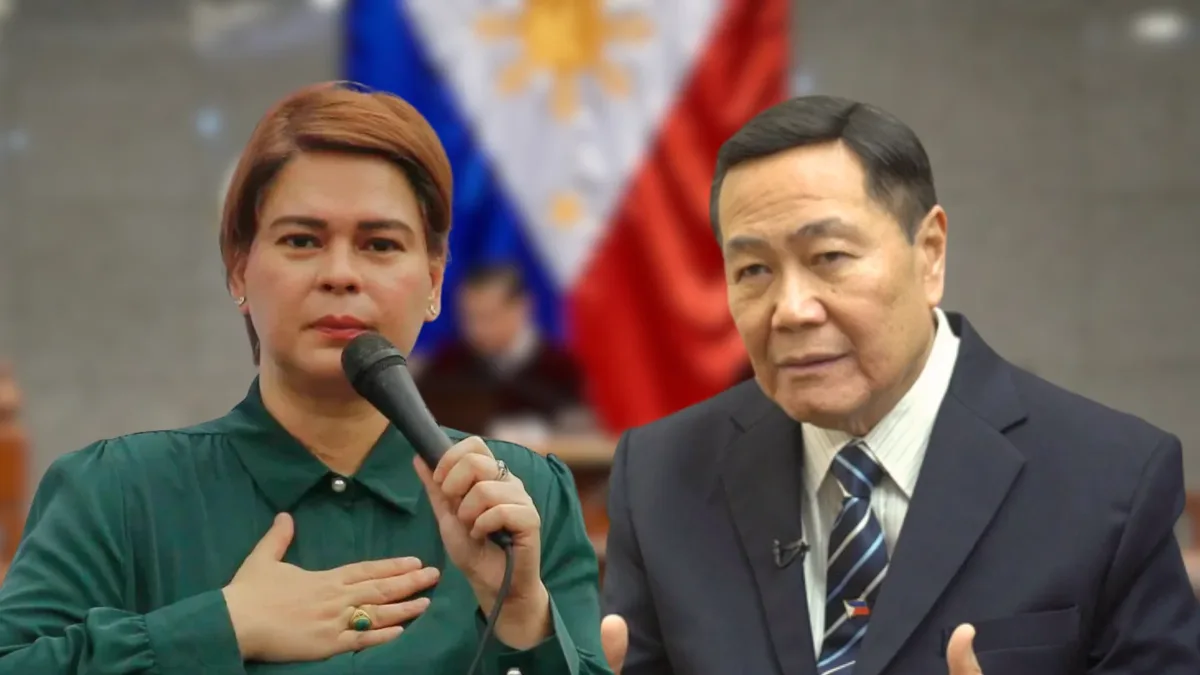
CAGAYAN de Oro City — Former Supreme Court Justice Antonio Carpio has described as strong the evidence concerning Vice President Sara Duterte’s alleged unexplained wealth, citing bank records and other documents that he said point to assets and funds not reflected in her Statement of Assets, Liabilities and Net Worth (SALN).
Carpio made the statement during a visit to the city on Tuesday, October 13, citing bank records and other documents that he said point to assets and funds allegedly belonging to Duterte and her husband, lawyer Manases Carpio, that were not reflected in her Statement of Assets, Liabilities and Net Worth (SALN).
The allegations have yet to be conclusively established in the impeachment proceedings.
Carpio identified CALE 88, a company associated with the Vice President’s husband and reportedly engaged in banana chip manufacturing and exports, as a key part of the allegations.
According to Carpio, the company allegedly earned hundreds of millions of pesos that were not reflected in Duterte’s SALN. He also cited evidence presented during the impeachment proceedings that the company allegedly received ₱319 million from China.
The figures and the nature of the reported transactions, including whether the money should have been declared in Duterte’s SALN, require examination of the underlying records and applicable disclosure rules. The reported receipt of funds does not, by itself, establish wrongdoing.
Carpio argued that the couple could not simply rely on the company’s separate legal identity to avoid scrutiny of their wealth.
“They cannot invoke the doctrine of corporate veil as the property of the husband is the property of the wife,” Carpio said.
His statement reflects his legal position. Whether particular business assets or income must be attributed to Duterte depends on the applicable law, ownership arrangements and evidence presented.
Carpio said failure to declare assets, bank deposits and business interests that the law requires to be disclosed could constitute a violation and support an impeachable offense.
“Failure to declare their assets in the SALN is in itself a violation of the law,” he said.
He also argued that the Bank Secrecy Law should not automatically shield public officials from scrutiny of their wealth.
Public officials, Carpio said, must account for their assets and show that these are consistent with their salaries and other legitimate sources of income, even when their money is held in bank accounts.
Duterte faces allegations that she failed to declare about ₱800 million in assets in her SALN. The alleged discrepancy, and whether it constitutes a violation of law, remain matters for determination through the appropriate proceedings.
CARPIO CITES CORONA CONVICTION
Carpio recalled the 2012 impeachment trial of former Chief Justice Renato Corona, who was convicted by the Senate impeachment court in connection with his failure to properly disclose bank deposits in his SALN.
Carpio cited allegations involving approximately US$2 million in Corona’s dollar bank accounts, which he said was worth about ₱80 million at the time of the impeachment trial.
He invoked the case to illustrate how questions over undeclared wealth can become central to the accountability of public officials.
However, the comparison does not determine the outcome of Duterte’s case. The evidence, applicable legal standards and circumstances must be assessed independently.
THREE IMPEACHMENT ARTICLES WITHDRAWN
Carpio also reacted to the reported frustration of Duterte’s lawyers over the House prosecution panel’s decision to withdraw three of the four Articles of Impeachment against the Vice President.
The prosecution retained the article concerning her alleged failure to declare her true assets, liabilities and net worth, as well as her alleged unexplained wealth.
Carpio said it was understandable for someone facing charges to welcome the withdrawal of some accusations.
“Naturally, kung may mga kaso ang tao, matutuwa kung i-withdraw ng prosecution ang ilan sa mga kaso,” he said.
(“Naturally, when a person is facing a case, they would be pleased if the prosecution withdrew some of the charges.”)
The withdrawal narrows the allegations the prosecution intends to pursue but does not establish whether the remaining allegations are true.
The impeachment proceedings will determine whether the evidence supports the remaining charge and whether the alleged failure to disclose assets warrants accountability under the law.