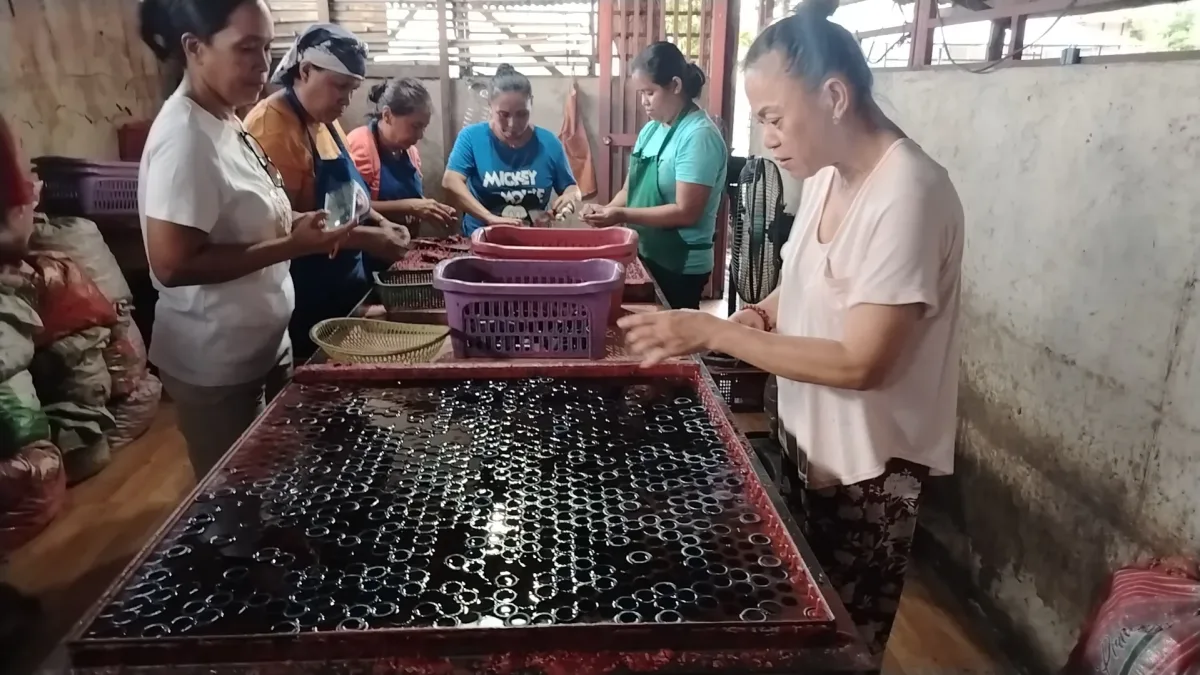
ILIGAN City — A candle-making project linked to the Gagmayng Simbahang Katilingban (GSK), or Basic Ecclesial Communities, is giving Church members a way to earn extra income while supplying candles for religious activities.
Imelda “Tata” Salado, who oversees the project, said the initiative grew from her candle-making business, which she started in 2002, before becoming part of the Church’s livelihood program.
Now in its 13th year, the project produces about 30,000 candles a week during regular operations, or roughly 120,000 pieces a month. Production can rise to around 50,000 candles a week during peak periods, depending on demand.
Orders typically increase around All Souls’ Day, Christmas, New Year and the feast of St. Michael the Archangel, when candles are widely used for prayer and other religious observances.
Salado said the project began on a small scale and went through a trial period before the group adopted larger, more durable equipment to improve production.
An initial investment of about ₱50,000 covered start-up needs, including raw materials, training, transportation and other expenses.
The production process includes melting wax, preparing wicks, setting up molds, pouring the wax and allowing the candles to cool before they are removed, stored and packed.
Operations generally run from Monday to Friday, 8 a.m. to 5 p.m. Participating members are organized into groups that take turns handling production.
Under the project’s income-sharing arrangement, 70 percent of income goes to the GSK group, while 30 percent is set aside for administration and related expenses, Salado said.
For Fely Lawas, a GSK member who works in candle-making, the project helps her contribute to her family’s daily expenses.
Lawas said her husband takes on construction work and other available jobs, while she makes candles to help supplement their household income.
Beyond providing an additional source of earnings, the project also encourages members to work together and support their faith communities.
As the initiative moves toward a more established operating arrangement, the organization of participating members and the transfer of responsibilities will be important to sustaining production and keeping the livelihood program running.