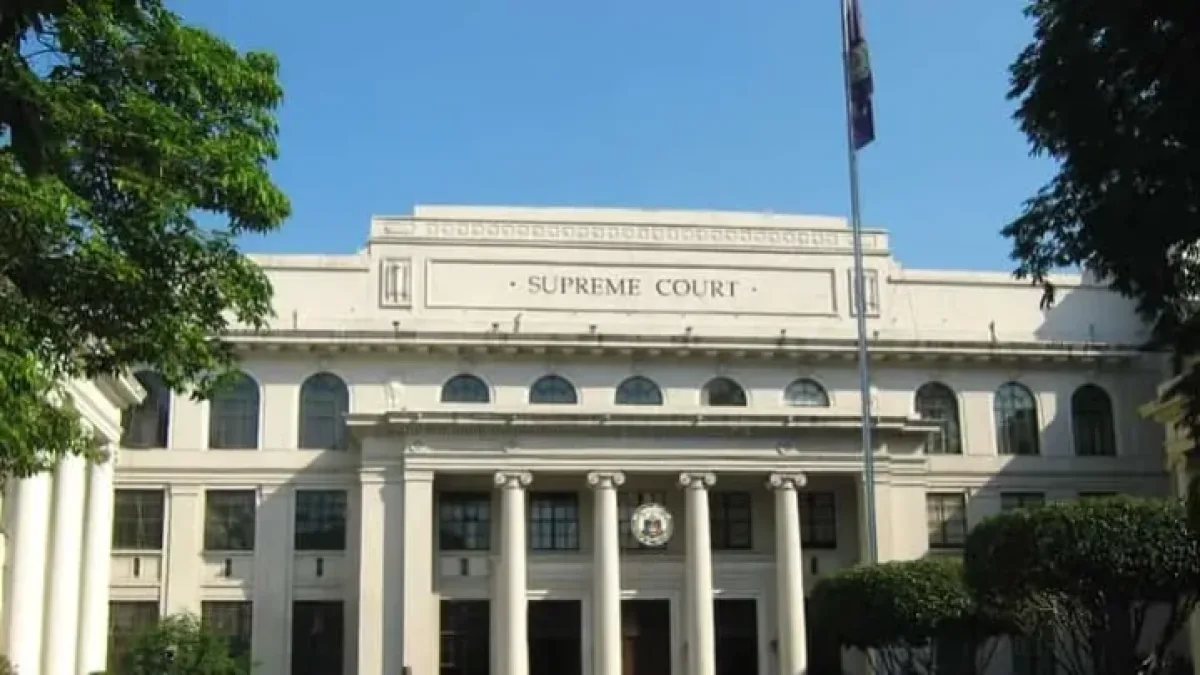
CAGAYAN de Oro City - More than ₱417 million in Supreme Court cash advances were flagged for liquidation deficiencies, including transactions dating back as far as 12 years, raising questions about how effectively the country’s highest court enforces rules for accounting for public funds.
The Commission on Audit (COA), in its 2025 annual audit report, identified 706 cash advances totaling ₱417.25 million with unresolved liquidation issues.
These covered payroll-related advances, funds released to special disbursing officers for specific activities, and travel expenses for court personnel, according to a report by the Daily Tribune published on October 23.
The findings highlight a basic accountability question: Why were new cash advances repeatedly granted even when earlier advances had not been properly liquidated?
For taxpayers, the issue goes beyond paperwork. Liquidation documents are necessary to establish how public money was spent and whether expenses complied with government rules.
Delays in submitting or processing these documents can weaken oversight and make it harder to determine whether funds were used properly.
Two officers account for ₱276 million
Of the flagged transactions, 463 cash advances totaling ₱276.35 million involved two special disbursing officers who had not submitted the required liquidation reports.
Most of these advances were granted in 2023 and 2024.
COA said one officer cited a medical condition and a heavy workload in requesting a 90-day extension to complete the liquidation.
The other attributed the delays to late or incomplete reports from other offices.
Auditors, however, noted that some deficiencies predated the reported medical condition and remained unresolved. They classified these as recurring findings.
COA also found instances in which new advances were granted despite outstanding balances from previous transactions, pointing to weaknesses in the enforcement of liquidation rules.
The findings do not establish that the money was stolen or improperly used. They do, however, raise questions about why existing safeguards failed to ensure timely liquidation before additional funds were released.
₱154 million liquidated, but what remains?
The audit report said the Supreme Court had taken corrective measures and completed the liquidation of ₱154 million in cash advances as of April 13, 2026.
That is a significant step, but the figure alone does not establish how much of the original ₱417.25 million remained unresolved after those measures.
The remaining balance must be verified against the underlying transactions and the audit's reporting period.
The public also needs clarity on whether the outstanding deficiencies have since been resolved, whether additional liquidation reports have been submitted and what administrative measures, if any, have been taken to prevent similar findings from recurring.
The Supreme Court's Finance and Accounting divisions were also identified as contributing to some deficiencies through delays in processing, verifying and recording liquidation documents.
This indicates that the problem was not attributed solely to individual officers.
Separate from the budget ruling
The audit findings were reported a day after the Supreme Court announced its October 20 ruling declaring the 2024 and 2025 national budgets unconstitutional over specific congressional increases in appropriations and striking down certain provisions involving unprogrammed appropriations in the 2026 budget.
The two matters concern different issues. The budget ruling addressed constitutional limits on government appropriations, while the COA findings concern the liquidation and accounting of cash advances within the judiciary.
Their proximity in timing does not establish a connection between the cases.
Nevertheless, the audit findings underscore a broader public concern: accountability standards must apply across government institutions, including those responsible for interpreting and enforcing the law.
Questions the public deserves answered
The Supreme Court has reported corrective measures, but the remaining questions are practical and measurable: How much has since been liquidated? Why were additional advances approved despite unresolved balances? Who is responsible for the delays in submitting and processing the required documents? And what controls will prevent the same deficiencies from recurring?
The court's response, together with updated liquidation records and any subsequent COA findings, would help the public assess whether the corrective measures have addressed the underlying weaknesses.
For taxpayers, the standard is straightforward: Public funds must be accounted for, audit findings must be addressed, and recurring deficiencies must lead to corrective action.