AMID the prevailing coronavirus disease, northern Mindanao agriculture department on Saturday reintroduced a new substitute for rice to help make more parts of the country hunger-free.
Providing high-quality seeds, technical assistance and market access to local farmers including the former New People's Army rebels have chosen to grow adlai versus high-input and volatile common crops in Bukidnon to help them boost their income.
"Cultivating this high-quality grain helps increase the income of our farmer partners and allows us to deliver safe and nutritious food to consumers," said Northern Mindanao Agriculture department regional director Carlene Collado.
With about P100,000 net income per hectare from P30,000-35,000 capital for adlai production, according to Collado.
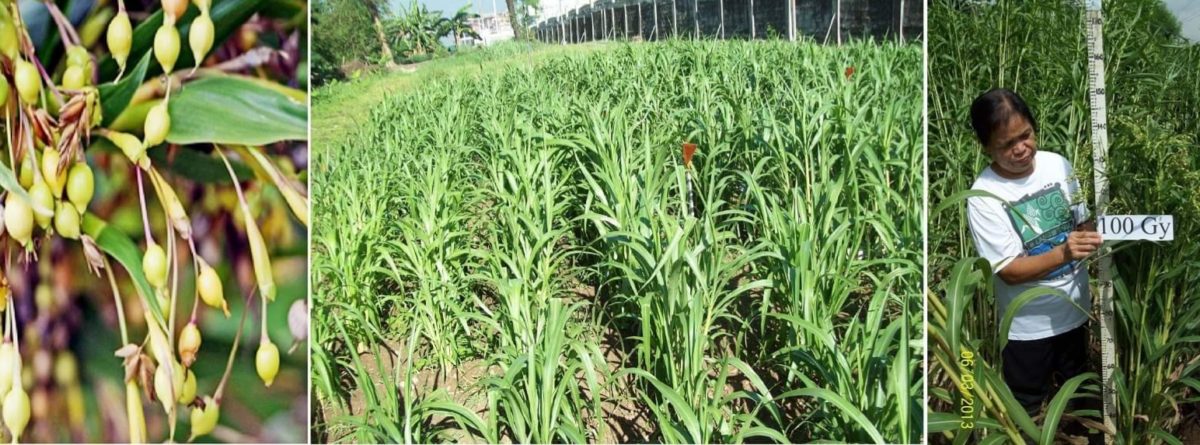
Collado said that just like corn and rice, adlai belongs to the grass family with its long stalks that primarily grow in the tropical areas of Eastern and Southern Asia.
Adlai is also known as Chinese pearl barley, or Jobs’ Tears because it bears tear-like shape grains which has become the staple food of the many indigenous people.
Adlai is the champion crop of the Subanen Tribe in Mindanao, particularly in Zamboanga and Northern Mindanao, Collado said.
It also grows in the regions of Cordillera, more commonly in Sagada and the Mountain Province.
Major growing areas are like in Lantapan, Manolo Fortich, Impasugong, Malaybalay, Talakag (Hineliban foundation), he said.
Other growing areas are in Libona, Valencia, Maramag, Pangantucan, Kalilangan, Kadingilan, Kitaotao, Baungon, San Fernando, Balingasag and Claveria.
"Adlai looks and tastes close to rice, but has slightly nutty flavor," he explained.
Collado said a lot of farmers and even former rebels in Bukidnon now shifted to planting the said commodity.
During the Cabinet officer for regional development and security (CORDS)-X Podcast yesterday, (Sept. 12), Collado said DA-10 was the first to host the National Adlai Congress in the country.
"Compared to corn, there is really a big difference in profit with adlai, farmers can benefit financially," said Collado.
Mainly planted on uplands, adlai is already produced in about 570 hectares in Bukidnon and these include areas in Libona, Valencia, Maramag, Pangantucan, Kalilangan, Kadingilan, Kitaotao, Baungon and San Fernando.
Collado said adlai production only takes about 4-5 months and farmers can do two croppings in a year.
He added that suppliers in Talakag, Bukidnon usually sell the commodity at P500 per kilo in Metro Manila.
As for consumer benefits, adlai is mainly used as a substitute for rice. "It is good for diabetic individuals as it contains low glycemic index," the regional director said.
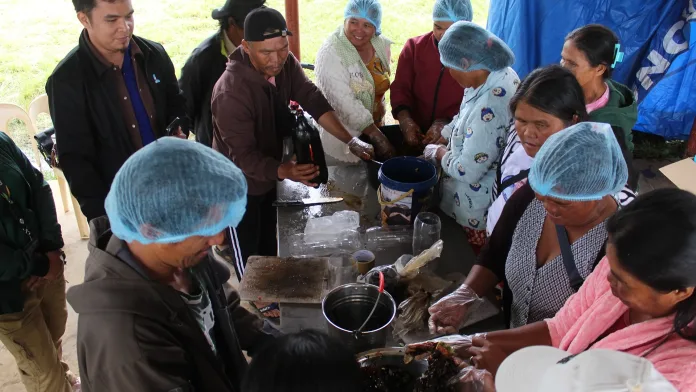
Farmers and other groups also developed various products out of adlai peelings and these include wine, beauty soap, coffee, and more.
Also, adlai production has aided the department's campaign to end local communist armed conflict in the region, through stimulating the interest of former rebels in agricultural productivity.
Meanwhile in Malabalay City, Bukidnon, DA-10 assisted former rebels in planting adlai in a 6,000 sq m area where the FRS were able to produce 1,800 kilos of adlai.
Aside from adlai, Collado said the region has shown strength in agriculture as it spots number one throughout the country in pineapple and cattle; number two in sugarcane, banana, coconut, corn, including tomato, papaya, and cassava; number three in chicken and swine, but as to update, the region is already number one in swine; and number five in rubber production.
The region is also at 83 percent sufficiency level and 114 percent sufficient in corn. (Ben Balce, Recthie Tolinero and Angie Cabig)