NORTHERN Mindanao agriculture department on Friday is encouraging all local government units in the region to buy palay directly from local farmers at a higher price, following palay prices plunged to as low as P12 per kilo for fresh weight in October.
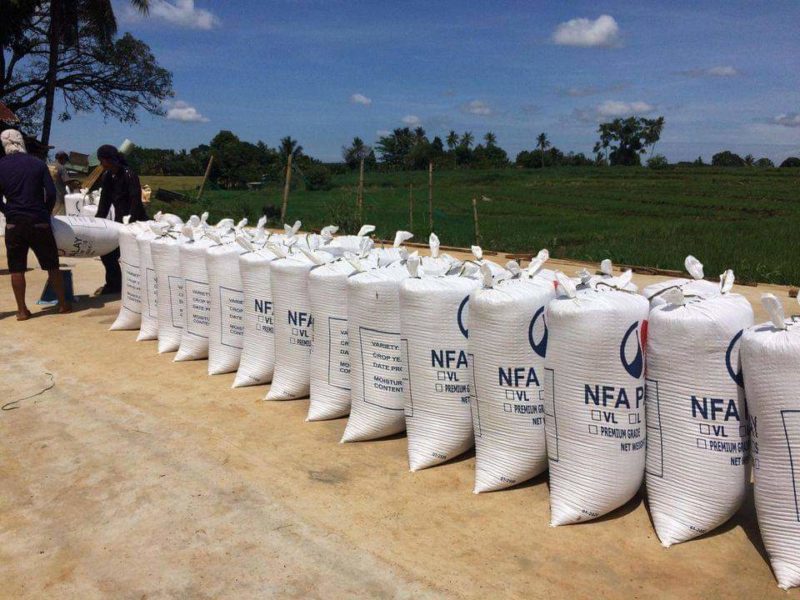
The department even urged rice farmers in the region to sell their palay (unhusked rice) to the National Food Authority (NFA), which buys grains at P19 per kilogram.
DA-10 is banking on the rice procurement program involving local government units (LGUs) to help farmers recover from income losses due to dropping farmgate prices.
“NFA is buying dry palay with 14 percent moisture content at P19 per kilo,” said NFA 10 Regional Director John Robert R. Hermano.
Based on DA-10’s palay price monitoring report in the different provinces in Region 10, due to peak harvest season, palay prices plunged to as low as P12 per kilo for fresh weight last month.
The provinces of Bukidnon and Lanao del Norte sell dry palay while Misamis Occidental, Misamis Oriental, and Camiguin sell fresh palay.
As the price lowers, NFA 10 assures rice farmers in the region of its continuing effort to purchase their palay at a higher, profitable price.
"At P19 per kilo, the price is set based on a standard P12 per kilo for production capital," said Hermano adding that minus all postharvest costs, the farmers can earn an estimated P6 per kilo net income if they sell their palay to NFA.
He added, since October they have procured roughly 300 thousand sacks of palay regionwide. By the end of November, they anticipated the figure to be at 500 thousand sacks.
Currently, NFA allocates an average of P48 million weekly funds to procure palay in the region depending on the agency's target procurement per week.
NFA can absorb 8-10% of the region's palay production, which is equivalent to 560 thousand to 700 thousand bags, considering the region is producing 7 million bags of palay per production cycle.
"We have no problems with funds. We can always accommodate farmers that intend to sell their palay to us," said Hermano.
Aside from regular palay farmgate price monitoring, NFA deployed mobile procurement teams to penetrate far-flung rice areas and non-traditional palay sources in the region.
The agency's effort is highly concentrated on areas where palay prices are low.
One of the reasons why our farmers cannot sell their palay at a higher price is because we are short of drying facilities. Wet palay is sold cheaper. That is why we are proposing for the establishment of two more drying facilities in Lanao del Norte and another two in Bukidnon, according to Hermano.
In the meantime, NFA welcomes farmers who wish to use their drying pavements to dry their produce.
He vouched for every farmer who will seek NFA’s assistance and will be accommodated and treated fairly.
"We highly encourage our farmers to sell their palay to us. Not only their palay will be bought at a higher price, but they can also contribute to the region's food security, as well," Hermano remarked.
NFA is guided by its minimum palay buying specifications of 14% moisture content, 13% discolored and damaged kernel, and 90% purity, in assessing farmers' palay quality.
Meanwhile,Lanao del Norte's Provincial Grains Processing Center's (PGPC) manager Hubaib Cayongcat said amid plunging palay price, the provincial government is reaching out to the farmers by buying their palay at a standard of P1-2 pesos higher than local palay traders’ price.
Cayongcat said the local government's strategy in keeping the palay price advantageous to the rice farmers.
"By buying the farmers' harvest at a higher price, we can directly and indirectly help our rice farmers by compelling traders to catch up with PGPC's price," Cayongcat said.
He said, the facility (PGPC) is born of the local government’s intent to help the rice farmers in the province by mitigating a decent palay buying price.
The PGPC has been operational since 2012. In cooperation with the Provincial Agriculture’s Office of Lanao del Norte, the facility has bought 516.7 metric tons of palay from farmers in the province in 2019.
"With this facility, we were able to somehow free our farmers from being tied to traders-decided palay price," Coyongcat accounted.
He also shared, they are planning to establish a mechanical drying facility in the future which will help their farmers improve the quality of their palay, especially during the rainy season.
“The PGPC will always find ways and stick to its objective in helping our farmers in Lanao del Norte,” he vowed. (Angie Cabig/Azbie Talib/DA-10)