GOVERNMENT officials late last week expressed support on Adlay seed production as an alternative staple food on the Filipino table by saying it will boost the income of small farmers in northern Mindanao.
Presidential Communications Operations Office (PCOO) Secretary Martin Andanar said a new substitute for rice 'Adlay,' would help make more parts of the country hunger-free.
During his visit to the Northern Mindanao Agricultural Crops and Livestock Research Complex (NMACLRC), Andanar committed to help promote the agricultural products of Region 10, while reiterating next year’s plan of conducting a broadcast auction of farmers’ produce.
He said the government is pushing for the planting of adlai or adlay, a gluten-free grain, to ensure food security and fight against hunger and poverty.
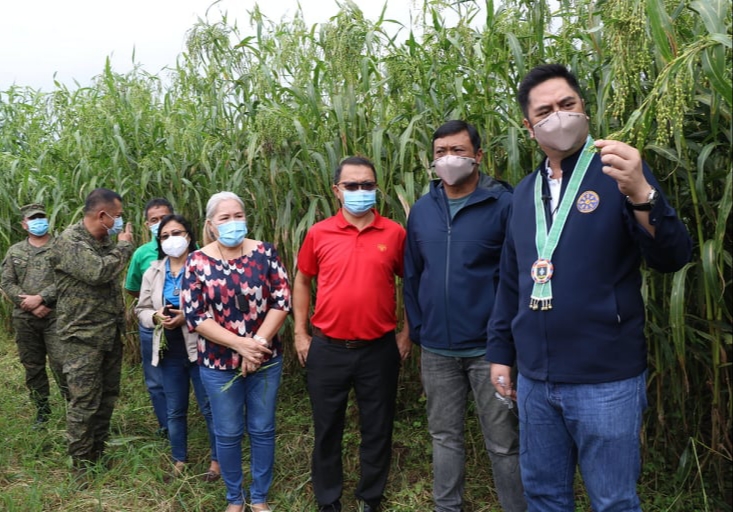
Andanar and his team also visited adlay farm in Camp Osito Bahian of the 403rd Infantry Brigade on October 20, In line with the government’s pursuit to end local terrorism in the country.
Former rebels (FR) find interest in planting adlay which is easier to cultivate and incurs less production cost.
Andanar, with DA and military officials also seen adlay’s health benefits and its impact to the lives of the FRs and IPs.
Andanar assured that his office will help the DA -10 and the Army's 403rd Brigade, in promoting and marketing adlay, including its value-added products to sustain the project.
DA-10 director Carlene Collado said the department has partnered with the AFP to reach far-flung areas and use its military reservation camps for planting adlay that will benefit FRs living nearby.
Camp Bahian has a total area of 70 hectares suitable for agriculture, according to 403rd Brigade commander Col. Barandon.
Barandon said the 10-hectare at the back was already planted with corn by some trained personnel with the help of some former rebels eventually converted to adlay farm..
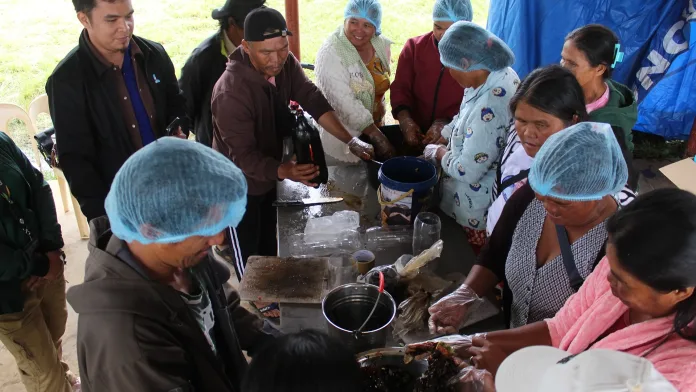
Andanar also visited the adlay seed production, undertaken by DA-RFO 10’s research center to produce and distribute quality seeds to the farmers in Northern Mindanao.
Collado presented the crop’s various value-added products, such as adlay grits, cereal, coffee, cookies, wine and even soap.
He emphasized that the prevailing farm gate price of the seeds is P50-100 per kilo and the grits ranges from P180-200 per kilo.
DA-RFO 10 Research Division OIC-Chief Carmelito T. Lapoot said, in 2012, the DA-Bureau of Agricultural Research has started to fund the project as it was found to have economic significance to some indigenous peoples (IPs) in some parts of the region due to its adaptability, resilience to pests and diseases and lesser cost of maintenance in farming.
"Based on studies, adlay is good for diabetes since it has a low glycemic index and is rich in fiber, making it in demand to consumers who's into healthy foods," Lapoot explained.
He also noted that the region has a total source of about 520 hectares of said crop, particularly in Bukidnon with major growing areas in Lantapan, Manolo Fortich, Impasug-ong, Talakag and Malaybalay City; which are mostly due for harvest on the last week of November this year.
Andanar’s project visit is in line with the Regional Task Force to End Local Communist Armed Conflict in Bukidnon to fully operationalize Executive Order No.70, also known as the whole of nation approach. (Ben Balce with Angie Cabig/EMBentulan/DA-10)