ILIGAN City — The Department of Agriculture (DA) is linking Halal industry development to food security, farmer income, and new market opportunities for micro, small and medium enterprises (MSMEs).
DA Undersecretary for Mindanao Concerns and BARMM and Halal Food Industry Development Program Director Zamzamin L. Ampatuan said stronger agricultural production is needed to ensure a steady supply of raw materials for Halal processors and businesses.
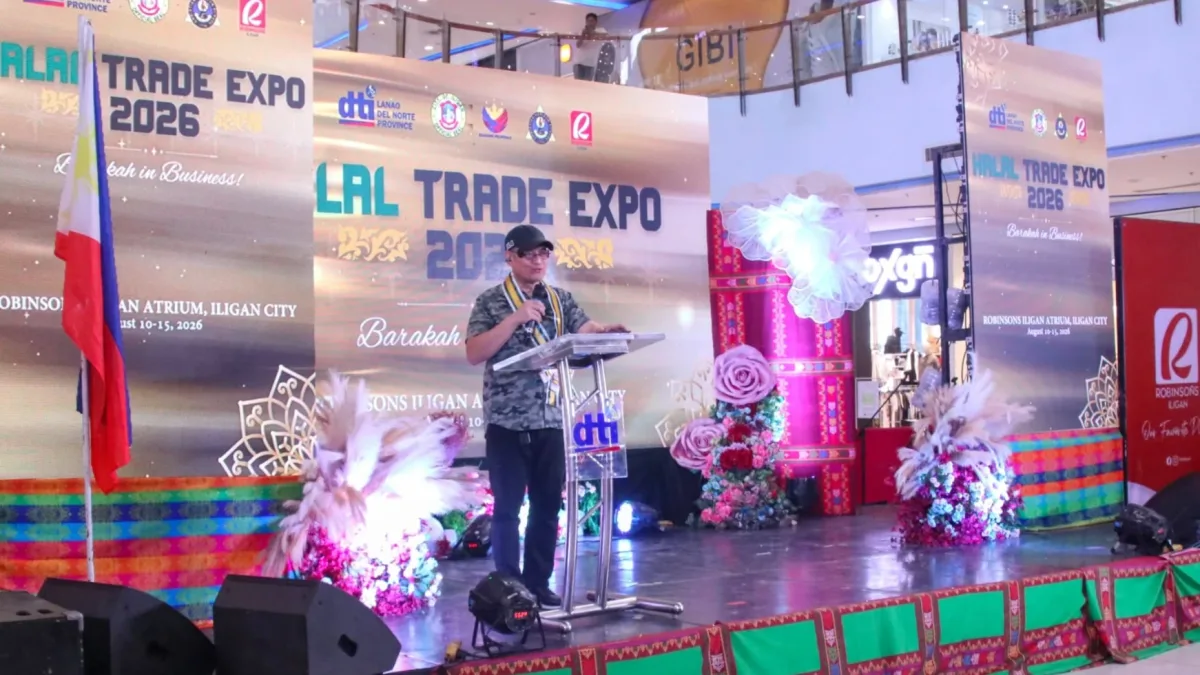
“The Halal value chain must begin with DA,” Ampatuan said during the launch of the Halal Trade Expo 2026 on Aug. 10.
He said the value chain covers crops, livestock, feeds, agricultural and fishery inputs, handling, processing, certification, logistics, marketing, and exports.
For consumers, he said, the goal is to make basic Halal food products more available, particularly chicken, beef, and goat meat.
“This is a dual challenge,” Ampatuan said. While the Philippines seeks to expand its Halal exports, it must also ensure that Filipino Muslims have adequate access to basic Halal food.
The DA is working with the Department of Trade and Industry (DTI) and other government agencies to strengthen the Halal supply chain and connect producers with processors, retailers, institutional buyers, and exporters.
More opportunities for farmers, businesses
Ampatuan said stronger agricultural production can also benefit farmers by creating more opportunities to supply Halal processors.
He said the DA’s Halal program is linked to its livestock initiatives, including the planned Animal Industry Competitiveness Enhancement Fund for 2027, which will include support for Halal development.
More production, he added, can increase farmers’ income and purchasing power while providing businesses with a more reliable supply of agricultural products.
The program also aims to help Philippine Halal producers tap both local and international markets.
“Locally, malaki talagang Halal market, and internationally lalong mas malaki,” Ampatuan said.
He said government agencies have a role in helping businesses meet market requirements and expand their reach.
From farm to market
Ampatuan stressed that Halal development should go beyond certification.
“Producing Halal food is not enough. We must produce it with quality and consistency, at the proper price,” he said.
He said products must be available in commercial quantities and meet the standards required by target markets.
To strengthen the industry, he said the Philippines needs more livestock and poultry production, Halal-compliant slaughterhouses, meat processing facilities, and stronger logistics systems.
Farmers and fisherfolk also need better connections to institutional buyers, retailers, and exporters, he added.
The government is seeking to build a Halal industry that can support food security while creating livelihood and market opportunities for farmers, fisherfolk, entrepreneurs, and MSMEs.
Ampatuan said government agencies, local governments, private investors, businesses, producers, and Muslim communities all have a role in growing the industry. (With a report from Lou Ellen L. Antonio of PIA-10)