THE eruption of Camiguin island’s Mt. Hibok-hibok in 1951 gave the country what is now the Philippine Institute of Volcanology and Seismology (Phivolcs).
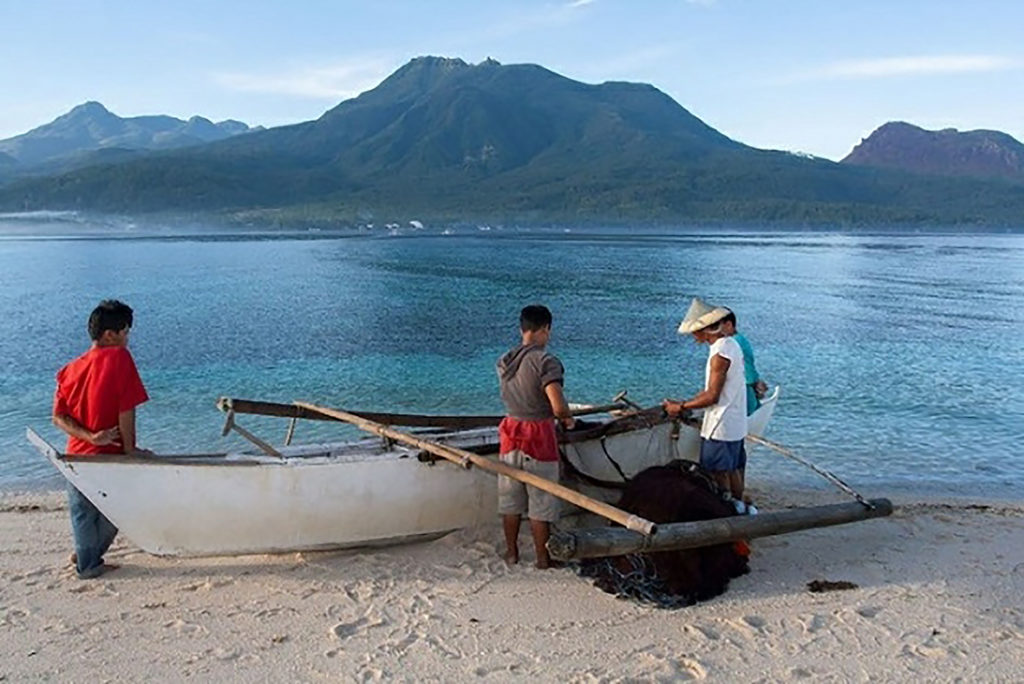
According to the Phivolcs’ website, the violent eruption of Hibok-hibok volcano1951 which killed at least 3,000 persons and caused extensive damage “made the nation realize the necessity to seriously monitor and conduct studies on active volcanoes in the country.”
Mt. Hibok-hibok is listed by Phivolcs as one of 24 active volcanoes in the Philippines. In Mindanao it is one of eight.
According to the website of the Camiguin provincial government, the volcano “constantly rumbled and smoked” from 1948 to 1951. A minor eruption in 1948 caused little damage and loss of life; in 1949, its eruption caused 79 deaths due to landslides and in the morning of Dec. 4, 1951, when the volcano erupted again, “it unleashed boiling lava, poisonous gases, and landslides enough to destroy nearly 19 square kilometers of lands particularly in Mambajao. All in all, over 3,000 people were killed.”
The website also notes that before Hibok-hibok’s 1951 eruption, the population of Camiguin was 69,000. After the eruption, it dropped by half -- to 34,000 -- due to massive out-migration. (Camiguin’s population as of the 2015 government census is 88,478)
A major producer of abaca then, Camiguin was part of Misamis Oriental, elevated into a sub-province by 1958 and a separate province by 1966 although it was formally inaugurated in 1968.
The series of eruptions from 1948 prompted the post World War II government to create a body that would monitor and study the country’s active volcanoes. Republic Act 766, passed on June 20, 1952 during the administration of President Elpidio Quirino, created the Commission on Volcanology (Comvol) primarily to “safeguard life and property against volcanic eruptions and its dangers.”
Comvol was mandated to “investigate and conduct studies of all active Philippine volcanoes; establish necessary facilities in order to predict their eruption in advance, if possible; formulate in advance and in detail specific plans of action and of relief in the event of the eruption of any volcano; recommend to the President of the Philippines such measures as may be necessary to protect life and property in areas which may be affected by volcanic eruptions, including the declaration of certain areas as closed to human habitation or subject to regulation” and perform such other duties as may be necessary to carry out the the law’s purposes.
Comvol was initially placed under the Executive Board of the National Research Council and later under the National Science Development Board (NSDB).
In 1982, President Ferdinand Marcos issued Executive Order 784, reorganizing the NSDB and its agencies into the National Science and Technology Authority (NSTA). Comvol was restructured and renamed Philippine Institute of Volcanology (Phivolc).
In 1984, Marcos issued EO 984 transferring the Philippine Atmospheric, Geophysical and Astronomical Services Administration (Pagasa) from the Ministry of Defense to the NSTA.
Seismology or the science that deals with earthquakes, was transferred from Pagasa to Phivolc which the EO also renamed into Phivolcs.
In January 1987, President Corazon Aquino issued Executive Order No. 128, transforming the NSTA into the Department of Science and Technology. The EO also reorganized the Phivolcs was mandated to “predict the occurrences of volcanic eruptions and earthquakes and their geotectonic phenomena; determine how eruptions and earthquakes shall occur and, also likely areas to be affected; generate sufficient data for forecasting volcanic eruptions and earthquakes; mitigate hazards of volcanic activities through appropriate detection, forecast, and warning systems; and formulate appropriate disaster-preparedness plans.” (Carolyn O. Arguillas, Mindanews)