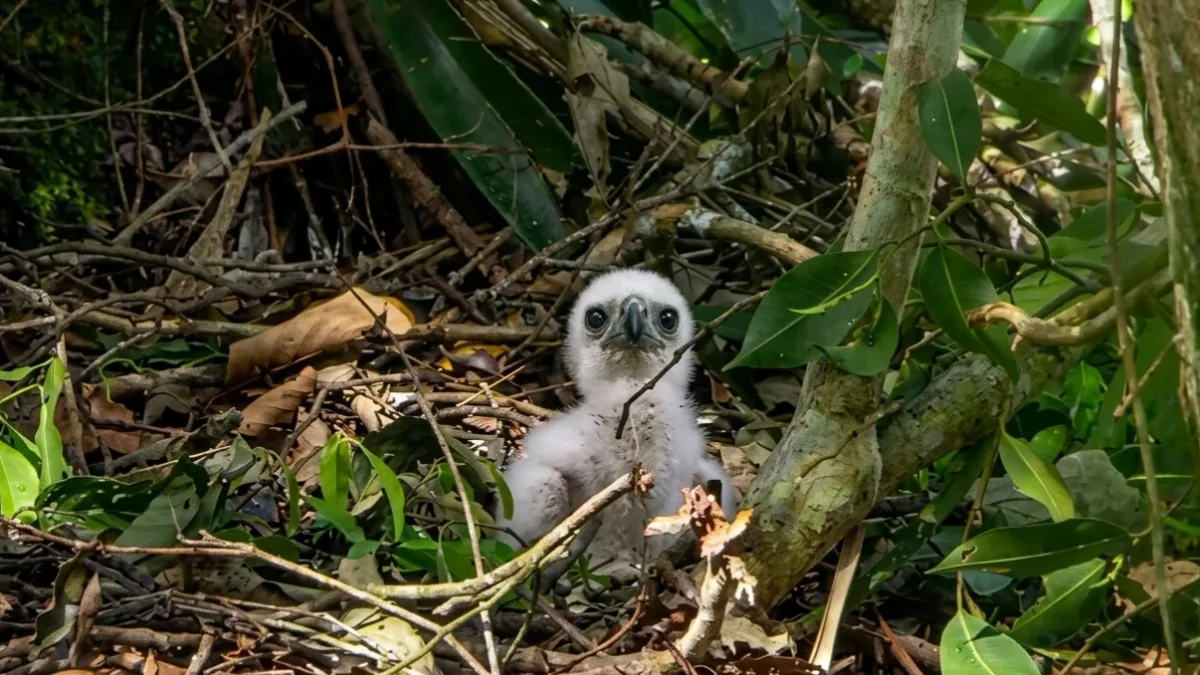
CAGAYAN DE ORO CITY – Indigenous ancestral domains are serving as the primary shield for the Philippine Eagle, with a new habitat study finding that nearly two-thirds of core nesting sites in eastern Mindanao fall within tribal lands.
The research mapped nesting habitats across the Eastern Mindanao Biodiversity Corridor, finding that 65 percent of core nesting sites and 46 percent of highly suitable nesting areas fall directly within these Indigenous territories.
The findings demonstrate that the eagle’s survival relies as much on traditional community stewardship as it does on government policy or national parks.
Guardians of the Stronghold
In the mountain ranges of Davao de Oro and Davao Oriental, Indigenous communities have preserved these forest ecosystems for generations.
Local leaders actively lead these conservation efforts on the ground. Jupiter Comania, a Mansaka leader, serves as chairman of the SUMPAW Indigenous Peoples Structure and head of the Tandik Multi-Purpose Cooperative in Maragusan, Davao de Oro, where his community protects wildlife and acts as stewards for local Philippine Eagle releases.
In Caraga, Davao Oriental, Mandaya tribal elder Augusto Diano (Mangkatadong) leads heritage preservation in Sobrecarey. Their lands represent traditional territories of the Mansaka, Mandaya, Mamanwa, Manobo, and Dibabawon-Manguangan peoples—domains that overlap directly with the national bird’s primary remaining stronghold.
Culture Meets Conservation
Behind the data are living communities whose daily cultural practices keep primary forests intact.
"When Indigenous cultures thrive, the forest has a future. When the forest thrives, the Philippine Eagle has a home."
Conservation advocates emphasize that saving the species requires protecting Indigenous territorial rights, proving that nature preservation and cultural heritage are inseparable. (Dave Achondo, Editorial Assistant)