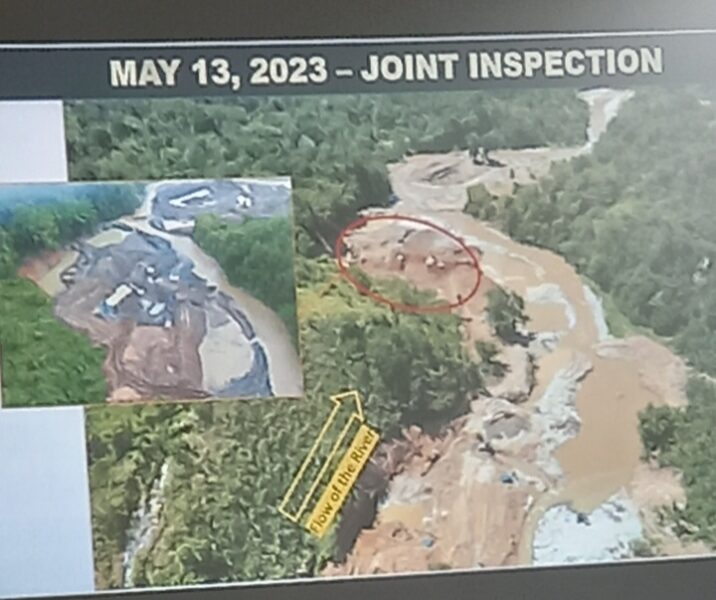
THE local government of Cagayan de Oro has expressed its plans to rehabilitate and develop communities that have been affected by illegal mining in the Iponan River watershed area which serves as the city’s border with Opol, Misamis Oriental.
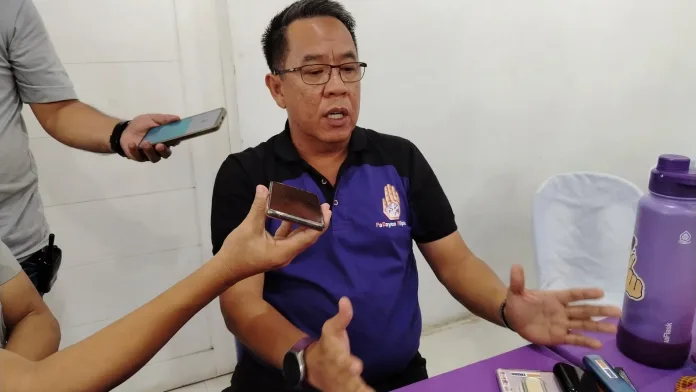
"Magtinabangay nalang kita sa pagpahibalik sa naguba nga kinaiyahan,” said Mayor Rolando "Klarex" Uy, adding, the damage caused by illegal mining in Iponan River affects both the city and Opol as this is a shared river ecosystem.
Also on his part, Uy wants improved coordination between the said two LGUs to include the Misamis Oriental government in rehabilitating mined areas in the critical Iponan River basin.
While law enforcement against illegal mining is crucial, Uy has stressed the importance of implementing rehabilitation and development programs for the communities along the river on both sides.
The city mayor on May 19, urged both LGUs to work together towards restoring the damaged environment a week after the arrest of five Chinese nationals and 13 Filipino workers in an illegal gold mining site in the Iponan River.
Uy, who is also an environmental advocate is urging the affected communities to work together towards restoring the damaged environment.
The operation conducted by the DENR, Philippine Army, and NBI aimed to crack down on suspected mining operations that threatened the environment.
Uy emphasized the importance of collaboration between LGUs to address the environmental damage caused by illegal mining activities.
During the recent crackdown, the raiding team discovered ongoing illegal mining activities in barangay Cauyunan and Nangcaon of Opol town.
The authorities seized various mining equipment and materials, including excavators, fuel tankers, and industrial water pumps. Based on satellite maps, 10.3 hectares of damaged areas were found in the the said two barangays.
Meanwhile, in a quarterly report on the Bantay Suba anti-illegal mining operation, the City Local Environment and Natural Resources Office (Clenro) targeted Barangays Tuburan, Pigsag-an, and Tumpagon as part of the city's ongoing campaign against illegal mining activities along the Iponan River.
Uy said that the recent quarterly report, the city's monitoring operation against illegal mining along the Iponan River was carried out in compliance with the signed Memorandum of Agreement , which was ordered by the Court of Appeals in 2013.
The City Local Environment and Natural Resources Office (Clenro) submitted documentation showing traces of illegal mining activities using heavy equipment such as backhoes and hydraulic pumps along the Iponan River.
Clenro head Engr. Armen Cuenca reported that the extraction areas were outside the city's political boundary and respectfully endorsed the matter to the Task Force Kinaiyahan for appropriate action.
Cuenca like Mayor Uy expressed their gratitude for the Task Force's cooperation in their efforts to protect the environment.
As responsible for overseeing the city's environmental protection efforts, the city government remains committed to fighting against illegal mining operations that threaten the health and safety of the community and the environment.
Revisited the prohibited mining along the Iponan River
In February 2013, Associate Justices at the Court of Appeals in Cagayan de Oro expressed optimism that illegal mining activities along the Iponan River would soon be eliminated after the signing of Memorandum of Agreement (MOA) in protecting the Iponan River.
Associate Justice Renato Francisco and Justices Oscar V. Badelles and Henri Jean Paul B. Inting considered the MOA presented by petitioner Bangon Kagay-an Incorporated (BKI).
The MOA was signed by various government and non-governmental organizations on February 28, 2013.
The judges believed that the MOA would be an effective measure to address illegal mining in the area.
The MOA signing was a significant step towards the protection of the Iponan Watershed, which was threatened by mining activities.
This paper attempted to confirm whether the Court of Appeals had also granted the Writ of Continuing Mandamus against the aforementioned respondents, as part of efforts to safeguard the Iponan River.
In response to these developments, BKI's legal counsel, Evangeline Carrasco, expressed the group's openness to a compromise agreement suggested by the CA justices.
The agreement was seen as a way to expedite the rehabilitation of the river and mitigate the damage caused by the mining activities.
Carrasco also expressed concern that obtaining a Temporary Environmental Protection Order (Tepo) would only lead to more court hearings and eventually reach the Supreme Court, by which time the damage to the Iponan Watershed would be irreparable.
Despite this concern, they maintsined at the time that the signing of the Writ of Kalikasan and the Writ of Continuing Mandamus were significant victories for BKI in their fight to protect the Iponan Watershed.
After thorough discussions on the issue, BKI chair Nixon Baban stated that the group will support what is best for the environment.
Baban expressed openness to improving the MOA so that it can become a useful tool for everyone concerned about rehabilitating the Iponan River.
Agreement
Several government agencies and organizations, such as the MGB, Environmental Management Bureau-Northern Mindanao, city governments of Cagayan de Oro and Iligan, the Provincial Government of Misamis Oriental, and the Department of Interior and Local Government (DILG)-Northern Mindanao, along with the Archdiocese of Cagayan de Oro, Sulog environmental group, regional police and military, National Bureau of Investigation, and Bureau of Immigration including the Army's 4th Infantry Division (4ID) were among the signatories of the MOA.
The then agreement was signed after a series of raids that led to the apprehension of numerous Chinese nationals who were illegally extracting gold minerals and working without legal permits.
The use of makeshift dredging machines, backhoes, and hydraulic equipment for illegal mining activities has led to significant siltation and degradation of water quality in the Iponan River, which has extended to Macajalar Bay.
Notably, the MOA was signed by several officials, including the outgoing Cagayan de Oro City Mayor Vicente Emano, who was represented by Councilor Emmanuel Abejuela, as well as the Misamis Oriental Governor and Mayor-elect Oscar Moreno, and the defeated Mayor Lawrence Cruz of Iligan.
Optimistic result
Expressing optimism regarding the MOA, the then DENR Regional Executive Director Ruth Tawantawan underscored the importance of collective efforts in environmental conservation.
Tawantawan expressed her belief that the MOA would lead to positive outcomes and enable the people of Cagayan de Oro to come together for the preservation of the environment.
Moreover, she emphasized that the DENR could not tackle the issue alone and called for the participation of civil societies and other stakeholders.
Moreno elected as the new mayor
In the past, the Iponan River in Cagayan de Oro City was plagued by rampant illegal mining activities.
However, the city has then found hope with the election of Mayor-elect Oscar Moreno.
The Court of Appeals (CA) also expressed optimism and confidence in Moreno's ability to find solutions to put an end to the illegal mining operations in the area.
This positive development followed the CA justices' initiation of a compromise agreement, which was praised by Renato G. Tibon of the BKI group.
Tibon applauded the CA's efforts on social media, referring to them as the "people's champion" for their role in expediting justice.
According to Tibon, the triumph over illegal mining in the Iponan River is a victory for the people, irrespective of whether a temporary environmental protection order (Tepo) is granted or not.
He stresses that the benefits of this achievement will extend to future generations, particularly the youth who will inherit a cleaner and healthier environment.
Moving on
Meanwhile, Former Task Force Macajalar spokesperson Bencyrus G. Ellorin has raised concerns about the effectiveness of the Writ of Kalikasan if any in protecting the Iponan River from destruction by mining firms.
While the writ was supposed to recognize the damage caused by the mining companies, Ellorin criticized it as just “a piece of paper.”
To make the writ effective, the court issued a temporary restraining order (Tepo) as a cease and desist order to stop the destruction of the river, acvorfing to Ellorin.
However, Ellorin's concerns suggest that more needs to be done to ensure that the writ is enforced and that the mining companies are held accountable for their actions.
According to him, even if the temporary restraining order (Tepo) was granted it did not become a permanent environmental protection order, which raises concerns about the long-term protection of the Iponan River.
Moreover, the mining firms that were the subject of the writ and the Tepo no longer exist, and evidence suggests that the river has been rehabilitated, leading to questions about the relevance of the writ and the Tepo.
Ellorin also highlighted the role of the city government in protecting the area. Despite the absence of the respondent mining firms, the city government has continued to monitor and conduct anti-illegal mining activities and submits regular reports to the TF Kalikasan, a group formed by the respondents to implement the Tepo.
The issue of how to ensure the long-term protection of the Iponan River remains a concern.
The situation highlights the need for a comprehensive and sustainable approach to environmental protection.
While legal instruments such as the Writ of Kalikasan and Tepo can be effective in addressing specific incidents of environmental destruction, Elloren stressed that they may not be sufficient to ensure long-term protection of the environment.
"It is important for all stakeholders, including the government, civil society, and the private sector, to work together to develop and implement sustainable solutions to environmental challenges," said Elloren.
No writs were issued but a MOA instead
Amidst concerns about the protection of the Iponan River, Department of Environment and Natural Resources Region -10 (DENR-10) legal division chief Ban Michael Pacuribot clarified that “no” writ or Temporary Environmental Protection Order (Tepo) had been issued.
“The CA did not issue any writs, particularly on the Writ of Kalikasan and a Tepo," said Pacuribot adding that the CA then suggested a compromise aggreement through a Memorandum of Agreement (MOA) that signed by both parties instead.
Pacuribot suggested that a copy of the MOA between the various government agencies involved in the protection of the Iponan River be obtained and distributed again to the agencies involved in the rehabilitation.
He said that the MOA outlines the respective roles of each agency in ensuring the river's preservation.