MORE than a week after its inauguration, Cagayan de Oro City Mayor Rolando ‘Klarex’ Uy approved the guidelines for the use of the Rio de Oro Boulevard that forms part of Phase 2 of the Flood Risk Management Project for Cagayan River (FRIMP-CDOR) project.
“The Rio de Oro Boulevard is a flood-resiliency structure that is a secured, safe, clean and family-friendly open space or park that promotes mobility, tourism, recreation and the well-being of persons…while its primary purpose is flood control, the (structure’s) added engineering works…necessitate the focused control of its use to preserve its integrity (and ambiance),” the three-page order stated.
As such, tourist police outposts will be set up at the boulevard’s entry and exit points for security. The tourist police will be augmented by the Cagayan de Oro City Police Office’s bike patrols along with the barangay tanods and the bike patrol units of the Roads and Traffic Administration (RTA). Security cameras will be installed by City Hall and the barangays while the boulevard will be well-lighted, the order stated.
No liquor, vendors
An emergency response satellite station is also set up by the City Disaster Risk Reduction Management Department (CDRMMD) while signs governing the use of the boulevard and directional signs will also be installed. To keep the area clean, trash bins will also be set up at strategic locations throughout the entire stretch of the boulevard.
The guidelines also stated that the removal of shanties and other illegal structures will be enforced, while ambulatory vendors will be prohibited from selling in the boulevard including the sale and consumption of liquor and cigarettes. However, refreshment kiosks that may be set up by City Hall or its authorized entity will be allowed while horizontal gardening will be promoted along the boulevard’s external walls.
Horizontal gardening in the boulevard is In compliance with the ‘open space’ requirement included in the project agreement between the national government and City Hall and also included greening and landscaping works in the boulevard’s riverside and mainland sides. Sanitation facilities and trash traps in drainage outfalls will be installed.
Yes to bicycles, no to skateboards
While the use of bicycles and e-bikes along with walking are encouraged, skateboards, roller skates, motor vehicles, and motorcycles are prohibited in the boulevard. Only emergency vehicles like ambulances, police vehicles, small fire trucks, and disaster response vehicles are allowed to enter the boulevard. A bike trail will be set up along the stretch facing the river while benches will be set up in strategic areas.
To promote tourism and recreation, mini-sports areas, fishing stations, and even Zumba corners will be considered along with family-friendly events subject to review and guidelines. The three-page guidelines as proposed by the Rio de Boulevard technical working group were submitted to Mayor Klarex who signed it last June 2.
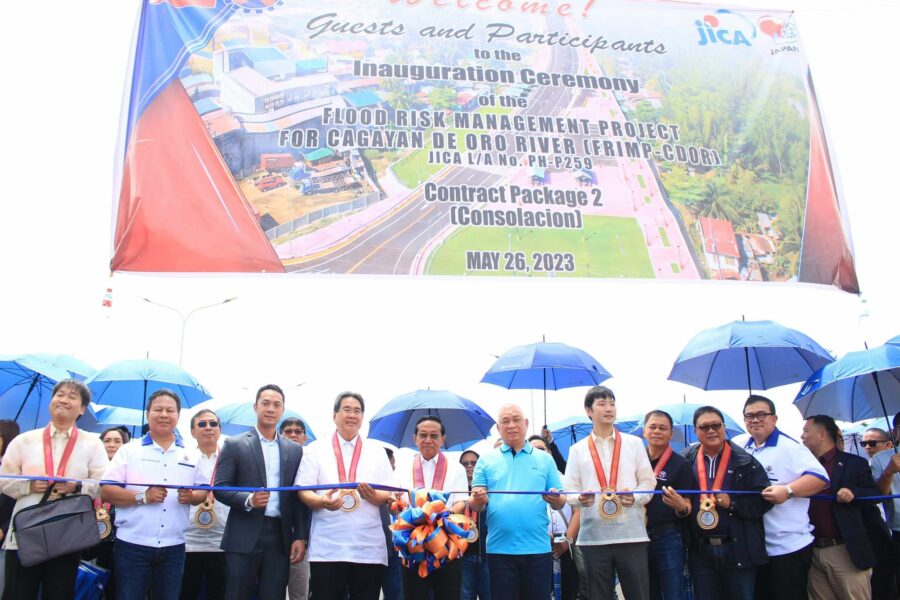
The Rio de Oro Boulevard forms part of Phase 2 of the FRIMP-CDOR project was inaugurated last May 26 and is funded by the Japan International Cooperation Agency (JICA). Aside from the boulevard, Phase 2 also included a 3.2-kilometer river wall, a bridge, and a drainage system. Phase 3 of the project is set for completion later this year. (Stephen Capillas of City Information Office)