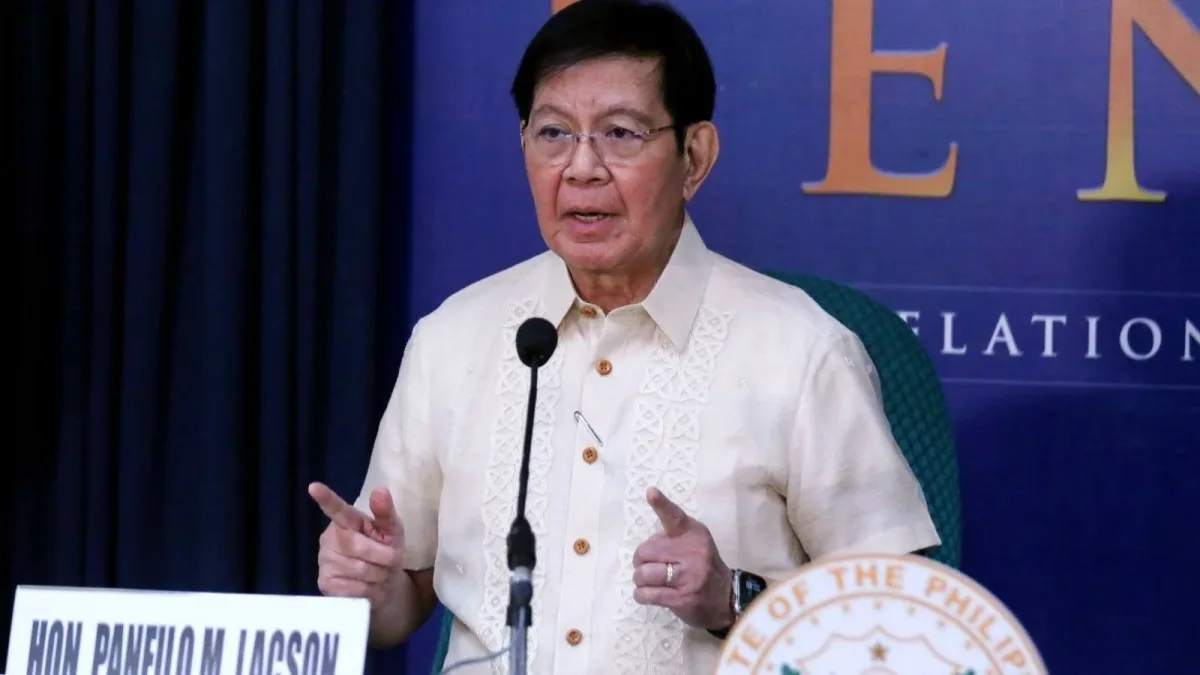
CAGAYAN de Oro City — Senator Panfilo “Ping” Lacson has described the 2024 and 2025 national budgets as the worst budgets passed by Congress, renewing questions about transparency and accountability after the Supreme Court struck down several budget provisions as unconstitutional.
In its 121-page decision released to the press on Oct. 20, the high court declared unconstitutional Congress’ ₱449.5-billion increase in unprogrammed appropriations under the 2024 General Appropriations Act (GAA) and a ₱17.99-billion increase in the Department of Public Works and Highways (DPWH) Special Road Fund under the 2025 budget.
The Court also struck down provisions governing unprogrammed appropriations under the 2026 GAA. Separately, it found that a ₱12.75-billion increase to certain agencies’ Special Accounts in the General Fund violated provisions of the Administrative Code.
The ruling puts the spotlight on how Congress changes the national budget and how the government accounts for public funds.
For taxpayers, the issue is whether budget decisions are transparent, spending follows constitutional limits, and the public can track where its money goes.
Sen. Leila de Lima, a co-petitioner in the legal challenge to the 2026 unprogrammed appropriations, welcomed the decision, saying it could help curb the misuse of public funds.
De Lima said unprogrammed appropriations had grown substantially since the 2022 GAA and had become a way to accommodate lawmakers’ preferred projects and redirect large sums to favored allocations.
“This decision of the Supreme Court is a warning to those who conspire and plan to abuse Unprogrammed Appropriations for personal and political interests,” De Lima said.
“The Supreme Court has closed that backdoor,” she added.
The Court clarified that unprogrammed appropriations are not unconstitutional in themselves. They must, however, have clear limits and safeguards to ensure fiscal discipline, transparency and accountability.
The decision also renews comparisons with the Disbursement Acceleration Program (DAP), which the Supreme Court previously declared partly unconstitutional.
The latest ruling does not automatically establish criminal liability for lawmakers or other officials involved in passing or implementing the questioned provisions. Its findings concern the constitutionality of the budget measures.
Questions remain about how the government allocated and used the affected funds, which projects benefited, and what steps it will take to comply with the decision.
For the public, transparency will be key: government agencies must clearly account for the questioned appropriations and explain how the ruling will affect public spending.
Ultimately, the decision’s significance will depend not only on the provisions it invalidated but also on whether it leads to clearer budget safeguards, better public access to spending information, and stronger accountability in the use of taxpayers’ money.