By NITZ ARANCONCorrespondents
LOCAL governments have been left on their own to formulate their own policies on the recruitment and training of “job order” workers whom they send out to the field as rescuers, the Department of Interior and Local Government (DILG) said on Friday.
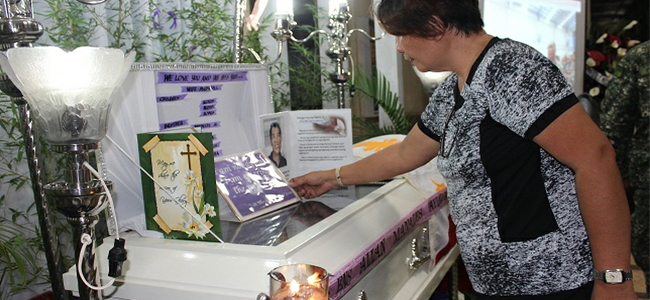
Arnel Agabe, DILG director for Northern Mindanao, said this after the March 17 death of 53-year old Allan Gaylawan brought to the fore the risks that “job order” rescuers are facing, and the challenges they have to deal with because of their work status.
“Job orders,” just like Gaylawan, face the same ordeal: they function like regular government employees and, at times, even do more, and yet they do not really belong to the local governments. They are not entitled to the kind of benefits regular government employees receive.
In Gaylawan’s case, he was not required by the capitol to submit to a medical examination before he was given tasks in the Provincial Disaster Risk Reduction Management Office (PDRRMO). The middle-aged worker died of what appeared to be a heart attack after climbing a reservoir where capitol rescuers trained.
Jessica Galindo, the head of the capitol’s human resources management office, told the Gold Star Daily last week that Gaylawan had no medical certificate in the office file because he was a “job order” worker, and only regular capitol employees were required to submit to medical examinations. She said there was no employer-employee relationship in Gaylawan’s case.
Agabe said the government policy about mandatory medical examinations is based on a law being implemented by the Civil Service Commission (CSC). The rule, he said, applies to rescue workers holding regular or plantilla positions in local governments.
“Naay requirement sa regular disaster officer sama sa civil service eligibility ug naay salary grade, actually, ana,” Agabe said.
But as for the “job orders,” he said, their welfare is the responsibility of the local governments.
“Ang local government unit na ang mahibalo unsay mga requirements nga iyang gikinahanglan. Kon ‘job order’ siya sa rescue unit, call na siya sa local government units kinsay iyang i-hire,” Agabe said.
He said the DILG has set no qualification standards for “job order” workers, and it was the responsibility of the local governments to determine if the “job orders” are physically fit or not through medical examinations.
“Sila ra ang mag-conduct og mga examination and training sa kadtong ilang gi-hire,” said Agabe. “Sila na ang maghimog medical examination ug uban pang mga requirements nga ilang gusto. Ila na nang call kon duna bay ilang mga intervention nga ilang buhaton para kadtong ilang na-hire would be appropriate ba sa position nga ilang gihatag.”
The capitol is not the only local government without a clear rule on medical examinations for “job order” workers engaged in rescue and other risky work.
At city hall, medical examinations are also not mandatory in the City Disaster Risk Reduction Management Department (CDRRMD) except for regular employees.
Allan Porcadilla, the department’s head, said the evaluation of an applicant’s qualifications, including his physical fitness, is being done by a CDRRMD panel. But none of the evaluators is a physician qualified to certify if applicants are physically fit or not.
Porcadilla said “job orders” are required by the CDRRMD to submit training records for scrutiny before they are admitted to city hall’s Urban Search and Rescue Team (Usar). CDRRMD also set an age limit--only those 40 years and younger can become Usar members.
If the applicant is 41 years old or older, he may be admitted only to do office work, Porcadilla said.
He said the rules are part of an internal policy spelled out when Mayor Oscar Moreno took Mario Verner Monsanto as a consultant for disaster risk reduction management in 2013.
“Amo ra kini nga policy, dili kini gikan sa ubang ahensiya. Internal policy namo kini, silbing among manual sa among rescue operations,” Porcadilla said.
But he said physical examinations conducted by qualified medical practitioners have not been a city hall requirement for “job order” workers.
“Wala na namo iequire ang medical examination kay gitan-aw man namo ang ilang mga trainings so kon na-ay ilang training sa rescue effort, physically fit siya,” Porcadilla said.