CITY Councilor Ian Mark Nacaya wants the City Council to investigate the alleged rapid increase in power rates imposed by the Cagayan de Oro Electric Power and Light Company (Cepalco) from February to May, this year.
Nacaya even claimed that the increase, which has soared to about 42 percent is coming from generation and transmission rates.
“May we ask that these be investigated so that we will know the reason for the increase,” Nacaya pleaded.
Nacaya, chair of the committees on planning, innovation, and development and on economic enterprises said that there was a huge increase in Cepalco’s rate, especially in April, this year.
He clarified that within a span of four months from February up to May, the generation rate has increased by 39.198 percent or P28.676.
“This increase may be considered as the highest increase rate compared to previous months and years,” according to Nacaya.
In his special report during the regular session, Nacaya insisted on an investigation because there has been no public hearing on the imposition of the charges on rates required upon every consumer.
Nacaya, however, did not confirm he has a plan to file a complaint with the Energy Regulatory Commission (ERC) as he just wished for an investigation following the query of most city residents about the abrupt increase in Cepalco’s power rates.
Ruled by Vice Mayor Raineir Joaquin V. Uy, Nacaya said that based on the data gathered by his office, variables such as generation and transmission rates started to rise as early as January and have increased continuously in the following months.
As of January, according to Nacaya power rate was at P12.20 per kilowatt-hour while the generation rate was at P7.3155 and the transmission rate was at P0.391.
“It soared up to P12.37 in February or 1.39 percent, P12.50 in March or 1.05 percent,” he reported.
This rapid increase continued in April at P14.31 or P1.81 difference compared to the previous month or equivalent to 14.48 percent.
“Although the month of May showed a decrease of P0.08 as the rate dropped to P14.43 per kilowatt-hour, it is still evident there was a huge increase in Cepalco’s rate,” Nacaya said.
Extent Cepalco has a constant rate on supply, metering, local franchise, real property, and missionary charges from January up to the present, transmission rates from January to February continued to increase, he pointed out.
Nacaya said the matter was referred to the committee on energy chaired by Councilor Romeo V. Calizo for appropriate action.
In a report made by the Mindanao Power Monitoring Committee (MPMC) to the Association of Mindanao Rural Electric Cooperative (Amreco) and the National Electrification Administration (NEA) on September 17, 2020, Cepalco has the most expensive power rate among Mindanao’s private distribution utilities at P10.8528 per kilowatt-hour as of March 2020.
While Region-10 has the most expensive average power rates among private distribution utilities and the most expensive average rate among electric cooperatives among the island’s six regions.
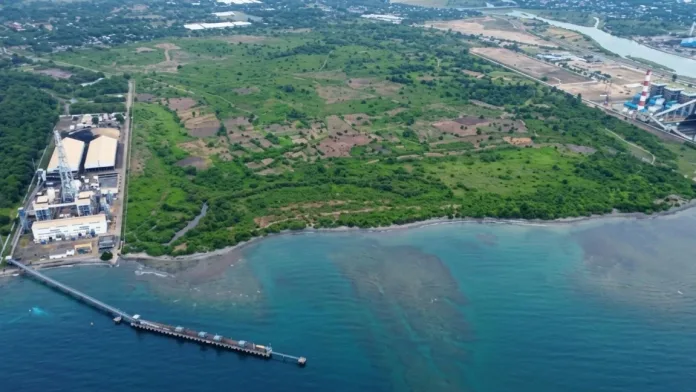
In a said presentation made by the MPMC, the tremendous increase in electricity rates in the city is a result of Cepalco sourcing up to 85 percent of its electricity from the Minergy Power Corp coal plant in Balingasag, Misamis Oriental, and other affiliate generating companies.
Accordingly, the rise in power rates within the Cepalco franchise area could be attributed primarily to the rise in generation rates as a result of the shift to the MPC coal plant and not to the transmission and distribution aspects of the franchise operations.
It is also true of other distribution utility companies in Mindanao that the increase in rates is in the generation component.
Meanwhile, power rates across the country’s grid rose on average and the Center for Energy, Ecology, and Development (Ceed) blames the country’s dependence on coal power.
“The six-centavo increase in the country’s national average power rate as of December last year, as reported by the Department of Energy, is another question posed as to why DOE is still intent on maintaining and even intensifying our dependence on costly and unreliable electricity from coal for our power needs,” Ceed Executive Director Gerry Arances said in a statement.
Arances said the power crisis of 2019, where many of the over sixty instances of red and yellow alerts were recorded during the summer months largely due to unexpected shutdowns of coal-fired power plants, caused price fluctuations that sent electricity rates soaring.
Arances urged the government to help the country join the worldwide movement on reducing coal consumption, especially since technical innovation around renewable energy generation has seen costs plummet.
He said there would be a 30% reduction in electricity charges if renewable energy becomes our primary source of power, according to Institute for Energy Economics and Financial Analysis.