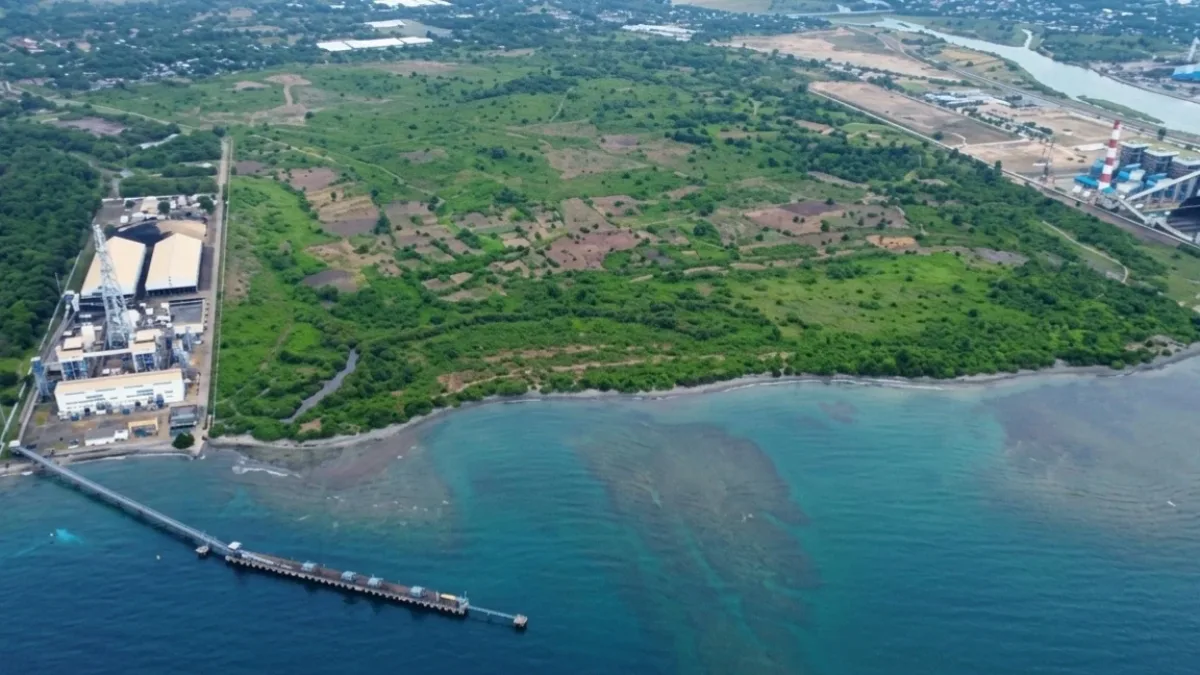
CAGAYAN de Oro City— The planned Philippine Navy base inside the PHIVIDEC Industrial Estate is moving forward, but important details about the project remain to be clarified, including its final cost, land acquisition and construction schedule.
The proposed facility is expected to serve as a naval base and dockyard for the Philippine Navy, with a role in maintaining and supporting the country’s growing fleet.
Defense Secretary Gilberto “Gibo” Teodoro Jr. said the government has a strategic need for the property and that President Ferdinand Marcos Jr. had already approved the Department of National Defense’s acquisition of about 300 hectares within the PHIVIDEC estate.
“We will hold on to this property because we have a strategic need for it,” Teodoro said in September 2025.
He said the Navy needs a new and modern facility because its existing base in Cavite is already crowded.
“We need a dockyard and a naval base for these boats,” Teodoro said, referring to the Navy’s expanding fleet.
Teodoro also said the Tagoloan facility would become the center of Philippine Navy operations in Northern Mindanao and the Visayas.
The need for the facility has become more pressing with additional naval vessels expected to join the fleet.
How much will it cost?
The project has been described in some discussions as a multibillion-peso undertaking, but the specific ₱40-billion figure should not yet be presented as the cost of the Tagoloan naval base without an official document confirming it.
Recent reports show that the Philippine Navy has a substantial allocation under the 2026 AFP modernization program, including funds for naval base upgrades and the acquisition of additional vessels.
However, this is a broader modernization budget and should not automatically be treated as the budget for the Misamis Oriental facility alone.
Teodoro himself previously stressed the importance of budget support for the planned facility.
“Even if we have the facility, without the budget allocation we cannot do otherwise,” he said in December 2024.
For taxpayers and communities in Northern Mindanao, the distinction matters: the public should know how much of the national defense budget will be used for the Tagoloan project and what specific works will be covered.
What is happening with the land?
The proposed naval base would occupy about 300 hectares within the 3,000-hectare PHIVIDEC Industrial Estate.
PHIVIDEC Administrator Joseph Donato Bernedo previously said the area was being considered because of its coastal frontage and deep-sea capability, which could allow larger Navy vessels to berth.
In November 2025, Bernedo said negotiations between PHIVIDEC and the DND for the land were making “steady progress.”
The DND had offered another government property in exchange for the 300-hectare area, although the location and financial details of the proposed arrangement were not publicly disclosed at the time.
A Philippine Navy team had also completed a survey of the site.
The latest publicly reported details therefore point to an acquisition process that still requires the completion of the necessary agreements and documentation.
Why does the Navy want the site?
The proposed facility is intended to provide the Navy with a modern base and dockyard in Mindanao.
Teodoro has said the base will support the Navy’s operations in Northern Mindanao and the Visayas.
He also earlier described the facility as a logistics center where bulky and heavy military equipment could be transported by sea rather than by air.
The site is also strategically located near major roads and an existing port facility, factors cited by officials in explaining its suitability.
The Navy’s expanding fleet is another reason for the proposed base.
Teodoro said the facility would be needed to support new vessels being acquired as part of the country’s military modernization program.
What about local concerns?
The project has also raised questions among some local business leaders.
Cagayan de Oro Chamber of Commerce and Industry president engineer Almario Brito previously said traders were concerned about the possible security implications of having a major military installation in the area, particularly if tensions in the region escalate.
Brito also asked what the exact nature of the naval facility would be and called for consultations with traders and residents before construction proceeds.
These concerns do not necessarily oppose the Navy’s stated objectives, but they point to issues that local stakeholders want addressed before the project becomes fully operational.
Among the questions are how the naval facility will coexist with existing industrial and commercial activities, what areas will be affected by the project, and what arrangements will be made for nearby communities.
What happens next?
The next steps include completing the land acquisition and titling process, finalizing the government’s arrangements for the property, and determining the funding and construction schedule.
Teodoro had earlier said the government wanted to move quickly on the project.
In September 2025, he said that once the land titling was completed, the DND would proceed with work on the naval base and its dockyard.
For the public, the key questions are straightforward: How much will the project actually cost? Who will pay for each part of it? When will construction begin? And how will the naval facility affect the communities and industries already operating around PHIVIDEC?
Answering these questions publicly would give taxpayers and residents a clearer picture of a project that is expected to become an important Philippine Navy facility in Northern Mindanao.