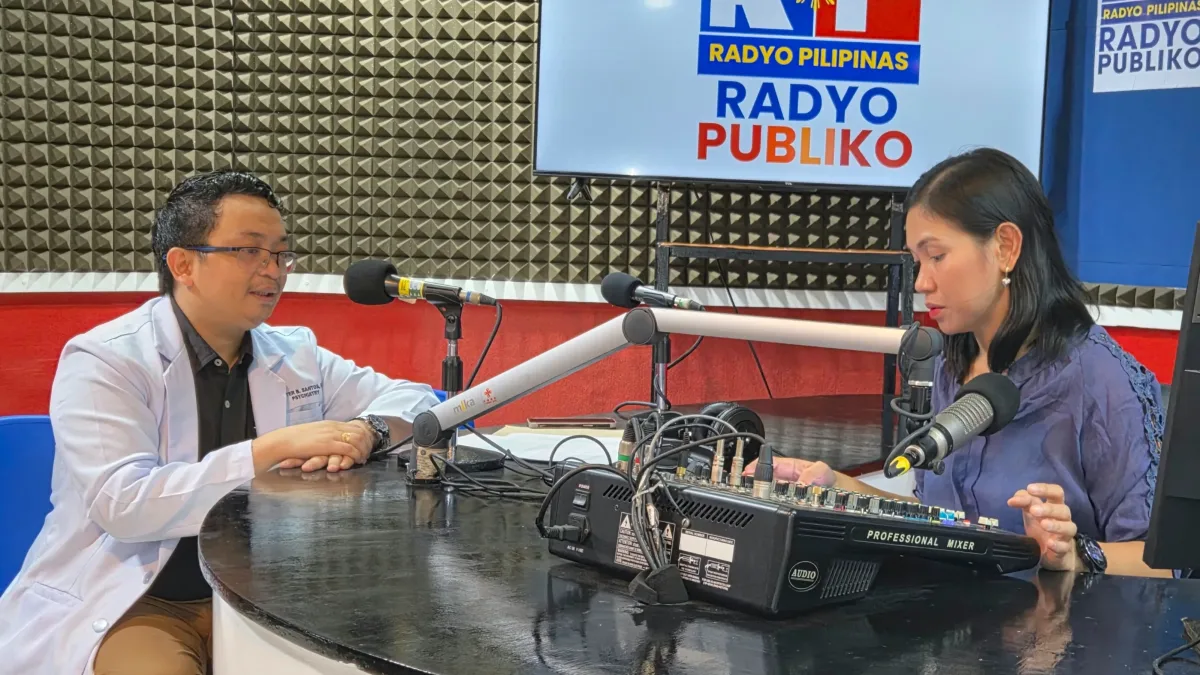
CAGAYAN de Oro City — If stress, anxiety or sleepless nights are starting to affect your daily life, seeking professional help can be an important first step toward feeling better, a psychiatrist at Northern Mindanao Medical Center (NMMC) said.
But while public awareness can encourage people to seek care, access to qualified professionals and available services also matters, particularly for communities where mental health support may be difficult to reach.
Dr. Peter Santos, an NMMC medical officer and psychiatrist, urged the public to treat mental health care as an essential part of overall health and not allow fear or shame to prevent them from consulting a professional.
Speaking on the Lambo Dyes radio program on Oct. 21, Santos said mental health care helps people manage stress arising from their daily activities and cope with emotional challenges.
“Ang mental health, maka-help siya sa ato kung paano ta mag-handle sa stress sa atong day-to-day activities,” Santos said.
(Mental health helps us manage stress in our day-to-day activities.)
He said National Mental Health Week serves as a reminder for people to pay attention to their psychological and emotional well-being.
“Itong National Mental Health Week na ito, it’s more of para ma-remind ta about ourselves,” he said.
Stigma can discourage people from seeking care
Santos said public education and open conversations are important to correcting misconceptions about mental health and reducing the stigma surrounding psychiatric consultations.
“Kani nga adbokasiya ang purpose pud ani kay para mawala ang stigma,” he said.
(The purpose of this advocacy is also to eliminate stigma.)
For people who are hesitant to consult a psychiatrist, Santos said a professional consultation provides an opportunity to discuss personal concerns and receive appropriate guidance.
“Kung pupunta ka sa psychiatrist, it’s not as bad as we initially naisip natin. Isipin na natin na nakipag-usap ka lang sa kaibigan mo, but more in a professional stance,” he said.
He also encouraged people to maintain habits that support mental well-being, including regular physical activity, deep-breathing exercises, balanced nutrition and adequate sleep. Limiting prolonged social media use may also help manage daily stress.
These habits can support general well-being but do not replace professional assessment when symptoms persist or begin to interfere with work, relationships or other daily activities.
Access to services remains important
Santos said community-based support is particularly important in areas where mental health professionals are limited. Local health units and barangay personnel can help identify concerns, guide families toward available services and refer individuals to qualified professionals.
Government health facilities, including NMMC, provide avenues for people seeking professional assistance. However, the information provided during the radio program did not specify consultation schedules, referral procedures, service capacity or whether patients could access mental health services without charge.
Clear information on where to seek help, how to arrange consultations and what services are available would help residents take the next step when they need support.
People experiencing persistent anxiety, prolonged stress, recurring sleep problems or other symptoms affecting their daily functioning are encouraged to consult a qualified health professional.
Reducing stigma is one part of improving mental health care. Ensuring that people can find and access appropriate services is also essential so that seeking help leads to the support they need.(With reports from Rushen Mae N. Dacera and Recthie T. Paculba/PIA-10)