CAGAYAN de Oro City — Government agencies in Mindanao were urged to make peace and development programs more accessible to communities and to show how these efforts are making a difference on the ground.
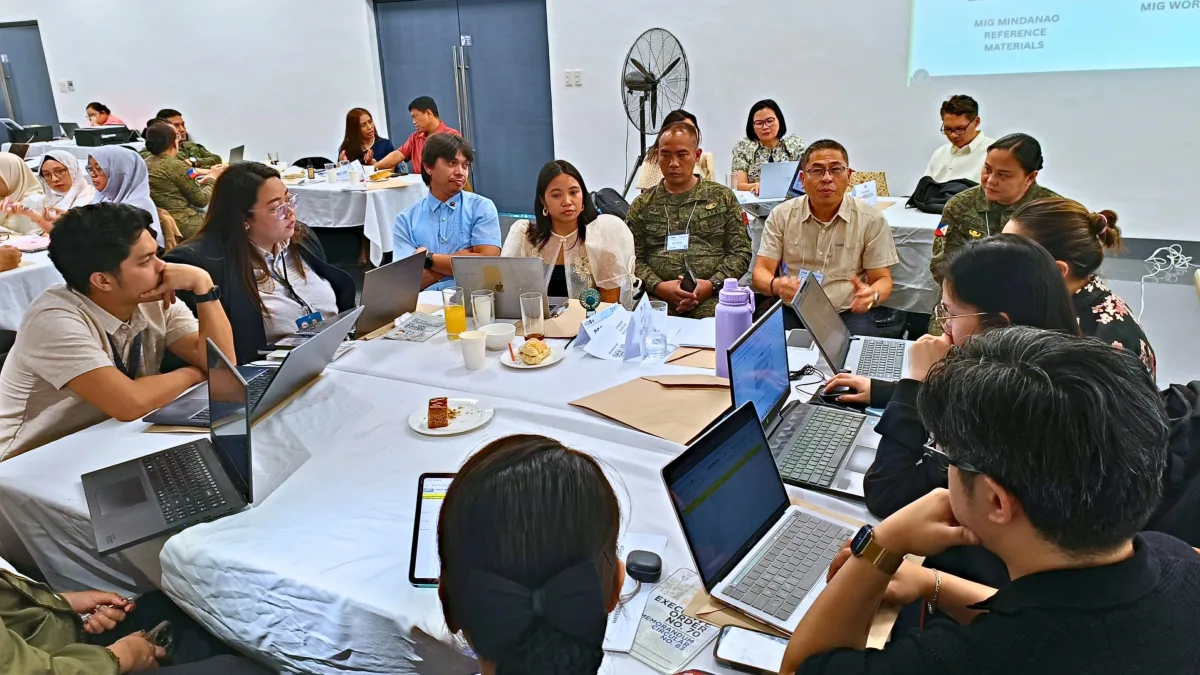
The call came during the Mindanao-wide Major Island Group Action Planning Workshop of the National Task Force to End Local Communist Armed Conflict (NTF-ELCAC) Strategic Communication (StratCom) Cluster held Sept. 29–30 at the Aquilino Pimentel Jr. International Convention Center in Cagayan de Oro City.
The two-day workshop brought together government communicators and partner agencies from Regions 9, 10, 11 and 12, Caraga and the Bangsamoro Autonomous Region in Muslim Mindanao (BARMM).
Participants worked on localized communication plans based on the NTF-ELCAC Communication Plan and the National Action Plan for Unity, Peace and Development (NAP-UPD) 2025–2028.
The NAP-UPD, adopted by the government in 2025, is intended to address the root causes of insurgency and local armed conflict and promote inclusive and sustainable peace. It also calls for government agencies to monitor and evaluate programs and engage civil society, the private sector and other stakeholders for feedback.
For communities, however, the test is whether these plans translate into services, opportunities and other concrete results.
National Security Council Assistant Director General for Strategic Communications Cornelio H. Valencia Jr. said national plans must be understood and carried out at the local level.
“A national plan can only succeed when it is understood, adopted, and carried forward by our partners in the regions and in the communities,” Valencia said.
He said the StratCom Cluster is promoting the principle of “one message, many voices,” with communication strategies adjusted to the different conditions and information needs of communities.
Valencia also urged government communicators to use social media and other approaches suited to the changing information environment.
But he stressed that communication should be backed by actual government programs and accomplishments. This requires closer coordination between agencies delivering programs and those explaining them to the public.
The workshop also focused on turning the national communication plan into localized actions for different parts of Mindanao.
NTF-ELCAC officials later reported that 28,415 barangays in 60 provinces are covered by Stable Internal Peace and Security (SIPS) declarations. The task force said 21,614 of these barangays are in nine entire regions that have already attained SIPS.
The figures are part of the task force's assessment of its peace and security gains. But sustaining those gains, according to NTF-ELCAC, will require more than security improvements.
The task force identified the need to sustain development projects, address remaining community needs and strengthen its Monitoring, Evaluation, Accountability and Learning (MEAL) framework.
That puts greater focus on whether government interventions continue to reach communities and whether their results can be measured.
Philippine Information Agency-10 Regional Director Franklin Gumapon said sustaining peace is important in creating conditions for development, particularly in communities that have experienced armed conflict.
“The challenge before us right now is how to build peace better in this country,” Gumapon said.
He cited peace negotiations, peace caravans, dialogues and security operations as among the government's continuing peacebuilding efforts.
“That is why we are gathered here to develop localized communication strategies and promote unified messaging to make the people aware of the National Action Plan for Unity, Peace and Development,” he said.
Gumapon also called on government communicators to help make public programs and services easier for communities to understand and access.
“As public servants being paid by our taxpayers, let us make our programs more accessible to the public. Be sincere in our services. Be transparent in the implementation of our programs.
And above all, be loyal to the government and its people,” Gumapon said.
The workshop ended Sept. 30 with regional participants expected to carry the communication plans into their respective areas.
For communities, the measure of these efforts will ultimately go beyond coordinated messaging. It will depend on whether government programs reach their intended beneficiaries, address local needs and deliver results that people can see and verify. (With a report from Jan Albert K. Araña of PIA-10)